
Unbiased headlines. Facts, not spin.
Every story is an unbiased news briefing written from 110+ sources across the spectrum — sources linked so you can verify it yourself.
 economy
Notable (6/10)
August 4, 2026 at 07:17 PM
economy
Notable (6/10)
August 4, 2026 at 07:17 PM
Tesla's Shanghai Plant Had Its Best June Ever. Elon Musk May Still Be Planning to Cut It Loose.
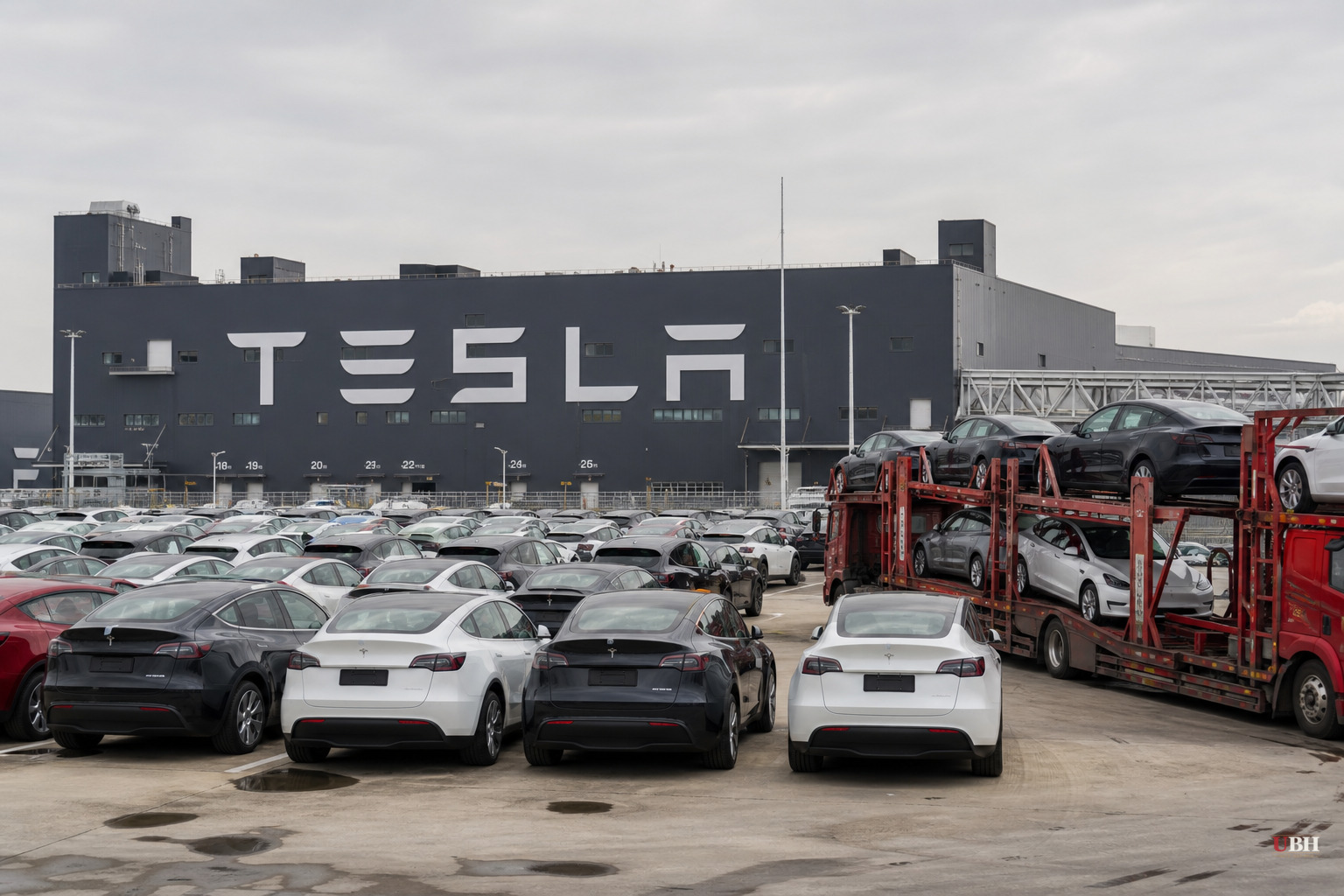
Tesla's Shanghai factory just posted its best June on record. That's the good news for Elon Musk's automaker. The complicated news is what that record actually means.
According to data from the China Passenger Car Association, Tesla built 93,579 vehicles in Shanghai in June, a 38 percent jump over June 2025. On paper, that looks like a company firing on all cylinders in its second-biggest market.
Chinese buyers aren't the ones snapping up those cars. Almost 40 percent of everything Tesla built in China that month was earmarked for export, according to CPCA figures. For the second quarter as a whole, more than half of Shanghai-built Teslas, 128,394 vehicles, went to Europe, Canada, and other Asian markets, versus 126,157 sold to buyers inside China.
That's a meaningful shift. Chinese sales have been falling quarter over quarter for more than a year now, with buyers increasingly tired of the aging Model 3 sedan, according to Ars Technica's review of the CPCA data. Shanghai isn't primarily a factory selling to Chinese consumers anymore. It's become an export hub.
There's a straightforward business reason Tesla keeps running that plant hard even as domestic demand cools. Labor costs in Shanghai are far lower than in Germany or the US, local suppliers are cheaper, and Chinese export-related tax rebates sweeten the deal further. That combination makes Shanghai one of Tesla's most valuable manufacturing assets, regardless of who ends up buying the cars.
A possible split
Despite Shanghai's clear value to the balance sheet, The Wall Street Journal reported last week that some Tesla executives have been assigned to work on separating the company's Chinese operations from the rest of the business. Tesla has denied that any such preparation is underway.
Nobody's claiming this is about trade politics, at least according to the reporting so far. The US has already moved to wall off Chinese-linked technology from American roads: new rules banning Chinese-linked connected car software took effect for model-year 2027, with a matching ban on Chinese-linked hardware coming for model-year 2030. Tesla has already stopped importing Chinese-built cars for sale in the US and has pushed its North American suppliers to strip Chinese-origin components from what it buys. That homework is done.
The real driver, according to the reporting, is Musk's desire to join up SpaceX with Tesla. SpaceX has already started putting surplus Cybertrucks to work in its own operations, a small but visible sign of the two companies drawing closer. The bigger prize, according to the reporting, is investor access: the S&P 500 rejected a request from Musk to bend its rules — which require four consecutive profitable quarters, among other things — to let SpaceX into the index directly. Tesla, however, has been a member of the S&P 500 since late 2020. If SpaceX were merged into Tesla, it would effectively gain the passive-investor access that the index tried to withhold from it directly. But no such merger has actually taken place.
There's an obvious problem with that plan. SpaceX holds tens of billions of dollars in military contracts with the US government. Tesla, meanwhile, still runs deep manufacturing operations inside China. A merger that put a major Pentagon contractor under the same corporate roof as a business this entangled with Chinese production would risk being blocked by the US government on national security grounds. That's likely why separating the Chinese operations first is reportedly on the table, even if Tesla says it isn't happening.
What isn't settled
Nothing here is confirmed beyond the denial and the reporting that prompted it. Tesla says there's no active plan to split off China. The Journal's sourcing says otherwise. Both can't be fully right, but only one side has gone on record with a flat denial.
Both Tesla and SpaceX are down roughly 25 percent year to date, though SpaceX's year only began with its IPO in June. Musk hasn't publicly detailed a Tesla-SpaceX merger plan, and no regulatory filing has laid one out either.
What's verifiable right now is the production math: Shanghai is running hotter than ever, Chinese consumers want less of what it's building, and the plant's future value increasingly depends on markets outside China rather than inside it. Whether that eventually means China gets carved out of Tesla entirely is still an open question, one that hinges on decisions Musk hasn't made publicly and regulators haven't been asked to review.
Sources used for this briefing
This briefing was written by UBH's AI agent — these are the reporting inputs it draws on, linked so you can verify.


