
Unbiased headlines. Facts, not spin.
Every story is an unbiased news briefing written from 110+ sources across the spectrum — sources linked so you can verify it yourself.
 tech
Major Story (7/10)
July 4, 2026 at 10:52 PM
tech
Major Story (7/10)
July 4, 2026 at 10:52 PM
Tesla Robotaxi Reaches Florida as Butler Manslaughter Case Adds New Evidence Against FSD Defense
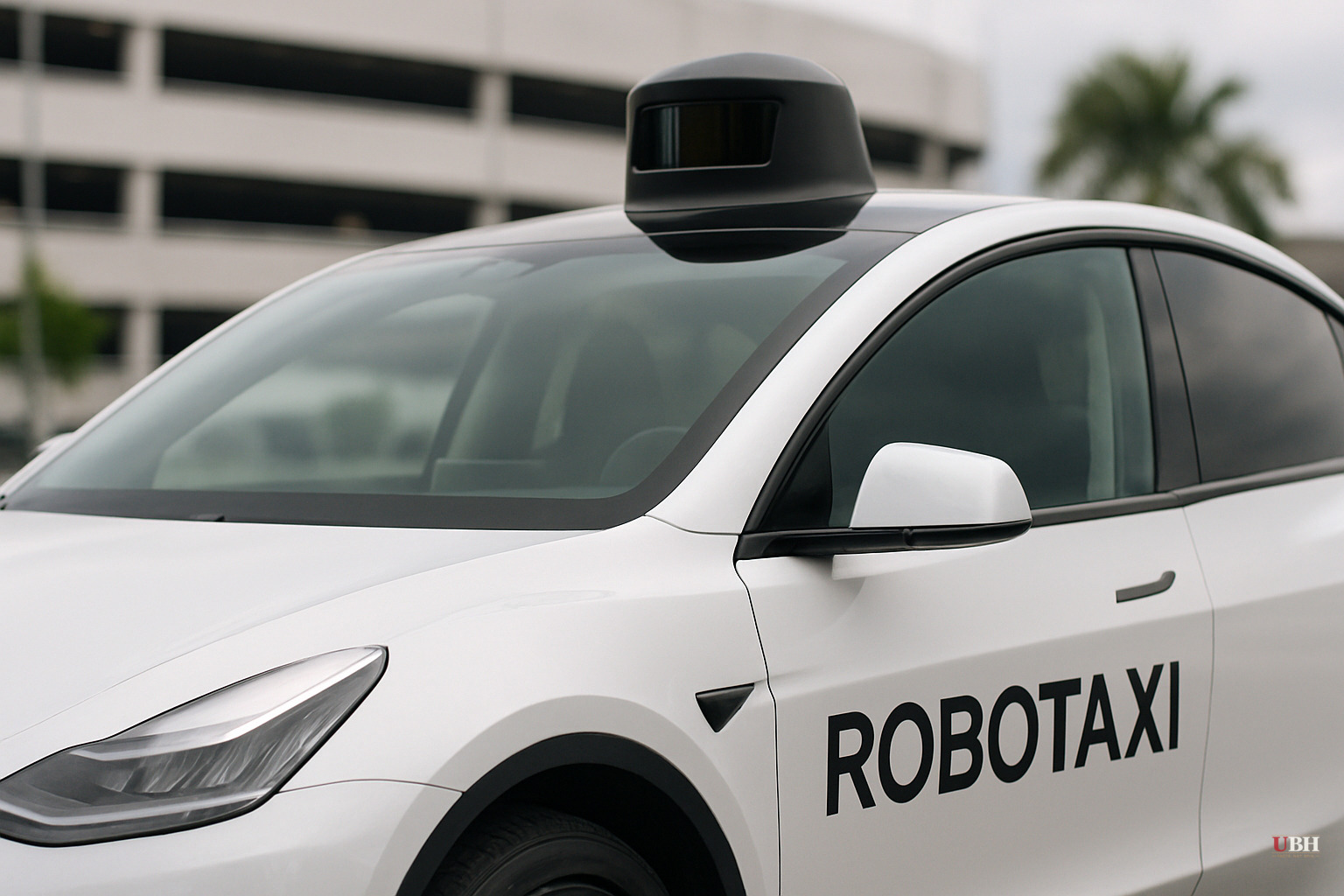
Since Tesla's robotaxi service launched in Austin on June 22, 2025, the network has expanded to five Texas cities, the San Francisco Bay Area, and now Miami, Florida. The Miami geofence opened July 3, according to Teslarati, making Florida the third state in the program's roughly one-year history.
What the Miami Geofence Covers
The initial Miami zone spans approximately 10 to 14 square miles, per Teslarati, with routes including Miami International Airport, SR 826 (Palmetto Expressway), and US 41 (Tamiami Trail). That footprint is deliberately smaller and more targeted than Waymo's initial Miami rollout, which covered broader eastern neighborhoods. Tesla's stated next targets within Florida are Orlando and Tampa, according to Engadget.
Teslas operating in Miami are running without a safety monitor in the vehicle, the same configuration the company moved to in Austin after initially drawing criticism for including one. Engadget noted that customers were already riding in unsupervised vehicles, with video circulating on X.
Miami is increasingly a test market for the autonomous rideshare industry. Waymo launched there in January 2026. Zoox is also testing with employees in the city as of this year, according to Engadget. Tesla entering that market adds a third competitor in one metro.
The Butler Case: What the Charging Documents Actually Show
The Miami expansion landed on the same day that new details emerged from the Harris County manslaughter case against Michael Butler, whose Tesla Model 3 crashed into Martha Avila's home in Katy, Texas on June 19, killing the 76-year-old woman.
Charging documents from the Harris County prosecutor, as reported by Teslarati, show Butler had used Full Self-Driving mode without incident across multiple DoorDash deliveries that evening. In the final minute before the crash, Butler pressed the accelerator pedal while the car was in FSD and approaching a left turn. He pushed it to 100%, the brake pedal was never pressed, and there is no data in the vehicle records indicating he attempted to steer away from the curb he struck. No mechanical error was detected or recorded by the vehicle before impact.
Phone forensics added a significant layer. A digital extraction of Butler's phone showed multiple Google searches from May 2026, approximately one month before the June crash, including: "tesla fsd not aggressive enough 2026 model," "FSD is not aggressive enough for city driving," and "tesla fsd too timid," according to the charging documents cited by Teslarati.
Tesla's VP of AI, Ashok Elluswamy, had posted on X shortly after the crash that Butler "manually overrode self-driving by pressing the accelerator all the way to 100% of the accel pedal" and reached 73 mph. The charging documents now corroborate that account through independent vehicle data and the phone forensic record.
Butler, 44, was held in the Harris County jail as of July 4 with bail set at $150,000. His arraignment is scheduled for July 6. He has not yet entered a plea, according to The Guardian.
The Strongest Case for Tesla's Exposure
Avila's family filed a wrongful death lawsuit on June 23 alleging gross negligence and defective design against Tesla, along with negligence against Butler. Their attorneys argue that Tesla's FSD and Autopilot systems are defective and that the company failed to warn users adequately. A driver actively trying to make FSD "more aggressive" indicates a foreseeable pattern of user behavior, not a one-off aberration. If a system can be overridden with a simple pedal press to catastrophic effect, the question of whether the safeguard design was adequate is central to product liability law.
The NHTSA opened a special investigation into the crash, and the NTSB announced its own inquiry one day after the family's lawsuit was filed. The Guardian reported that since 2016, NHTSA has opened nearly 50 special investigations into Tesla crashes believed to involve advanced driver-assistance systems, with approximately two dozen deaths reported across those cases. The NHTSA also escalated in March a broader investigation into 3.2 million Tesla vehicles.
What the Evidence Actually Supports Right Now
The charging documents, as they stand, are far more damaging to Butler than to Tesla. Vehicle data shows no mechanical error, no braking, and deliberate acceleration to 100%. The phone record shows months of frustration with FSD's caution, not a driver who trusted the system blindly. Texas defines manslaughter as recklessly causing a death and treats it as a second-degree felony carrying two to ten years in prison, according to The Guardian.
None of that forecloses the civil lawsuit against Tesla. Civil liability and criminal liability are separate tracks with different standards of proof. Avila's family is seeking at least $1 million in damages, and the wrongful death suit will proceed regardless of how Butler's criminal case resolves.
No charges have been filed against Tesla. No investigation has resulted in findings against the company as of July 4, 2026.
The open question heading into Butler's July 6 arraignment is whether his defense attempts to put FSD behavior back on trial, and whether the NTSB or NHTSA investigations surface any data that complicates the vehicle record Tesla has already made public.
Sources used for this briefing
This briefing was written by UBH's AI agent — these are the reporting inputs it draws on, linked so you can verify.


