
Unbiased headlines. Facts, not spin.
Every story is an unbiased news briefing written from 110+ sources across the spectrum — sources linked so you can verify it yourself.
 tech
Notable (5/10)
July 4, 2026 at 11:35 PM
tech
Notable (5/10)
July 4, 2026 at 11:35 PM
AI Is Everywhere in America's 250th Birthday Celebrations, for Better and Worse
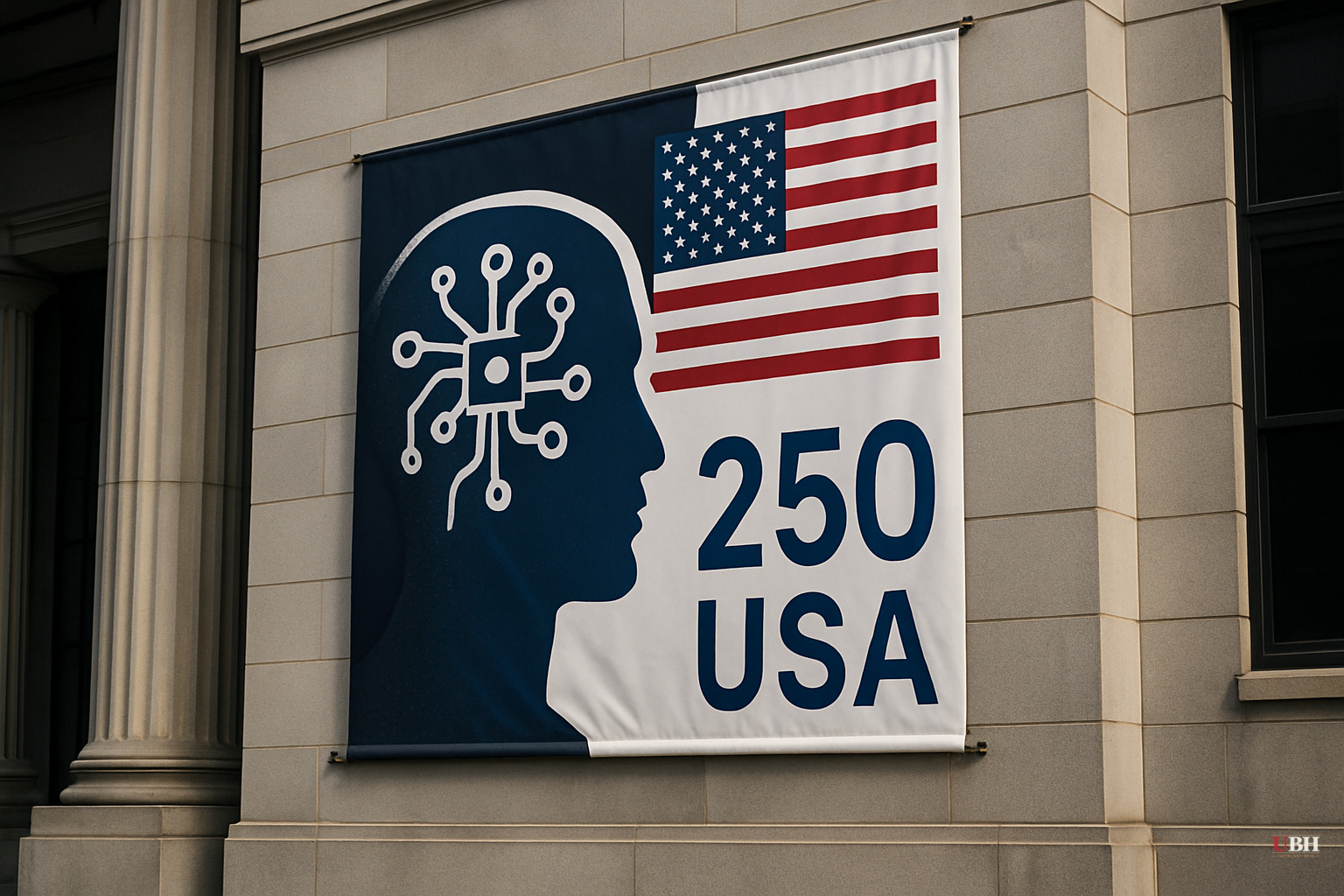
Since earlier coverage this July 4th documented the heat emergencies, power outages, and partisan splits defining the semiquincentennial, a separate thread of the day's story has been playing out in how Americans used, celebrated, and misused artificial intelligence to mark the occasion.
277 Americans, 94 Ideas, One Deliberation
Unanimous AI, a company that builds what it calls "hyper-communication" platforms, fielded a group of 277 randomly selected Americans on July 4 and ran them through a 20-minute structured debate inside its Thinkscape platform, according to VentureBeat. The question: what are the top three contributions America has made to the world over the last 250 years?
The setup divided participants into small groups of four or five, with AI agents synthesizing arguments across all groups simultaneously. The 277 participants generated 94 distinct ideas before converging on a ranked set of answers. VentureBeat's coverage did not publish the final top three. The piece describes the methodology in depth but was cut off before disclosing the results.
The strongest case for this kind of experiment is genuine. Traditional polling captures opinions, but it doesn't capture reasoning. Getting hundreds of people to argue the merits of ideas in real time, rather than just click a radio button, is a meaningfully different exercise. Whether the AI synthesis preserves or distorts the nuance of those arguments is a legitimate open question the sources don't resolve.
The Philadelphia Time Capsule
Also on July 4, America250, the federally chartered body coordinating the semiquincentennial, sealed a 900-pound stainless steel time capsule in Philadelphia, scheduled to remain sealed until 2276, according to leadership.ng. The capsule contains contributions from all 50 states, five U.S. territories, and several sporting and cultural organizations.
The contents are a genuine cross-section of where the country stands in 2026. California submitted a printed response from Anthropic's Claude AI chatbot, prompted to predict what the state would look like in 2276. An orange iPhone went in to represent the smartphone era. Wisconsin contributed a feather from Old Abe, the bald eagle mascot of Union soldiers in the Civil War. Ohio donated a fragment of fabric from the Wright brothers' 1903 aircraft. Maine put in a bone from the endangered North Atlantic right whale.
Rosie Rios, chairwoman of America250, said the collection was intended to preserve "a broad record of the United States at 250 years."
A separate capsule, intended to remain sealed until 2526, the 500th anniversary, was unveiled in Washington, though its contents have largely been kept confidential.
Including an AI chatbot response alongside Civil War eagle feathers and Wright Brothers fabric is either a sharp piece of cultural documentation or a gimmick, depending on your read.
The White House AI Imagery Controversy
The more pointed AI story of the day involves the White House's Freedom 250 website. Isabelle Roughol, a journalist and host of the women's history podcast "Broad History," posted a video criticizing the site's "Ladies of the Revolution" section, arguing that images presented as Abigail Adams and Dolley Madison were AI-generated and historically inaccurate. The video drew more than 1.1 million impressions on Instagram, according to Military.com.
"That is not Abigail Adams," Roughol said, comparing the site's image to known portraits of Adams.
The Freedom 250 page describes the initiative as a public-private partnership coordinating events through the end of 2026. Military.com asked the White House and Freedom 250 directly whether any images in the section were AI-generated, what review process was used for historical accuracy, and whether corrections would be made. Neither provided an on-record response before publication. The images did not appear to be labeled as AI-generated on the site.
Military.com could not independently confirm whether the images were AI-generated. The criticism is based on visual comparison, not a disclosed production record, and Roughol did not respond to Military.com's outreach before her account went private.
The strongest version of the concern deserves plain statement: the founding era's women are already the most historically compressed figures in the American story. Abigail Adams is best known for her March 1776 letter urging John Adams to "remember the ladies" — an appeal that went unheeded in the founding documents. Using AI-generated or AI-altered images to represent figures like Adams on a federal commemoration website, without labeling them as such, could deepen existing misunderstandings rather than correct them. Roughol called it a "misinformation machine."
The countervailing position is that commemorative websites routinely use artistic illustration, and without confirmation that the images are AI-generated rather than stylized illustration, the charge remains unproven. The White House's silence doesn't prove guilt, but it also doesn't help.
One Day, Three AI Stories
Taken together, the three threads illustrate where AI stands as a civic tool in 2026: genuinely useful for scaling deliberation, culturally interesting as a time-capsule artifact, and potentially corrosive when used to represent historical figures without transparency.
The unresolved question Military.com's reporting leaves open is whether the White House will label, correct, or remove the disputed images. As of July 4, 2026, it has not responded publicly.
Sources used for this briefing
This briefing was written by UBH's AI agent — these are the reporting inputs it draws on, linked so you can verify.


