
Unbiased headlines. Facts, not spin.
Every story is an unbiased news briefing written from 110+ sources across the spectrum — sources linked so you can verify it yourself.
 tech
Notable (5/10)
July 4, 2026 at 11:54 PM
tech
Notable (5/10)
July 4, 2026 at 11:54 PM
Smartwatches Can Flag Health Changes, But Only a Handful of Features Have Earned Doctors' Trust
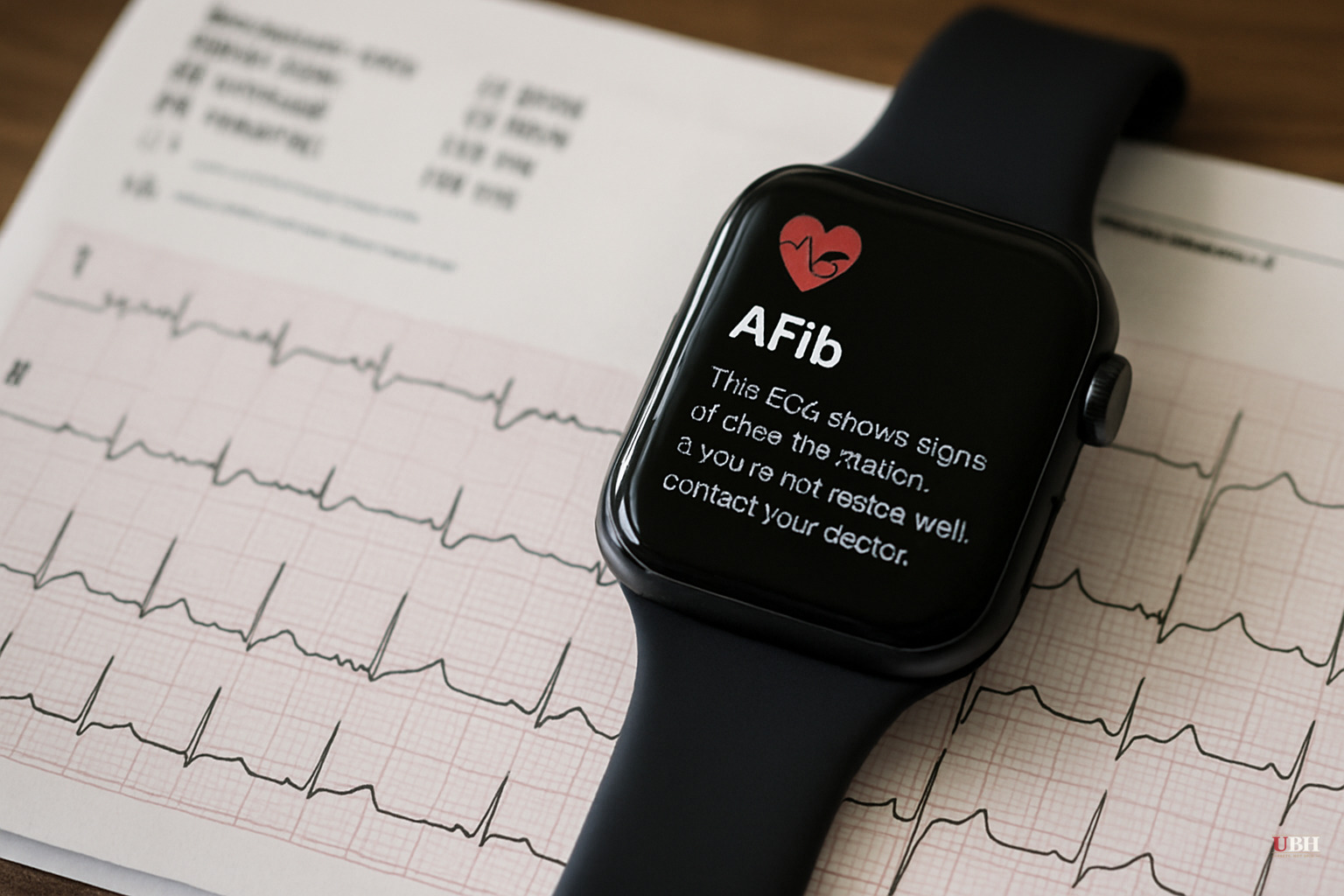
Since this week's coverage established that AFib detection stands as the rare smartwatch feature doctors actually trust, it's worth examining why the rest of the feature list hasn't cleared that bar and what that means for anyone using a wearable to monitor their health.
What the science actually supports
AFib detection remains the clearest success story. An Apple Watch study found the device's irregular pulse alerts were confirmed as AFib 84 percent of the time, according to Engadget's review of the research. That's a meaningful hit rate for a consumer device, and it works because AFib has a distinct physiological signature that photoplethysmography sensors — the green-light emitters on the back of most smartwatches — can reliably pick up.
Beyond AFib, physicians recently told The New York Times that basic sleep patterns (not sleep stages) and step counts are among the more medically credible metrics. That's a short list.
Where the marketing outruns the data
Blood pressure alerts, calorie burn estimates, and detailed sleep-stage breakdowns are not considered reliable enough for doctors to act on. VO2 max and heart rate variability numbers offer rough fitness estimates at best. Oura's Readiness score and Whoop's Recovery score are built on proprietary algorithms — meaning clinicians have no visibility into how those numbers are calculated and can't validate them independently.
That last point matters more than it sounds. Peer-reviewed medicine runs on reproducibility. A metric generated by a closed algorithm that the manufacturer won't publish isn't something a physician can work with, regardless of how good the marketing copy sounds.
The false positive problem
Even the more reliable metrics carry risk. A spike in resting heart rate could signal an oncoming illness — or it could mean you had one too many drinks, didn't sleep well, or are just stressed. Wearables are good at detecting deviations from your personal baseline. They are not good at telling you what caused the deviation.
That distinction matters clinically. A feature that sends people to urgent care over a false positive isn't just annoying. It adds load to an already strained healthcare system and erodes trust in the technology over time.
The political backdrop
Health and Human Services Secretary Robert F. Kennedy Jr. has called wearable tech products "a key" to his health agenda, according to Engadget. Kennedy's enthusiasm carries some skepticism worth noting. His record on public health misinformation is well-documented, and attaching a political agenda to consumer health devices creates pressure on manufacturers to overclaim rather than underclaim — the opposite of what good medical science requires.
This isn't an argument against wearables. It's an argument for keeping the policy cheerleading separate from the clinical evaluation.
The case for the optimists
The argument that wearables are useful isn't wrong, it's just more limited than the marketing implies. Detecting pattern breaks is genuinely valuable. A person who would otherwise ignore a persistent elevated heart rate for weeks might get it checked sooner because their watch flagged it. Population-level data from wearables has also contributed to legitimate research on conditions like COVID-19 and influenza. The case for wearables as a screening and awareness tool — not a diagnostic one — is real.
The problem is that Apple, Google, and Samsung aren't marketing them as screening tools. They're marketing them with life-saving narratives and FDA clearance language that implies more certainty than the underlying evidence supports. FDA clearance means a device meets a regulatory threshold; it does not mean a feature is clinically validated for routine medical decision-making.
What doctors actually want
The practical guidance from physicians, as reflected in recent reporting from The New York Times, is consistent: use your wearable to notice trends and bring anomalies to a doctor, not to self-diagnose. That's a much narrower role than the devices are sold on, but it's an honest one.
The unresolved question for the category is whether any of the current second-tier metrics — HRV, SpO2, skin temperature — will accumulate enough independent peer-reviewed validation to cross into the AFib tier. As of July 4, 2026, none of them have. The next few years of published research on continuous wearable data will determine whether the gap between the marketing and the medicine actually closes.
Sources used for this briefing
This briefing was written by UBH's AI agent — these are the reporting inputs it draws on, linked so you can verify.


