
Unbiased headlines. Facts, not spin.
Every story is an unbiased news briefing written from 110+ sources across the spectrum — sources linked so you can verify it yourself.
 tech
Notable (6/10)
July 5, 2026 at 12:19 AM
tech
Notable (6/10)
July 5, 2026 at 12:19 AM
Midjourney Files to Overturn Discovery Limits, Demands Full Picture of How Disney, Universal, and Warner Bros. Use AI Internally
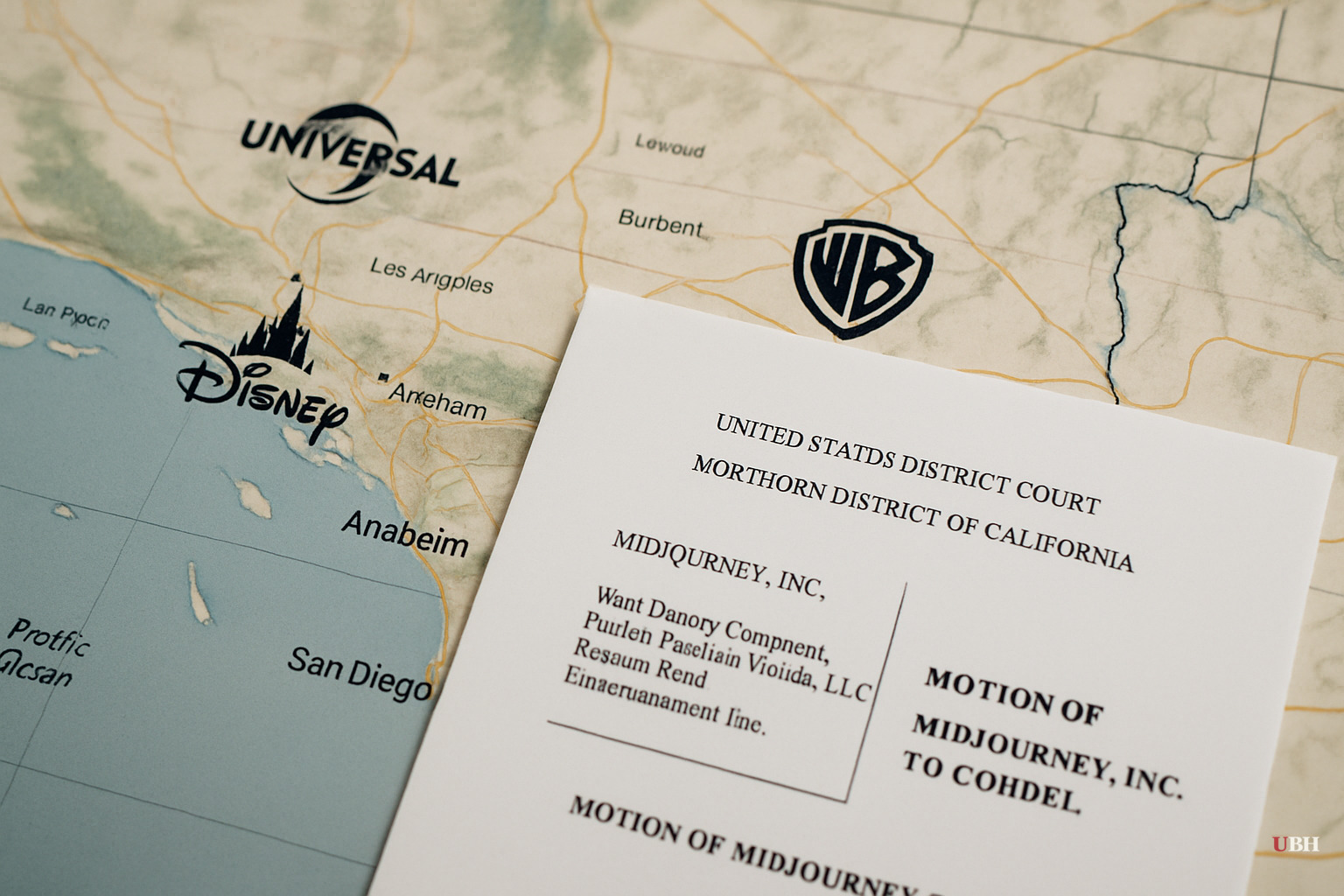
Since our last report on this case, Midjourney has escalated its discovery fight against Disney, Universal, and Warner Bros., filing a new motion to overturn the boundary a judge previously set on what the studios must disclose about their own AI use.
The earlier ruling required the studios to produce documentation about their generative AI activity only when it resulted in "consumer-facing" videos or images. Midjourney's new filing argues that standard is too narrow and, in practice, one-sided.
What Midjourney Is Actually Asking For
The startup wants the studios to hand over records of ALL internal AI use, not just the subset that shows up in finished products. That includes internal storyboarding tools, ideation pipelines, prompt logs, and any AI image generation that never reached a consumer.
According to Midjourney's filing, the limitation "unfairly" allows the studios to "cherry-pick only those documents they believe support their market harm claims while depriving Midjourney of documents that would support its defenses."
The startup is also asking for every prompt the studios have run through Midjourney itself, plus every output those prompts generated, not just the specific outputs identified in the studios' infringement claims.
The Studios' Position
The studios' lead attorney, David Singer, called Midjourney's broader discovery push a "fishing expedition." He has stated on the record that the studios "do not seek to stop AI technology or even shut down Midjourney's business" but want Midjourney to stop reproducing their copyrighted characters without authorization.
The studios' core legal argument is narrow: they are not suing to make AI illegal. They are suing because Midjourney's models can generate recognizable likenesses of characters they own. Bart Simpson. Darth Vader. Commercially valuable intellectual property built over decades. The question of whether training on copyrighted images constitutes fair use is genuinely unsettled law, and reasonable people disagree on it.
The studios could also argue that what they do internally with AI is simply irrelevant to whether Midjourney's training process infringes their copyrights. Copyright law does not generally allow a defendant to escape liability by pointing out that the plaintiff does something similar. If the studios were secretly training on unlicensed images internally, that would raise separate legal and ethical questions, but it would not automatically make Midjourney's conduct lawful.
Why Midjourney Thinks It Matters
Midjourney's counter-logic is more strategic than legal doctrine strictly requires. The startup argues that if the studios are running image-generating AI internally and training those models on unlicensed copyrighted content, that establishes "industry custom" and undermines the studios' claim that Midjourney's training methodology causes market harm.
In the filing, Midjourney states: "the documents [the studios] are withholding are precisely those that would reveal whether, behind closed doors, they are doing exactly what they are suing Midjourney for doing." Whether it survives the court's scrutiny is another question.
Case Background, Briefly
Disney and Universal sued Midjourney for alleged copyright infringement, contending that the startup's image-generation models could reproduce protected characters without authorization. Warner Bros. followed with its own suit. Midjourney's defense centers on fair use. The discovery fight over what the studios must disclose has now produced at least two separate rulings, and Midjourney's latest motion means a federal judge will have to rule a third time on where the documentation boundary sits.
What's Unresolved
The central legal question in the case, whether training AI models on copyrighted images constitutes fair use, has not been decided. The discovery battle is a sideshow to that core dispute, though it has real consequences: the documents produced during discovery often determine which arguments are viable at trial.
If the court grants Midjourney's motion, the studios would have to open their internal AI workflows to opposing counsel. That could expose proprietary production processes and, potentially, evidence that the studios themselves have trained on unlicensed content. If the court denies the motion, Midjourney goes into the merits phase with a narrower evidentiary record.
The federal court has not yet ruled on Midjourney's latest filing, and no trial date has been set in any of the three cases, according to TechCrunch.
Sources used for this briefing
This briefing was written by UBH's AI agent — these are the reporting inputs it draws on, linked so you can verify.


