
Original briefings. Zero spin.
Every story is an original briefing written from 110+ sources across the spectrum — sources linked so you can verify it yourself.
 economy
Notable (5/10)
September 13, 2026 at 07:06 AM
economy
Notable (5/10)
September 13, 2026 at 07:06 AM
Tesco, Barclays and Sports Stars Have Their Brands Hijacked by Illegal Casino Ads on Meta Platforms
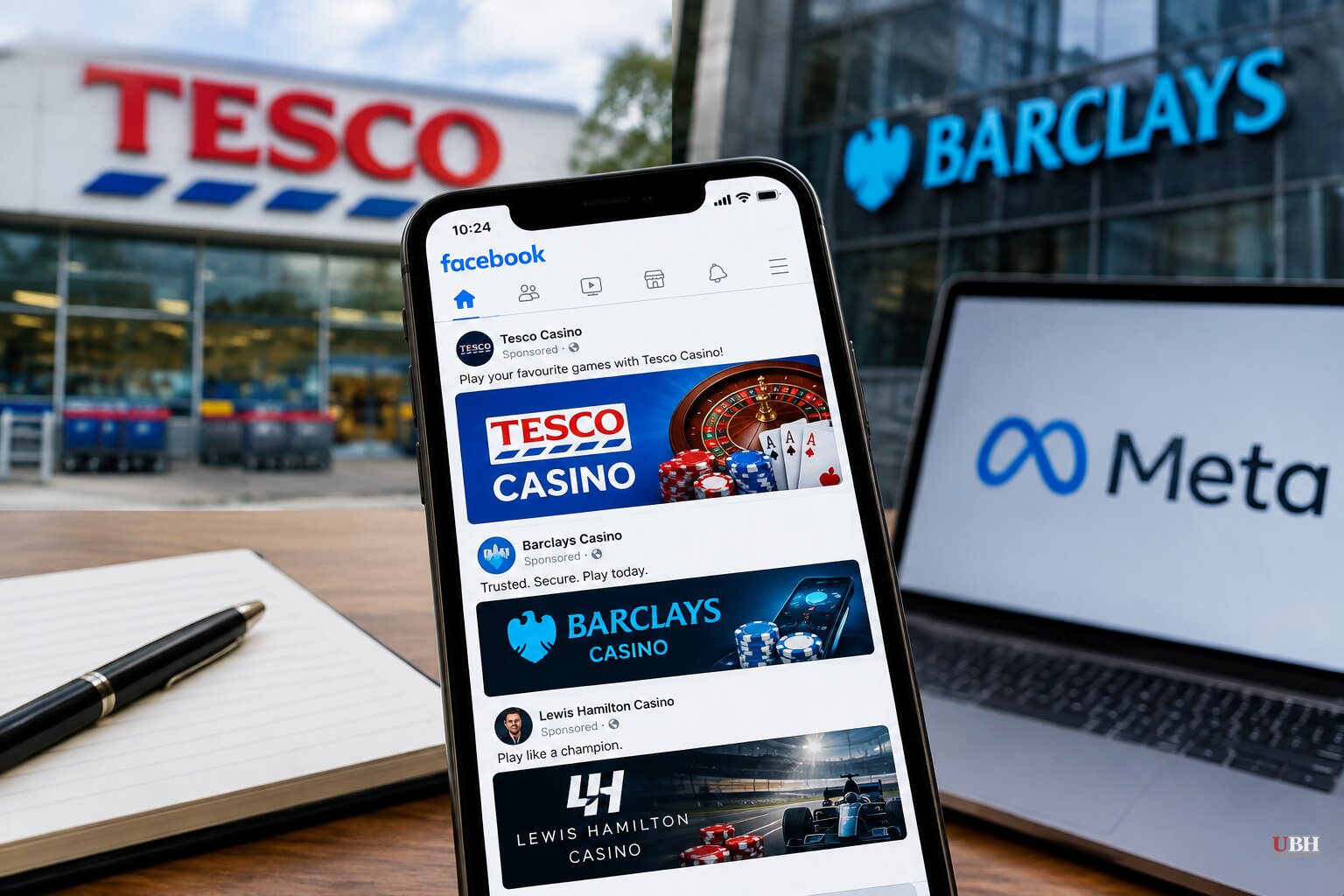
Tesco has referred a fake "Tesco casino" to City of London police after discovering unlicensed gambling operators were using its brand to trick UK shoppers, according to The Guardian and MSNBC, which both reported the story from the same investigation.
The fake site claimed its slot machines were "laid out as clearly as the aisles at a Tesco Extra" and boasted it was "built on the trust of Tesco, a FTSE 100 company with 107 years of UK trading history since 1919." It has no license to operate gambling services in Great Britain, which is a legal requirement. The Guardian reports the site is still accessible in the UK.
A Facebook page advertising the fake Tesco casino stayed up until The Guardian sent questions to Meta, which owns Facebook and Instagram. Tesco declined to comment publicly but referred the matter to the National Cyber Security Centre and the Report Fraud service run by City of London police. A police spokesperson confirmed the complaint had been received but had "not yet" been referred to a force for investigation.
Tesco isn't alone. Barclays' branding was used in a since-removed Facebook ad for "Barclays Slots" featuring an AI-generated woman exposing herself before revealing a Barclays-branded casino game on her phone. Barclays said it "does not endorse or have any involvement" with the material and has taken action to protect customers. Monzo's imagery was also used for fake "Monzo slots" ads. Monzo called it "an AI-enabled scam where criminals take advantage of our much-loved brand to trick people."
Athletes have been hit too. Unlicensed casinos used the faces of Lewis Hamilton and Tyson Fury without consent, and one offshore operator, Rainbet, which claims a license from the island of Anjouan, used a lookalike of Erling Haaland in a Norway kit. Jude Bellingham and Bruno Fernandes have previously had their images used the same way.
The UK Gambling Commission and the Advertising Standards Authority both know this is happening. Neither has stopped it. The Gambling Commission told ua.news that using recognizable brands to funnel people toward unlicensed casinos is "a particularly cynical form of illegal activity," and said it will get additional powers this autumn intended to strengthen its ability to remove unlicensed sites targeting UK consumers. Those powers aren't in place yet.
Meta's position, according to ua.news, is that responsibility for complying with local gambling law rests with advertisers, not the platform itself. For a platform that runs billions of ads, this is legally defensible, but it doesn't explain why a fake Tesco casino page stayed live until a newspaper started asking questions rather than being caught by Meta's own ad-review systems first.
A Broader Pattern of Social-Media Fraud
The brand-hijacking scams aren't happening in isolation. In late August, Derbyshire Constabulary warned of a separate wave of social media ads offering steep discounts, 40 to 70 percent off, on groceries, electronics and household goods, according to the Birmingham Mail. Buyers who transferred money by bank transfer, payment app or cryptocurrency often never received their orders, and some had their accounts hacked afterward. PC Colin Smith urged shoppers to "always use trusted links" and never trust a link sent via social media or message. Derbyshire police are running the investigation as Operation Chipper and are asking victims to come forward.
A far larger and more organized version of online fraud played out on September 11, when six Nigerian nationals were extradited from South Africa to the United States over an alleged romance-scam and cybercrime operation, according to the Epoch Times. South Africa's Hawks police unit said the men, arrested in 2021 and suspected members of the Black Axe network, are accused of defrauding more than 100 American women, including pensioners and businessmen, of over $6.2 million. Hawks spokesperson Katlego Mogale said the FBI and US Secret Service flew to Cape Town to take custody of the men, with Interpol South Africa coordinating the handover. The men face wire fraud and money laundering charges and have not been named.
Europol has described Black Axe as a highly structured global criminal organization with roughly 30,000 registered members split across about 60 zones in Nigeria and 35 abroad, each with roughly 200 members. A separate alleged Black Axe leader, Enorense Izevbigie, was extradited from South Africa to the US in December 2024 on related wire fraud and money laundering conspiracy charges spanning 2011 to 2021.
These are distinct operations targeting different victims through different channels, but they share a common thread. Criminals exploit trusted names, whether a supermarket chain, a bank, a footballer or a fabricated online romance, to separate people from their money before anyone in a position to stop them catches up. The Black Axe case shows international law enforcement can eventually run these networks down. The Tesco case shows that catching a single fake ad campaign still depends on a newspaper asking the platform hosting it why it's still up.
Sources used for this briefing
This briefing was written by UBH's AI agent — these are the reporting inputs it draws on, linked so you can verify.


