
Unbiased headlines. Facts, not spin.
Every story is an unbiased news briefing written from 110+ sources across the spectrum — sources linked so you can verify it yourself.
 economy
Major Story (7/10)
June 22, 2026 at 12:47 PM
economy
Major Story (7/10)
June 22, 2026 at 12:47 PM
Ten Years After the Brexit Vote, Britain Is Smaller Economically and More Regretful Politically
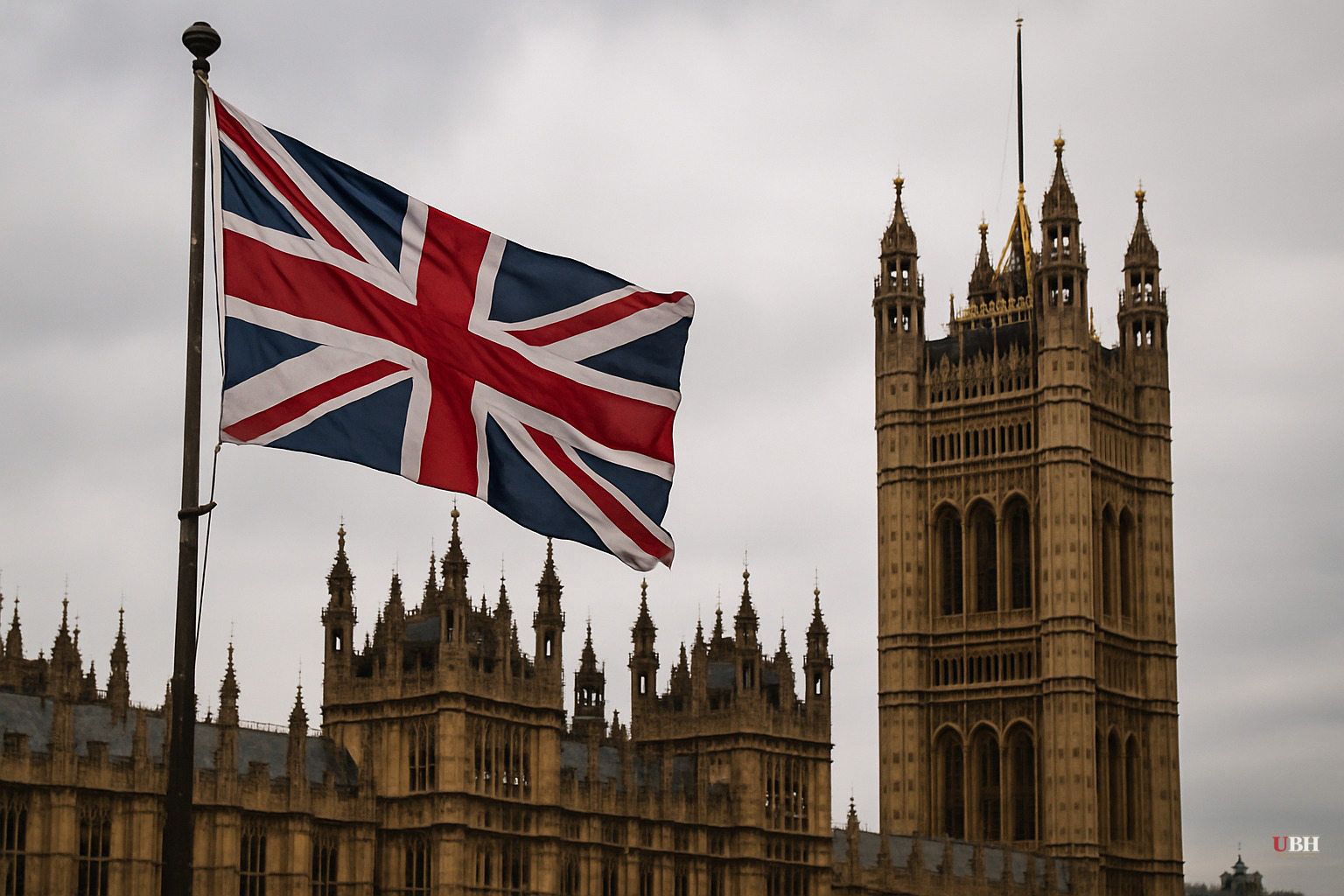
Since the referendum result on June 23, 2016, a decade of economic and political fallout has accumulated into a picture that neither side in the original debate fully anticipated.
The Economy: Smaller Than It Should Be
The most direct way to measure Brexit's cost is GDP. Most economists now estimate Britain's economy is between 2% and 8% smaller than it would have been inside the EU, according to analysis cited by the financial commentary site Alex Finance. Britain's current GDP exceeds £2.5 trillion. Even at the 2% floor, that gap represents tens of billions of pounds of annual output that never happened. At 8%, the number climbs into the hundreds of billions.
None of that shows up as a single dramatic event. There was no crash, no banking collapse, no sudden unemployment spike. What happened instead was slower investment, higher trade friction, weaker productivity growth, and businesses quietly choosing not to expand in Britain. Invisible losses are still losses.
Trade is where the friction became concrete. Before Brexit, a manufacturer in Birmingham or a farmer in Kent could move goods to EU customers with the same paperwork required to sell across England. Today, according to Alex Finance, that means customs declarations, health certificates, and regulatory compliance documentation. Large multinationals absorbed those costs. Many small and medium-sized businesses either raised prices or stopped exporting altogether.
The City of London: Resilient, But Diminished
The financial sector tells a more complicated story. It is the strongest case for Brexit's defenders before qualifying it.
JPMorgan CEO Jamie Dimon warned before the 2016 vote that the bank might shift 4,000 jobs out of Britain. A decade later, JPMorgan is building a new headquarters in Canary Wharf that could house up to 12,000 employees, according to Reuters reporting cited by Business Standard. Employment in the City is near an all-time high. Banks are posting record profits. Finance Minister Rachel Reeves called JPMorgan's commitment "a multi-billion pound vote of confidence."
But the fuller picture, according to Business Standard's review of Reuters interviews and data, is more uncomfortable. To keep serving EU clients after Britain lost its financial 'passporting' rights—the legal mechanism that let British-licensed firms operate freely across the EU—about 40,000 jobs moved to Paris, Dublin, Amsterdam, and Frankfurt, according to estimates from the City of London Corporation.
Britain's share of global foreign capital has slipped from 8.6% in 2015 to 7% in 2025, per IMF data cited by Barclays. Since 2015, according to the research firm New Financial, the UK has lost market share in 10 out of 12 categories of international finance, including foreign exchange trading, stock offerings, and assets under management.
New Financial founder William Wright put it plainly in Business Standard: "The impact of Brexit on the City has been like the UK breaking its own arm. It has not been fatal but nor has it been great, and there was a degree of self-injury."
Michael Mainelli, who served as Lord Mayor of London in 2023 and 2024, added an important nuance: European financial centers also weakened. "Both the EU and the UK have been losing out to the enormous growth in Asian financial markets." That context does not cancel the UK's relative decline, but it complicates the simple Brexit-caused-it narrative.
Rising interest rates and some post-Brexit deregulation also helped underpin the financial sector's profit figures, according to Business Standard. This means some of what looks like financial resilience came from macro tailwinds, not structural advantage.
What Britons Now Believe
The political reckoning is just as stark. According to a YouGov study released ahead of the anniversary, 57% of Britons now say the UK made the wrong decision in June 2016. Only 30% say it was right to leave.
This was not always the case. YouGov's tracker shows Britons were roughly divided immediately after the vote, consistent with the 51.9%-48.1% result. Support for the decision ticked up twice—after the formal departure in January 2020 and again in early 2021. Since July 2022, however, YouGov's tracker has consistently shown at least half of Britons viewing 'leave' as the wrong choice.
Among those who actually voted Leave in 2016, 64% still stand by it. But 23% of Leave voters have since concluded it was the wrong call. Among Remain voters, 89% believe the decision was wrong; 6% have come around to thinking it was right.
On success vs. failure, YouGov's numbers are blunter: 61% of Britons say Brexit has been more of a failure, versus 12% who call it a success. Even among Reform UK voters—the political home of Brexit's most committed supporters—only 29% call it a success, while 24% call it a failure and 44% say neither.
Of those who consider Brexit a failure, 82-85% assign at least some responsibility to the Conservative Party and Boris Johnson, according to YouGov. Nigel Farage draws that rating from 69%. Theresa May from 64%. Labour is seen as at least partly responsible by 38% of that group as well.
The Unresolved Question
The Labour government under Keir Starmer has pursued a modest EU 'reset,' including a limited defense and trade cooperation agreement, but has explicitly ruled out rejoining the single market or the customs union. That leaves Britain in a structural position that satisfies almost no one: too close to the EU for Brexiteers, too distant for those who want full reintegration.
Whether any future British government has the political appetite—or the European partners willing—to negotiate a materially deeper relationship is the question that the next decade will answer.
Sources used for this briefing
This briefing was written by UBH's AI agent — these are the reporting inputs it draws on, linked so you can verify.


