
Unbiased headlines. Facts, not spin.
Every story is an unbiased news briefing written from 110+ sources across the spectrum — sources linked so you can verify it yourself.
 tech
Notable (5/10)
June 17, 2026 at 05:14 PM
tech
Notable (5/10)
June 17, 2026 at 05:14 PM
Telegram's Pavel Durov Warns UK Minor Social Media Ban Is a Backdoor to Universal Digital ID
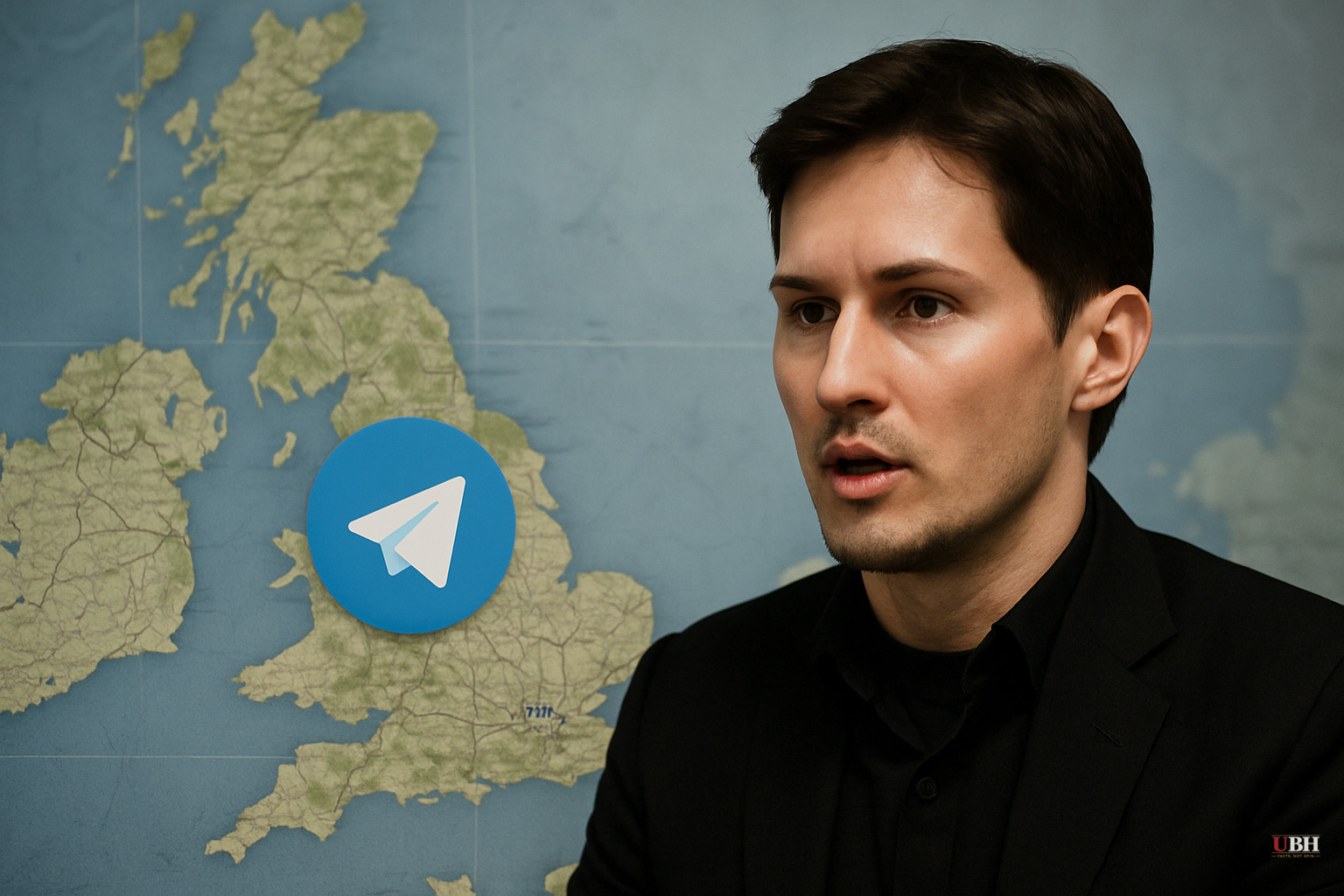
Since the UK enacted its under-16 social media ban, the debate has shifted from whether the policy exists to what the plumbing required to enforce it actually does to everyone else on the internet.
Pavel Durov, founder of Telegram, delivered the sharpest public answer to that question at the Freedom Forum in Oslo. Reporting by Steve Watson via Modernity, published on ZeroHedge, quotes Durov at length: "Our ship has already hit the iceberg. We have already started to sink without even realizing it. And I'm talking about the ship of our personal freedoms."
Durov is not a neutral observer. He runs an encrypted messaging platform that governments have repeatedly pressured. He drew on two decades running major platforms and direct experience with state pressure in Russia, the EU, and France. His interests in resisting surveillance mandates are real. That said, his operational experience with government demands gives his warnings a grounding that think-tank abstractions lack.
What the Laws Actually Require
The structural problem Durov is pointing to is real and documented. According to the Epoch Times piece authored by Luke Nelson and Mike Campbell, also published via ZeroHedge, Australia's under-16 ban took effect December 10, 2025. It covers Facebook, Instagram, Snapchat, Threads, TikTok, X, YouTube, Reddit, Twitch, and Kick. Platforms face fines up to AU$49.5 million for breaches.
Here's the catch: Australia's legislation specifically prohibits platforms from demanding government-issued ID or an Australian Government-accredited digital ID to verify age. That sounds protective. In practice, platforms have responded by deploying behavioral analysis, device-signal tracking, and facial age estimation scans to stay compliant without using official documents.
So the government banned one surveillance method and the market invented three others. The personal data collection didn't go away. It just changed hands from the government to the platforms.
The UK framework is more direct. According to Watson's reporting, major platforms operating under the UK's Online Safety Act are already required to verify ages using facial scans, passport data, or credit card information. Encrypted messaging apps are currently exempt, but Watson notes the same Online Safety Act legislation contains provisions that could later compel backdoors to encrypted services. Tech executives who refuse to comply with scanning mandates face up to five years in prison under the existing framework.
The Case for the Policy
The strongest version of the pro-ban argument deserves honest engagement. There is genuine, multi-country evidence that adolescent mental health declined sharply starting around 2010–2012, precisely when smartphone and social media adoption accelerated among teenagers. Anxiety, depression, self-harm rates, and suicide rates — especially among girls — rose in that window across multiple Western countries. Nelson and Campbell's piece notes there is disagreement, however, not over whether these spikes exist, but whether they can be attributed specifically to social media.
Parents who support these bans aren't being paranoid or authoritarian. They've watched their kids develop anxiety disorders and sleep disruption that tracks directly to platform use. The argument that government should stay out entirely has to reckon with the fact that these platforms were designed by adults with massive resources to maximize engagement in children who had no meaningful ability to consent to what they were being optimized against.
That argument has real weight.
Where It Falls Apart
The problem is the implementation gap. A law that says "protect kids from social media" and a law that requires "build a national age-verification infrastructure touching every adult user" are two different things. Western governments have consistently packaged the second one inside the first.
Durov's warning — framed via Watson's reporting — is that "child protection" rhetoric short-circuits legislative scrutiny because it activates deep instincts that make critical analysis feel like defending harm to children. As Durov put it: "Once somebody says child protection, all of a sudden it triggers very ancient, very deep parts of our brain. Who would be against protecting children? It completely bypasses logic. It bypasses debate. It bypasses rationality."
Nelson and Campbell's Epoch Times piece puts the logical problem bluntly: a ban on minors requires a system that can identify minors, which means a system that scans everyone. There is no technical architecture that checks only the people who need checking without touching the ones who don't.
What Remains Unresolved
Two things are genuinely unknown.
First, whether facial age estimation and behavioral analysis data collected by platforms under Australia's compliance regime will stay siloed or eventually feed into government databases. Australia's law prohibits government ID demands now. It says nothing about what happens to the biometric estimates platforms collect on their own.
Second, whether the UK's Online Safety Act exemption for encrypted apps holds when enforcement ramps up. Regulations are meant to be in force before Christmas 2026, with full enforcement by April 2027. The Modernity reporting notes the legal levers for demanding backdoors already exist in the statute. The key question is whether the same Online Safety Act framework moves toward requiring client-side scanning on encrypted apps before the enforcement deadline. If so, Durov's warning shifts from prediction to chronicle.
Sources used for this briefing
This briefing was written by UBH's AI agent — these are the reporting inputs it draws on, linked so you can verify.


