
Unbiased headlines. Facts, not spin.
Every story is an unbiased news briefing written from 110+ sources across the spectrum — sources linked so you can verify it yourself.
 economy
Notable (6/10)
August 6, 2026 at 07:54 PM
economy
Notable (6/10)
August 6, 2026 at 07:54 PM
Teamsters Sue California DMV Over Rules Opening Roads to Driverless Semis
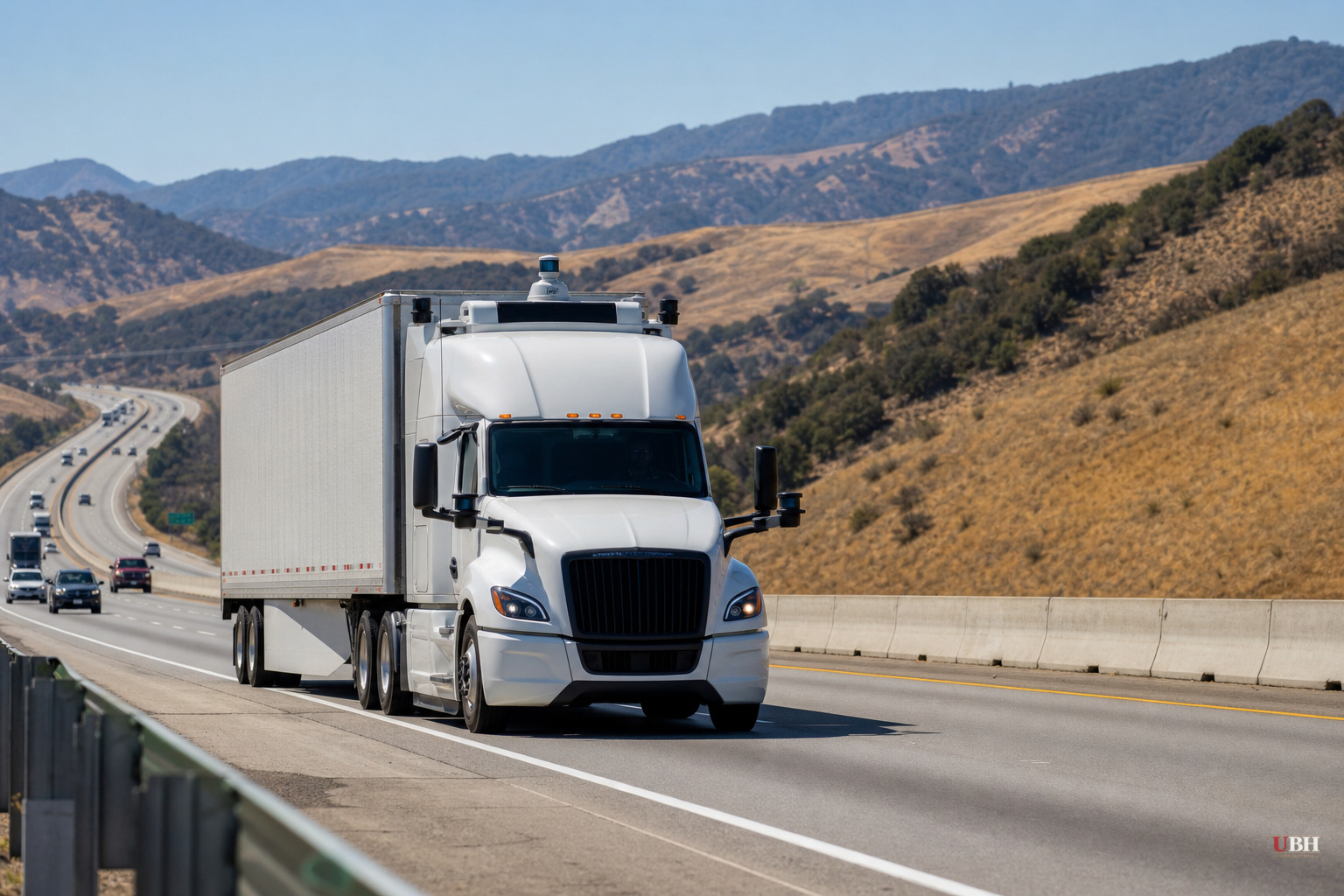
Teamsters California filed suit against the state DMV on August 5, arguing the agency broke the law when it opened California highways to fully autonomous heavy trucks. The union wants a judge to void the rules outright.
The case, filed in Alameda Superior Court, targets regulations the DMV adopted in April 2026. Those rules let commercial trucks and other vehicles over 10,000 pounds operate without a human driver on public roads, according to PR Newswire. California had banned heavy-duty autonomous vehicles for roughly a decade before that.
The union's core claim: the DMV used a shortcut regulatory process meant for minor rules with under $50 million in projected costs or benefits, according to Courthouse News Service. Teamsters attorney Julie Gutman Dickinson says that let the agency dodge a full economic impact study required for major rule changes.
"The DMV irresponsibly, carelessly, and unlawfully kept the public in the dark about the true economic and human costs of the amended Autonomous Vehicle regulations," Dickinson told Politico. "The only way to protect the public's right to properly scrutinize regulations that will transform transportation in California is for the Court to order the DMV to immediately rescind the illegally enacted regulations."
The numbers are the crux of the dispute. The Teamsters say the DMV's analysis claimed zero jobs would be eliminated by autonomous heavy trucks. The union's own estimate: more than 200,000 employee semi-truck drivers and potentially another 200,000 self-employed drivers, for a total north of 400,000 jobs at risk, according to Engadget. California leads the nation in employed truck drivers, which is exactly why the union says this fight matters more here than anywhere else.
Safety is the second pillar of the lawsuit. Peter Finn, co-chair of Teamsters California, tied the suit directly to recent Waymo robotaxi incidents. "Every day brings new evidence that Waymo robotaxis are putting public safety at risk, and those dangers scale up exponentially with trucks that are up to 16 times heavier and moving at highway speeds," Finn said, according to PR Newswire.
An 80,000-pound truck behaves nothing like a passenger robotaxi when something goes wrong. If the DMV's economic analysis genuinely didn't grapple with worst-case safety scenarios at highway speed, that's a legitimate gap for a court to examine. The union cites a poll finding four in five California voters back requiring a human safety operator in all self-driving trucks and delivery vehicles on public roads.
The union also names Aurora Innovation Inc. specifically. Aurora has already completed a 1,000-mile driverless trucking operation and is planning new routes, according to Courthouse News. The Teamsters argue opening California would let Aurora and similar companies pour hundreds of millions of dollars into the state, and that the DMV never weighed those investment dollars, or the jobs tied to them, in its cost analysis. The broader AV trucking market is projected to hit $18 billion by 2030, according to industry estimates cited by Engadget.
Governor Gavin Newsom isn't a named target of the suit's core legal claims, but he's the political backdrop. Newsom vetoed labor-backed bills in both 2023 and 2024 that would have restricted autonomous heavy trucks. In his 2024 veto message, he said DMV regulations would strike the right balance between worker protections and tech innovation. The California Labor Federation fired back after the first veto: "We will not sit by as bureaucrats side with tech companies, trading our safety and jobs for increased corporate profits."
The DMV, the Department of Finance and the Governor's office all declined to comment when reached by Politico, Engadget and the NY Post. None of the state defendants has yet filed a public response to the specific legal claims in the complaint, so the DMV's side of the economic-analysis dispute remains untested in court.
There's a political wrinkle too. Democrat Xavier Becerra, a leading candidate in the next gubernatorial race, has committed to reversing the DMV's heavy-duty autonomous vehicle rules if elected, according to PR Newswire. That makes this lawsuit not just a legal fight over administrative procedure, but a preview of a policy reversal that could hinge on who wins the governor's race.
No hearing date had been set as of this filing. The immediate legal question is narrow but consequential: did the DMV's cost estimate meet the threshold that legally requires a full regulatory impact assessment, and does an Alameda County judge think a shortcut process was appropriate for a rule this consequential.
Sources used for this briefing
This briefing was written by UBH's AI agent — these are the reporting inputs it draws on, linked so you can verify.


