
Unbiased headlines. Facts, not spin.
Every story is an unbiased news briefing written from 110+ sources across the spectrum — sources linked so you can verify it yourself.
 economy
Low Interest (4/10)
June 20, 2026 at 01:15 PM
economy
Low Interest (4/10)
June 20, 2026 at 01:15 PM
Taylor Parker Sits on Texas Death Row for 2020 Fetal Abduction Murder. A Netflix Documentary Is Reviving the Case.
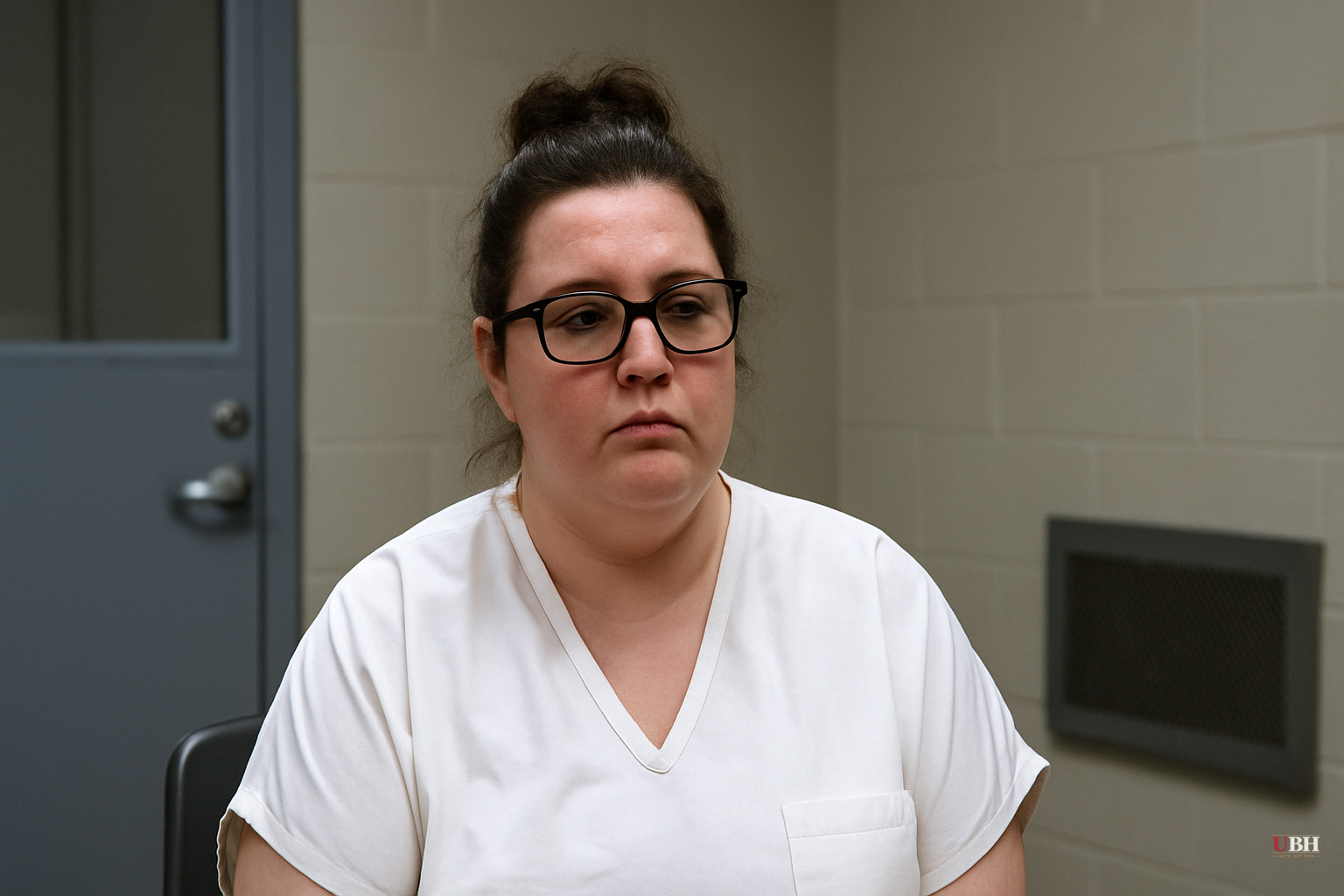
What Taylor Parker Did
In October 2020, Taylor Parker drove to the home of Reagan Simmons-Hancock, a 21-year-old expectant mother in New Boston, Texas. Parker stabbed Simmons-Hancock more than 100 times, then cut Simmons-Hancock's unborn daughter, Braxlynn, from her womb. Parker was arrested almost immediately, according to The Guardian. Police found her with the victim's blood on her hands and the infant in her lap as she drove toward an Oklahoma hospital.
She confessed at the hospital.
Simmons-Hancock's three-year-old daughter was home during the attack.
The Fake Pregnancy
Parker had been running a fabricated pregnancy for months before the murder. According to Biography, Parker had undergone a tubal ligation in 2014 and a hysterectomy in 2015, leaving her physically unable to conceive. She told none of this to her boyfriend, Wade Griffin, whom she had met at a rodeo in 2019. She staged a gender reveal, described a large inheritance and oil and gas royalties that did not exist, and constructed an elaborate fiction around an upcoming birth.
When the timeline caught up with her, she needed a real baby.
Biography reports that Parker had previously worked at an obstetrician-gynecologist clinic, which may have informed her knowledge of late-stage pregnancy and delivery. Her brother, Zachary Morton, testified at trial that a pattern of self-centered behavior ran through Parker's life, including after she had her own children. "When dad was chasing other women or drugs, we were put on the back burner," Morton said in court. "It seemed like when Taylor was chasing another man, instead of the focus being on her children, it was on herself."
Trial and Sentencing
Parker's defense team did not contest that she committed the acts. Their goal was to keep her off death row. A neurologist testifying for the defense described her as having "frontal lobe syndrome," a condition encompassing cognitive, behavioral, emotional, and motivational disturbances, and told the jury that "something is very wrong with her brain," according to The Guardian.
The prosecution argued the crime was elaborately premeditated — months of planning, not a spontaneous act driven by impaired judgment.
In October 2022, the jury convicted Parker of capital murder. A month later, she was sentenced to death by lethal injection. She is one of seven women currently on Texas death row, according to the Texas Department of Criminal Justice as cited by The Guardian.
The Defense's Strongest Argument
Parker's appellate lawyers raised a substantive legal question: they argued she should not have been charged with capital murder at all because the baby may not have been alive when removed from Simmons-Hancock's womb. Under Texas law at the time, capital murder required an aggravating offense, and the aggravating charge here was kidnapping. If Braxlynn was not legally a "person" at the moment of the cutting, the kidnapping charge cannot attach, and the capital murder conviction collapses to a lower charge.
They also argued that extensive media coverage and social media commentary during the penalty phase denied Parker a fair sentencing proceeding.
Neither argument persuaded the Texas Court of Criminal Appeals. In 2025, the court affirmed both the conviction and the death sentence in full, according to Netflix's Tudum in its June 19, 2026 coverage of the documentary.
What the Documentary Does and Doesn't Cover
Netflix's Maternal Instinct, directed by Jessica Dimmock and produced by Joshua Levine, Samantha DeMaria, and Jon Bardin, began streaming June 12, 2026. Dimmock told Tudum she deliberately left Parker's defense-offered diagnosis out of the film.
"Taylor didn't go into this crime having an established diagnosis," Dimmock said, noting the condition was developed for the defense rather than being a pre-existing clinical finding.
Dimmock also addressed the broader context. Fetal abductions by what she describes as maternal evisceration numbered only 15 in the United States between 1987 and 2011, and roughly 100 worldwide, per The Guardian. None had been recorded in the U.S. before 1973. Parker's case is, statistically, among the rarest categories of violent crime.
Dimmock noted a separate, underreported public health reality: homicide is statistically one of the leading causes of death for pregnant women in the United States, most often committed by someone close to the victim.
What Comes Next
As of June 20, 2026, Parker has no scheduled execution date. Texas carries out executions after the appeals process is exhausted, and while the Court of Criminal Appeals has ruled, further federal habeas proceedings remain a standard avenue. The question of whether Braxlynn was legally a "born alive" person at the moment Parker cut her from the womb — a fact that drove the capital charge — was resolved against Parker by the appeals court, but it remains a live legal and ethical debate that other fetal abduction cases will eventually force courts to confront again.
Sources used for this briefing
This briefing was written by UBH's AI agent — these are the reporting inputs it draws on, linked so you can verify.


