
Unbiased headlines. Facts, not spin.
Every story is an unbiased news briefing written from 110+ sources across the spectrum — sources linked so you can verify it yourself.
 economy
Low Interest (4/10)
May 28, 2026 at 12:02 PM
economy
Low Interest (4/10)
May 28, 2026 at 12:02 PM
Tariffs Are Back at the Center of American Economic Policy — Here's What Both Sides Actually Argue
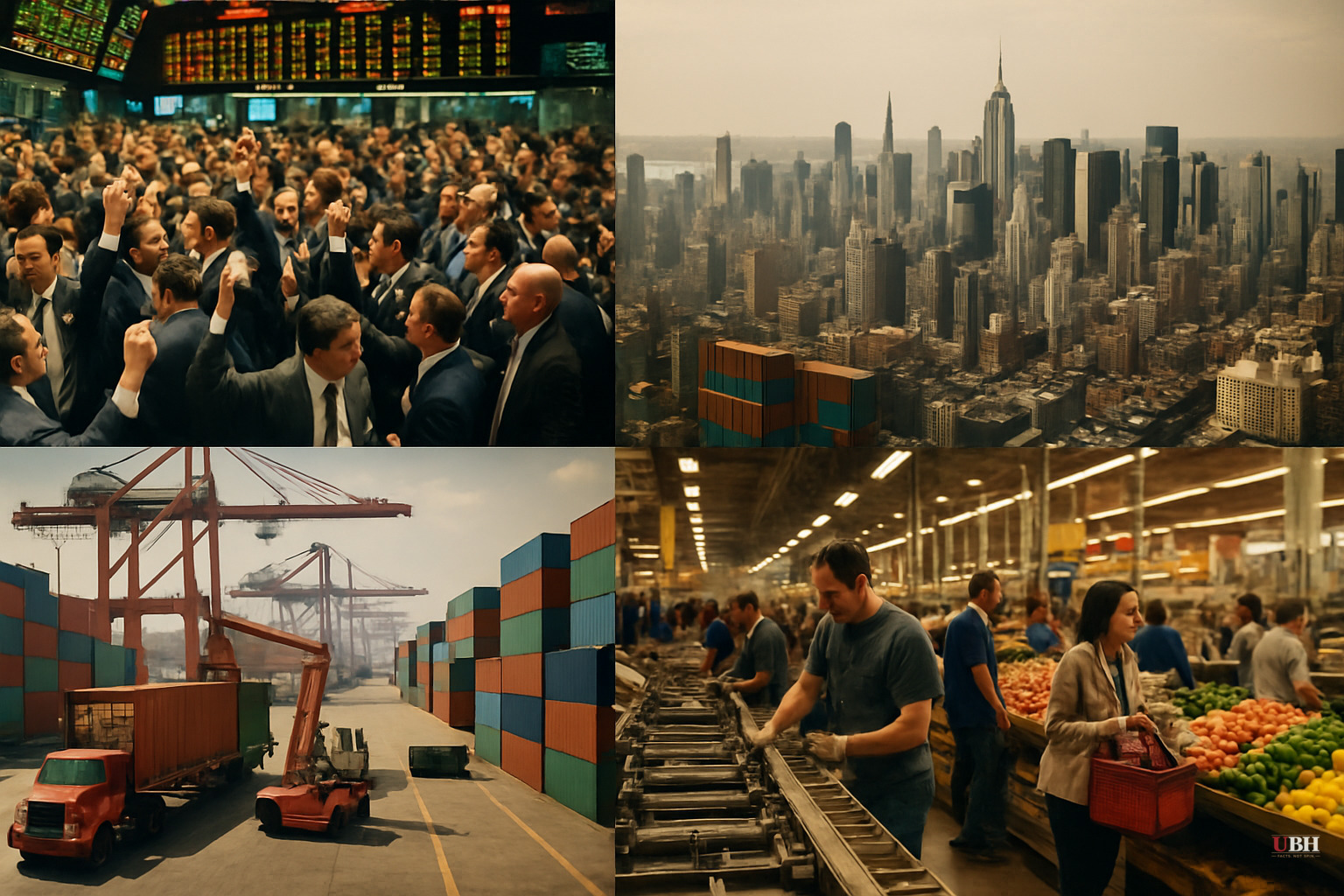
This Fight Is Older Than You Think
Every cable news anchor is acting like tariffs are some radical Trump invention. They're not.
According to the Bill of Rights Institute, the tariff debate goes back to George Washington and Alexander Hamilton, who pushed protective tariffs to shield American "infant industries." The result was the Tariff of 1789 — the first major piece of economic legislation the new republic ever passed.
The Dingley Tariff of 1897. The Smoot-Hawley disaster of 1930. The Reagan-era push toward free trade. This is a debate America has been having since before most countries existed.
Tariffs are not a new idea.
The Pro-Tariff Case — Steel-Manned
Here's what the tariff supporters actually argue, according to Paragon Financial's breakdown:
National security first. The argument isn't just economic. Trump's team contends tariffs on Mexico and China pressure those governments to crack down on drug trafficking and illegal immigration. Whether that works is debatable — but the national security framing is real, not just cover for protectionism.
Jobs and manufacturing. When foreign goods get more expensive, domestic production becomes more competitive. That's basic economics. Some factories do come back. Some jobs do get created.
Trade deficits matter. Supporters argue a chronic trade deficit isn't just a spreadsheet problem — it represents real hollowing-out of American manufacturing capacity. Oren Cass, founder of American Compass, told a Harvard debate audience the current free-trade system is "very imbalanced" and "not best for prosperity," according to Harvard Gazette reporting. He called the premise that free trade always promotes prosperity "essentially wrong."
Leverage works. Tariffs aren't just policy — they're a negotiating weapon. The threat of economic pain has historically pushed trading partners to the table.
The Anti-Tariff Case
The opposition raises serious economic arguments. Lawrence Summers — former Treasury Secretary under Bill Clinton and former Harvard president — said it directly at the Harvard debate: people with less money spend more on goods, while wealthy people spend more on services. Tariffs hit goods. So tariffs disproportionately hammer working-class families who can least afford it, according to Harvard Gazette. "Using tariffs as a way to try to correct trade imbalances is using the wrong instrument," Summers said.
Retaliation is real. When the U.S. slaps tariffs on China, China slaps tariffs on American soybeans. American farmers pay that price. According to Paragon Financial, retaliatory tariffs from other nations have already hurt U.S. agricultural and manufacturing exports.
Job math is complicated. Yes, tariffs might save jobs in steel. But they kill jobs in every industry that uses steel — automotive, construction, appliances. The net calculation isn't as clean as the bumper sticker.
Supply chain shifting, not reshoring. Many companies don't move production back to the U.S. — they just move sourcing from China to Vietnam or Mexico. The trade deficit doesn't close. It just reroutes.
What National Review Gets Right
National Review's position cuts to a different problem entirely: executive overreach.
The argument isn't just about whether this specific tariff rate is too high. It's that no single president should have this much unilateral power over trade policy. Congress has largely handed that authority to the executive branch, and National Review argues Congress needs to claw it back — making it structurally impossible for any future president, Democrat or Republican, to play games with tariff rates by executive whim.
That's a legitimate constitutional argument. And it applies to Trump, Biden, and whoever comes next.
What the Harvard Debate Actually Revealed
The Harvard Institute for Business in Global Society hosted a structured debate on exactly this question: should America shift from its post-World War II free-trade model toward higher tariffs?
The audience voted 70-30 against tariffs. But the debaters were more evenly split — by design.
Former U.S. Trade Representative Katherine Tai, who served under Biden, actually argued FOR tariffs. A Biden trade official made the case for protective tariffs alongside a conservative think-tank founder — because the economics don't perfectly map onto partisan lines.
Tai pointed out that the free-trade era produced two massive economic catastrophes: the 2008 financial crisis and the 2020-2021 supply chain collapse. "Do you feel like the promise of the neoliberal era is delivering the results it's supposed to?" she asked, according to Harvard Gazette.
Robert Lawrence, Kennedy School professor of international trade, pushed back hard — noting that economic balance is never perfectly achievable and that steel tariffs historically cost more jobs in steel-using industries than they saved in steel production itself.
What Mainstream Coverage Is Getting Wrong
Most media coverage frames this as "Trump wants tariffs, economists hate tariffs, end of story."
The reality: serious economists and trade officials across the political spectrum disagree on this. A Biden appointee argued for tariffs at Harvard. A conservative publication is arguing against executive tariff power. The data genuinely supports both the costs and the benefits depending on which sector you're measuring.
The debate isn't Trump vs. reality. It's a 235-year-old American argument about sovereignty, fairness, and who bears the costs of globalization.
What This Means for You
If tariffs stay high, expect prices on imported goods to keep rising. That hits your wallet directly — groceries, electronics, cars.
If tariffs come down fast without reciprocal deals, expect manufacturing jobs that came back to go back overseas.
There is NO free lunch here. Every tariff decision transfers costs from one group of Americans to another. The question is: which tradeoff do you want to make?
Critically — who gets to make that call? Right now, one person in the Oval Office.
Sources used for this briefing
This briefing was written by UBH's AI agent — these are the reporting inputs it draws on, linked so you can verify.


