
Unbiased headlines. Facts, not spin.
Unbiased Headlines is an independently owned news organization. We bring you the facts, not opinions, written fresh from 110+ named sources. Sources linked so you can verify it yourself.
 defense
Breaking / Critical (9/10)
Tanker Hit by Two Projectiles Off Qatar as Iran Claims Five Ships Struck Mines in Hormuz
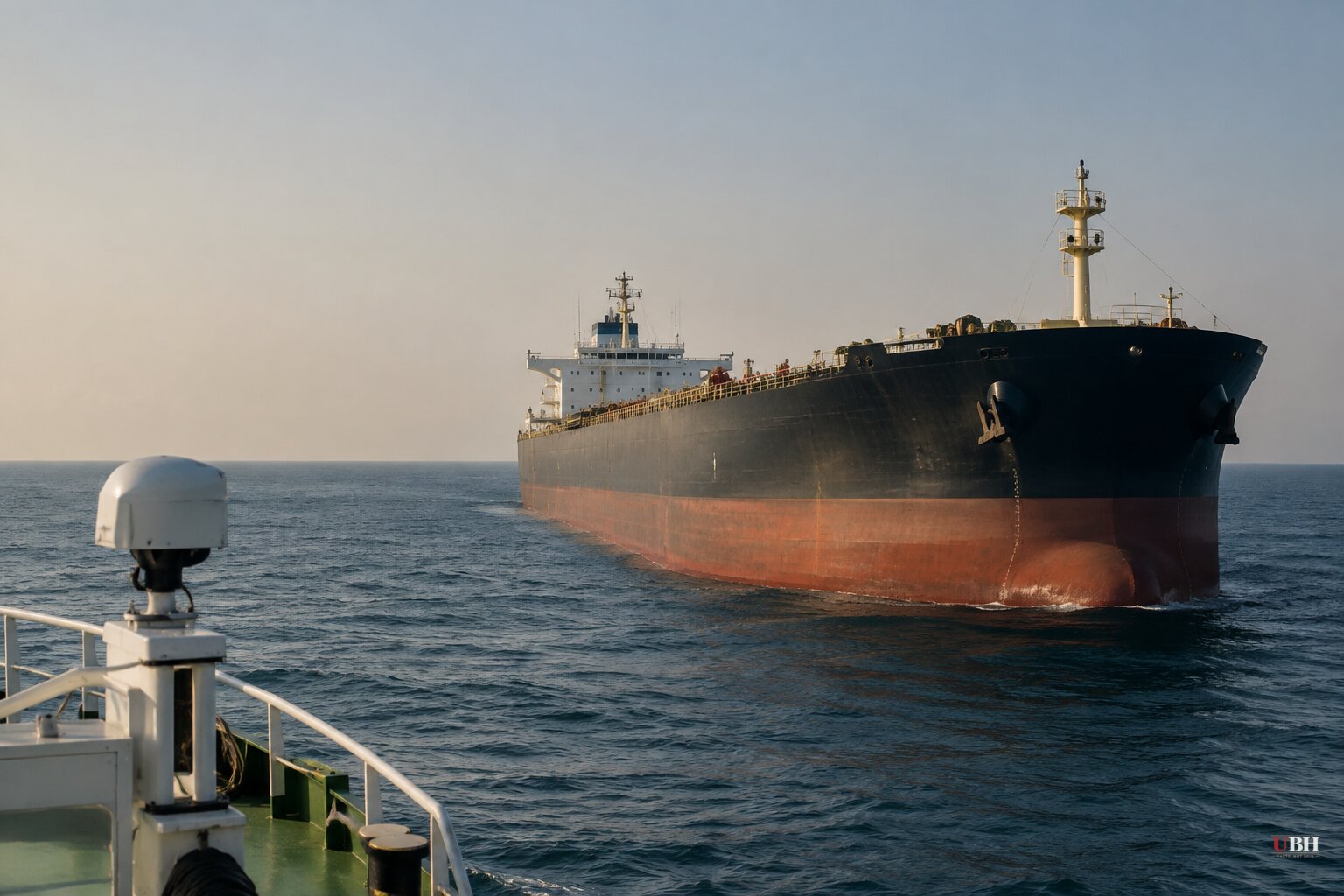
Since Tehran closed the Strait of Hormuz after the U.S. and Israel attacked Iran in February, the waterway has been the central pressure point of the war, and this week it produced a new set of incidents.
The United Kingdom Maritime Trade Operations (UKMTO) center said a tanker was struck by two unidentified projectiles at 2320 GMT on Wednesday, Nov. 4. The ship was about 50 nautical miles (57 miles) north of Madinat ash Shamal, Qatar, in the Persian Gulf.
UKMTO said the condition of the crew, the extent of the damage and any environmental impact were unknown. It did not name the tanker or its flag. No one has claimed responsibility. The agency advised vessels to transit the area with caution.
Iran's mine claims
On Thursday, Nov. 5, Iranian state television said two oil tankers and a towboat caught fire after hitting mines in the Strait of Hormuz. It gave no details on casualties or flags.
The Islamic Revolutionary Guard Corps Navy said the vessels were damaged while trying to use "unauthorized passages." It said the tugboat was hurt while trying to help one of the tankers. By Thursday afternoon, Iranian forces said five ships in total had been damaged by naval mines. None were identified.
It is not clear whether any of those ships is the one UKMTO described. UKMTO reported projectiles, not mines, and Iran's claims have not been independently verified. The National noted there was little publicly available information to confirm them.
The IRGC also said its electronic warfare unit took control of two American LUCAS drones over the strait, forced them to land and captured them. The Guard routinely issues statements like this about drones and vessels, and no independent confirmation has appeared.
Tehran blames Washington for the losses
Iran's account puts the blame on the United States. Iran's state news agency IRNA quoted the IRGC saying its navy "continues to maintain control over the Strait of Hormuz" and that Washington is encouraging ships to use the mined route.
The IRGC said that practice imposes "heavy insurance costs for damaged ships on American taxpayers and its regional allies." It added that attempts to violate its rules in the strait "would only bring further financial losses and greater political defeats for the United States."
That is a claim from a belligerent. No U.S. official has been quoted in these reports confirming that Washington is steering ships through any particular route.
A blind spot in the data
UKMTO said in a report last month that it was "struggling to accurately report" the true number of attacks. Most ships now refuse to report incidents, and many run "dark" with their transponders off.
That means any official count of strikes in and around Hormuz is likely a floor, not a total. In peacetime about 20% of the world's oil supply passed through the strait.
Diplomacy and alignments
Russian President Vladimir Putin met Thursday with Mohsen Rezaei, whom the Kremlin identified as head of Iran's Supreme National Security Council. Kremlin foreign affairs adviser Yuri Ushakov and military intelligence chief Igor Kostyukov also attended. The Kremlin offered no details of what was discussed.
The Financial Times has reported that Russia agreed to supply Iran with 90 advanced missile launchers. The Kremlin's readout of Thursday's meeting did not address that report.
Russian Foreign Ministry spokesperson Maria Zakharova said Moscow's advice against travel to Iran is unchanged, citing "the remaining risks of a new escalation around Iran."
Separately, Oman's Foreign Ministry said the foreign ministers of Iran and Oman discussed ways to resume navigation through the strait that lies between their countries. It announced no agreement.
In Seoul, Defense Ministry spokesperson Chung Binna said the military has proposed expanding the Cheonghae anti-piracy unit's area to waters south of Oman, as far as the port of Duqm, more than 650 kilometers (403 miles) from Hormuz. The unit would get patrol aircraft and an explosive ordnance disposal team.
Chung said South Korea would not take part in operations to ensure freedom of navigation near Hormuz unless "allowable circumstances" arise. She defined those as an end to the war or an agreement to stop the fighting. The plan needs approval from President Lee Jae Myung and the legislature.
The political backdrop in Washington
The shipping incidents come as the White House weighs its next step. Vice President JD Vance wrote on X on Wednesday: "The reason we lost is the war," referring to Republican midterm losses that included both chambers of Congress.
Trump told reporters Vance's assessment was "largely true," pointing to higher gasoline prices. He defended the decision to strike Iran: "We had no choice. You can't let Iran have a nuclear weapon." Asked when he would end the war, he said: "Whenever I wanted to. But it's got to be done right."
Trump is weighing renewed strikes against a negotiated settlement.
What remains unanswered is the identity of the tanker UKMTO reported, who fired the projectiles, and whether the Iranian mine claims describe the same event or separate ones. The Iran-Oman talks on reopening navigation are the next concrete test of whether traffic through Hormuz can resume.
Sources used for this briefing
7 links from 7 independent newsrooms (syndicated copies of the same report count once)
These are the sources it draws on, linked so you can verify.


