
Unbiased headlines. Facts, not spin.
Unbiased Headlines is an independently owned news organization. We bring you the facts, not opinions, written fresh from 110+ named sources. Sources linked so you can verify it yourself.
 defense
Major Story (8/10)
Event date: November 3, 2026 ·
House Republican Chairmen Ask Nvidia CEO Jensen Huang for Nov. 18 Closed-Door Briefing on Reported Chinese Intelligence Contact
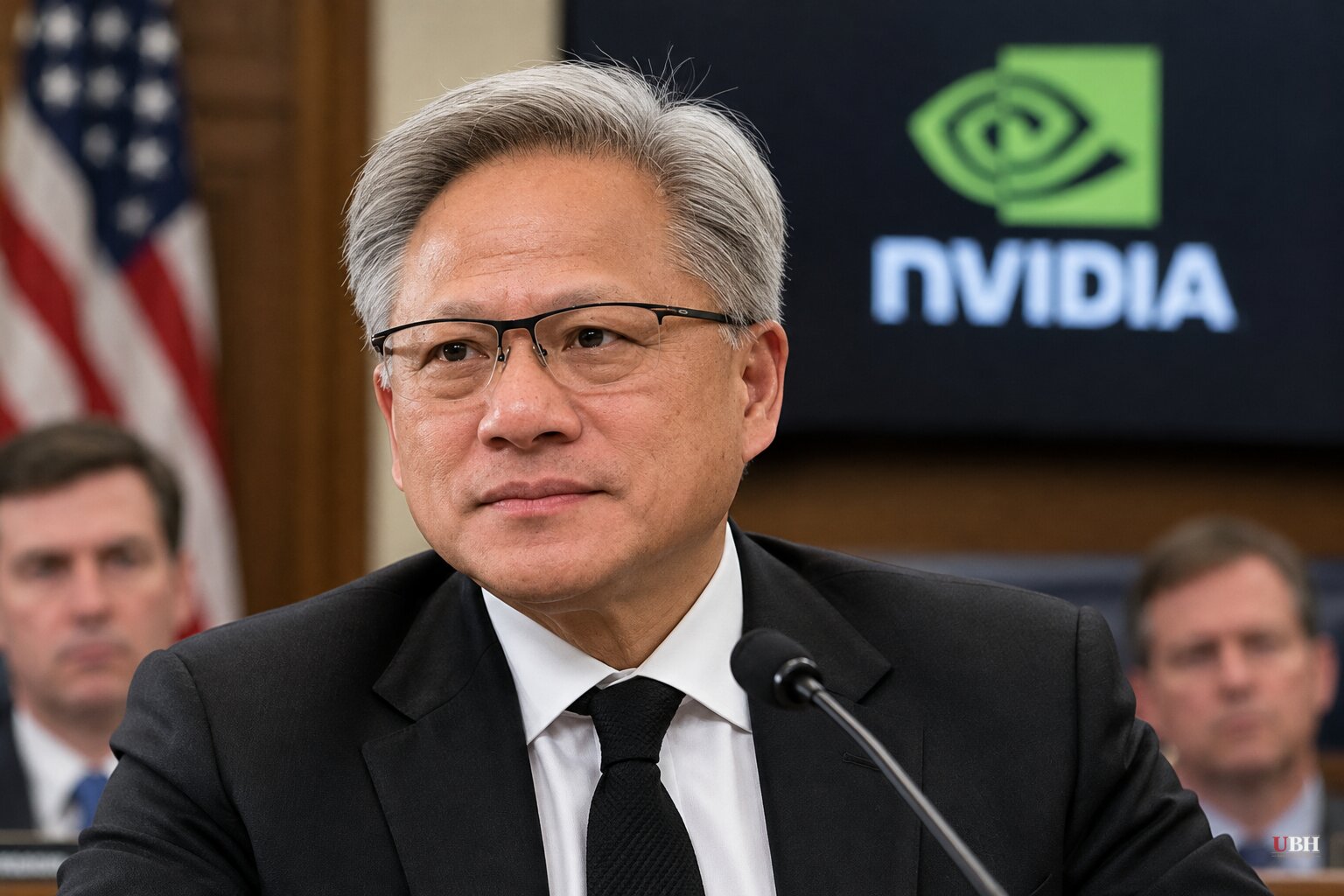
Since The New York Times reported on Oct. 29 that U.S. intelligence had concluded a Megaspeed executive was funneling information to Beijing and had grown close to Nvidia CEO Jensen Huang, the story has moved from newspaper allegation to congressional demand.
Three House Republican chairmen have now asked Huang to sit for a closed-door briefing. Their letter is dated Wednesday, Nov. 4, and became public today, Nov. 5.
The signers are Brian Mast of Florida, who chairs the Foreign Affairs Committee. John Moolenaar of Michigan, who chairs the Select Committee on China. And Rick Crawford of Arkansas, who chairs the Intelligence Committee.
What the chairmen want
They asked for an in-person joint briefing on Nov. 18. The subjects are Huang's interactions with Alice Huang, also known as Huang Le, and Nvidia's "security protocols against foreign adversary espionage."
"Recent reports raise significant national security concerns regarding the PRC's access to sensitive U.S. technology and information," the lawmakers wrote. "It is vital that Congress determines the extent to which U.S. national security has been placed at risk."
The letter does not name the reports it relies on. It also does not find that any sensitive information was actually transferred. Alice Huang, a Chinese citizen, has no relation to Jensen Huang.
Nvidia reports third-quarter earnings on Nov. 17. The requested briefing is the next day.
What the Times reported
The Times, citing people briefed on the surveillance and other sources, reported that U.S. spy agencies were watching Alice Huang over suspected diversion of advanced Nvidia chips to China. Surveillance then turned up what officials concluded was something else: she was allegedly an intelligence asset passing information to Beijing.
The same surveillance, the Times reported, showed she had developed a close relationship with Jensen Huang. What she may have shared, and how valuable it was, has not been made public. The Times reported that the investigation and surveillance are continuing.
President Trump was briefed on the findings about a year ago and chose not to act, the Times reported. It said Trump has been wary of disrupting Nvidia's chip sales and complicating trade with Beijing. The White House, the CIA and the NSA declined to comment.
Jensen Huang did not receive a defensive briefing from the government, the Times reported, because a warning could have jeopardized the investigation. When officials told Trump, they reportedly did not believe Huang knew of her alleged role. Whether that view has changed is unclear. No charges have been reported, and the Times report does not accuse Huang of wrongdoing.
Those claims rest on anonymous sourcing. They are allegations, not findings from a court or an agency.
Nvidia's response
Nvidia did not answer whether Huang would attend. It repeated a statement it had already given the Times.
"Our regional cloud customers receive ordinary business information — not sensitive NVIDIA trade secrets — and zero information relevant to national security," a spokesperson said. "Meetings with customers are part of a CEO's job; Jensen talks with thousands of customer executives every year."
The company added that it is "confident that if the U.S. government believes that any person is a threat to American industry, it would let us know." Spokesperson John Rizzo said Huang's interactions with Alice Huang "are not unusual or unexpected."
Megaspeed has said it hired outside counsel and will cooperate with the U.S. government. It did not respond to a request for comment on the letter.
The Megaspeed backdrop
Megaspeed is a Singapore-based data center company that buys Nvidia chips and sells compute to Chinese AI labs, including Alibaba's Qwen team. U.S. officials began looking at the company in late 2024, after a Commerce Department official visiting its Malaysia data center reportedly found Nvidia equipment still in boxes.
The case reportedly went to the Justice Department in 2026. A Malaysian sister company reportedly spent at least $4.8 billion on Nvidia-based equipment between June 2024 and February 2026.
Operators in Singapore and Malaysia draw scrutiny because they can legally buy chips that Chinese firms cannot. That makes them possible routes around U.S. export controls. Nvidia has said earlier allegations about diversion were investigated and debunked last year.
A separate Nvidia rule on Chinese customers
The Financial Times reported, citing people with knowledge of the matter, that Nvidia's sales teams have spent the summer telling data center partners to sell at least 51 percent of their cloud services to non-Chinese companies. The instruction was reportedly verbal, never written, and applies worldwide. It covers only future contracts, not existing leases.
People familiar with the rule described it as a pre-emptive move to head off criticism from U.S. lawmakers. One Singapore-based cloud provider told the FT it was hard to find enough non-Chinese clients outside the U.S. and that strict enforcement "will definitely hurt business."
Nvidia's public line is that clouds built on American chips serve American interests. Longstanding U.S. policy, the company says, encourages every cloud to build on American infrastructure and win business everywhere.
What comes next
A letter is a request, not a subpoena. Nov. 18 is the date the chairmen chose, not one Nvidia has accepted.
Huang is the head of the most valuable chipmaker in the world, and the chairmen want to know what the U.S. government knew about his contacts and when. Two things are still unanswered. Will Huang show up the day after he faces Wall Street on earnings? And will the administration say anything about why a year-old intelligence finding reportedly went unused?
Sources used for this briefing
7 links from 6 independent newsrooms (syndicated copies of the same report count once)
These are the sources it draws on, linked so you can verify.


