
Unbiased headlines. Facts, not spin.
Unbiased Headlines is an independently owned news organization. We bring you the facts, not opinions, written fresh from 110+ named sources. Sources linked so you can verify it yourself.
 defense
Major Story (7/10)
Shield AI Agrees to Buy Echodyne for Up to $5.3 Billion, Raises $2.5 Billion at $28.8 Billion Valuation
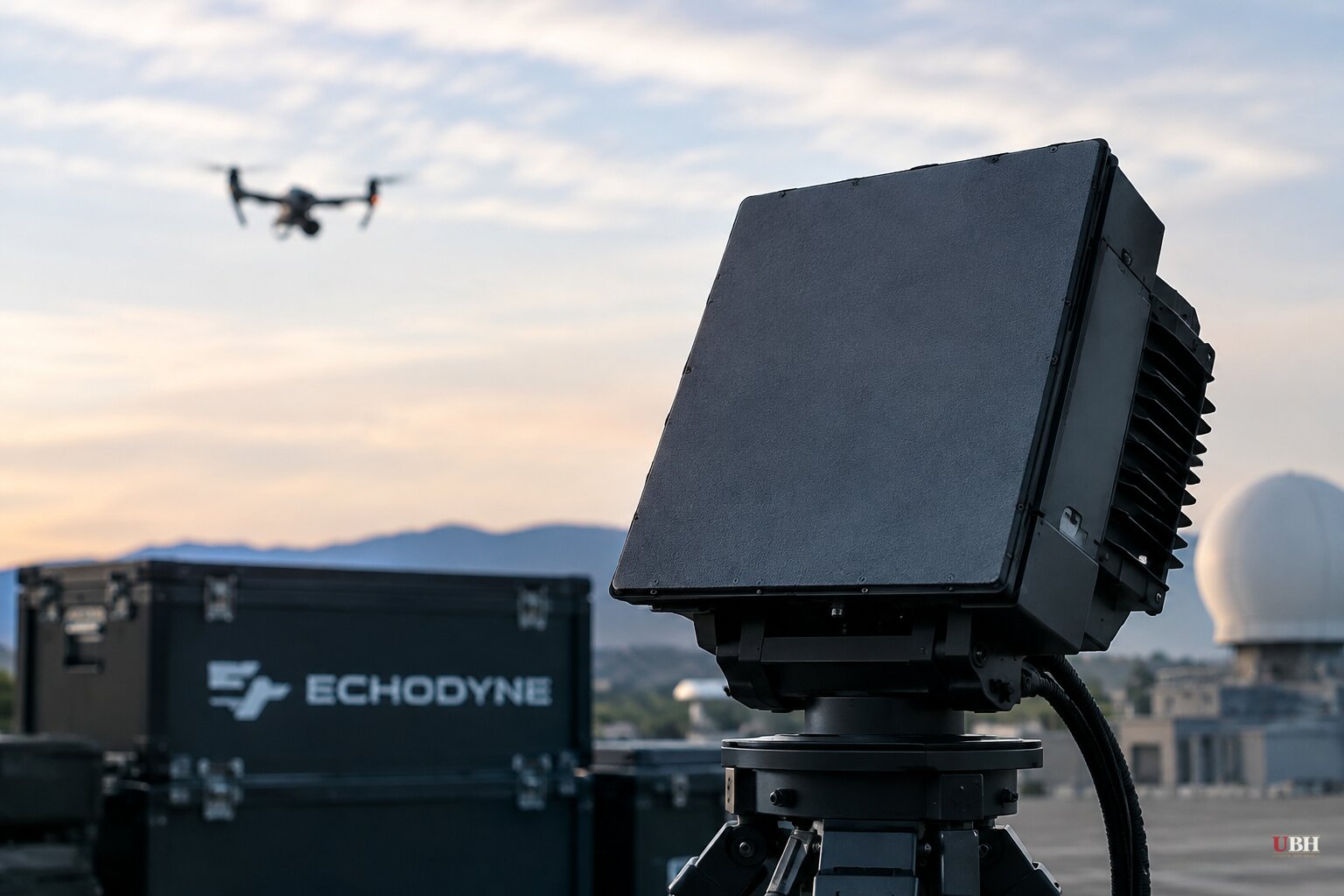
Shield AI announced today, Thursday, Nov. 5, that it has signed a definitive agreement to buy Echodyne Corp., the Kirkland, Washington, maker of compact radars used in counter-drone systems. The transaction is valued at $5.3 billion.
Of that, $4.8 billion will be paid and issued at closing. Up to $500 million more is contingent on Echodyne hitting agreed performance targets. The companies expect to close in early 2027, subject to regulatory approvals and customary conditions.
How Shield is paying for it
Shield is raising $2.5 billion to fund the purchase. The package has three pieces:
- A $1 billion Series H at a $28.8 billion post-money valuation, co-led by Disruptive and Innovation X Capital.
- A $1 billion structured equity investment from funds managed by Blackstone.
- $500 million in debt, with JPMorgan Chase Bank, N.A. as sole arranger.
Shield's valuation was $12.7 billion at its March Series G. That is a jump of more than 2x in about eight months. Shield and Echodyne have not said how much of the purchase price is cash and how much is Shield stock.
What Shield is buying
Echodyne builds radars on its patented Metamaterials Electronically Scanned Array, or MESA, technology. The companies say the radars are built into hundreds of counter-drone and security systems used by defense, government and commercial customers in more than 40 countries. They feed remote weapon stations, high-energy lasers and high-power microwave systems, and help point interceptors at incoming drones.
In September, the Pentagon's Joint Interagency Task Force 401 gave Echodyne a contract with a $250 million ceiling to supply counter-drone radar to U.S. and allied forces. That award came as part of a round of 10 indefinite-delivery contracts with combined base ceilings of $4.15 billion for the Domestic Shield program. A ceiling is a maximum, not guaranteed spending.
The Pentagon is pushing hard in this space. On Wednesday it said more than 25,000 drone and counter-drone systems, including more than 24,000 counter-drone systems, were delivered to U.S. Central Command this year as part of roughly $782 million in investment. "The thousands of systems operating across CENTCOM this year are just the beginning," said Owen West, the Pentagon's Direct Reporting Portfolio Manager for Unmanned Systems.
The numbers on Echodyne
Echodyne was spun out of Intellectual Ventures in 2014 with a $15 million round led by Bill Gates and Madrona. It has raised about $200 million in total. PitchBook put its valuation at $485 million after its last priced round in 2022.
Madrona's Tim Porter wrote that the deal is believed to be the second-largest acquisition of a private venture-backed company in Washington state history, behind Okta's $6.5 billion purchase of Auth0 in 2021. Porter said Echodyne is profitable.
Both companies say they expect triple-digit revenue growth this fiscal year. Neither has published Echodyne's revenue, so the price cannot yet be measured against sales.
Echodyne has about 400 employees, up from 260 in July when it opened a $40 million manufacturing facility in Woodinville, Washington. The facility is designed to produce about 30,000 radars a year. The combined company will have about 2,700 employees. A Shield spokesperson said no layoffs are planned and Echodyne staff will not have to relocate.
Shield's strategy
Shield is best known for its Hivemind autonomy software and V-BAT drone. It is also building X-BAT, a vertical-takeoff, AI-piloted combat aircraft. CEO Gary Steele said this week the jet will fly for the first time before the end of the year. In September, Shield named Des Moines, Washington, as X-BAT's production home.
Shield's growth has come through acquisition before. Its V-BAT line traces to its 2021 purchase of Martin UAV, and it recently bought simulation firm Aechelon Technologies. Steele describes the company as three units: autonomy software, autonomous systems and mission systems. Echodyne becomes a business unit inside mission systems.
Echodyne CEO Eben Frankenberg will report to Steele and keep responsibility for products, manufacturing, and partner and customer relationships. MESA radars will remain available as standalone products to outside integrators. A Shield spokesperson said the company's existing work with RTX on radar for X-BAT is separate and unaffected.
Steele told Bloomberg that Echodyne is Shield's first step into dual-use hardware, since all its end users so far have been governments. "Think about public safety, whether it's the Super Bowl or FIFA, just literally every single thing is going to need protection from drones," he said.
Washington politics
Asked about the midterms and the possibility of tougher scrutiny of defense spending, Steele said he is not worried. "Even with the midterms, I think there will be a common view of what needs to be done on defense," he said.
The deal's economics lean heavily on that assumption. A big share of Echodyne's growth case rests on Pentagon counter-drone demand, and the U.S. military's drone push is still ramping up. The Pentagon has said it aims to stand up an Autonomous Warfare Command by October 2027.
Two things remain open. Regulators must sign off before closing, and no review or objection has been announced. And Shield's new money only goes forward if the deal closes, so the early-2027 timeline decides when the $2.5 billion actually lands.
Sources used for this briefing
7 links from 6 independent newsrooms (syndicated copies of the same report count once)
These are the sources it draws on, linked so you can verify.


