
Unbiased headlines. Facts, not spin.
Unbiased Headlines is an independently owned news organization. We bring you the facts, not opinions, written fresh from 110+ named sources. Sources linked so you can verify it yourself.
 defense
Major Story (8/10)
Half of Japan-based Navy destroyers and the carrier George Washington are deployed to the Iran war as Theodore Roosevelt steams west
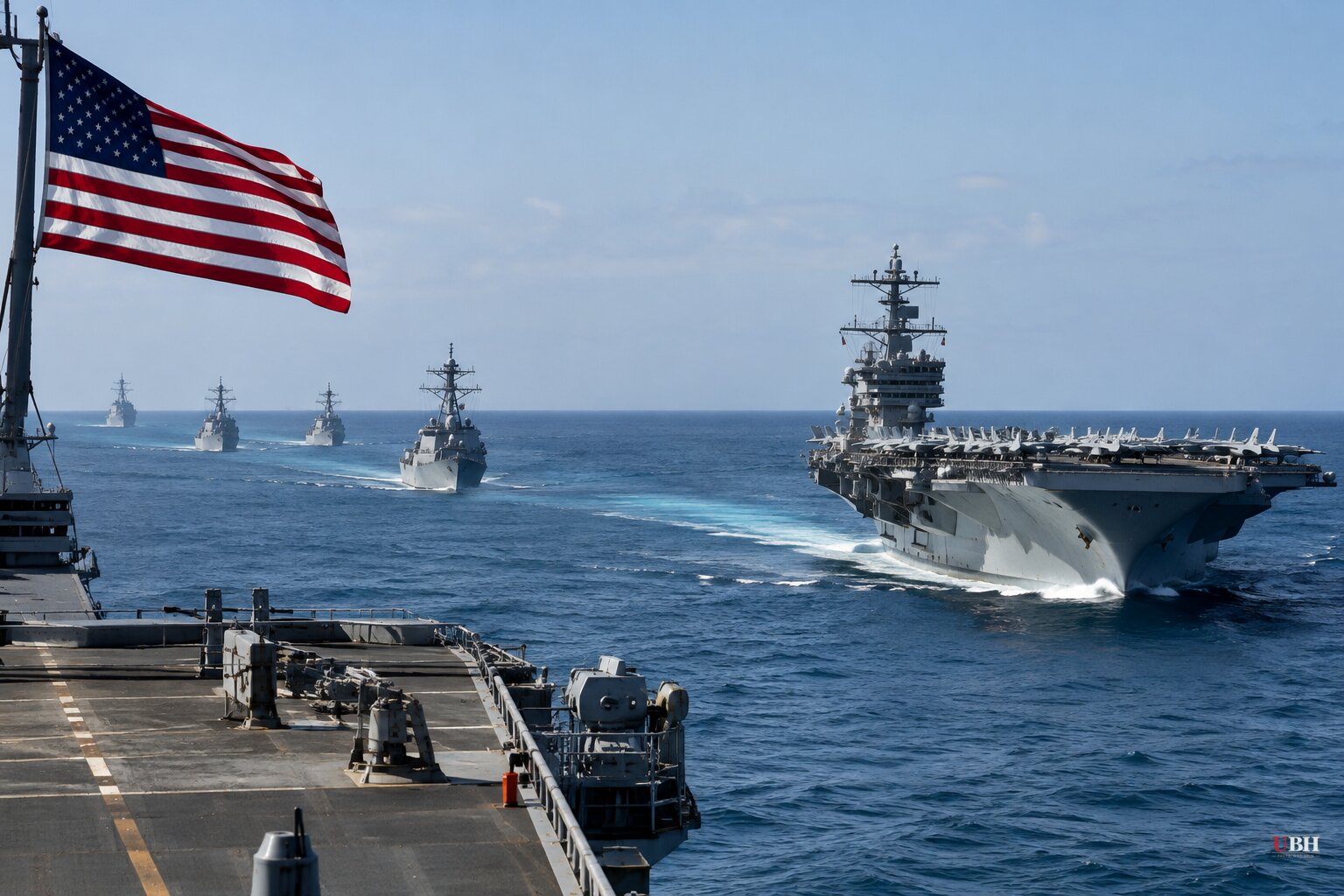
The Navy's strongest forward-deployed force in Asia is spending the fall in the Arabian Sea.
Five of the 10 destroyers homeported in Yokosuka, Japan, are deployed to U.S. Central Command's area, along with the Yokosuka-based carrier George Washington, according to Defense One's reporting. Navy officials have told the crews of at least some of those destroyers they won't be home until 2027, Defense One reported.
Now a second carrier is leaving the Pacific for the same fight.
A strategy that said the opposite
The National Security Strategy, released less than a year ago, said "the days in which the Middle East dominated American foreign policy in both long-term planning and day-to-day execution are thankfully over." The January National Defense Strategy named the U.S. homeland and deterring China as its top priorities.
About five weeks later, President Trump launched the war on Iran. Operation Epic Fury officially concluded in June, but the Pentagon has kept a large force in the region, carried out occasional strikes and is waiting to see whether Trump orders more, Defense One reported.
The Wall Street Journal reported Tuesday, citing sources, that the U.S. has told several Gulf Arab allies to prepare for a brief but intense campaign following the midterm elections. The goal, per that report, is to push Tehran back to the negotiating table.
At the U.N. Security Council on Tuesday, U.S. Ambassador Mike Waltz said "the United States and our partners will never let you obtain a nuclear weapon to terrorize the world." He also cited International Atomic Energy Agency chief Rafael Grossi's demand that Iran deliver "answers, not speeches."
The carrier shuffle
The Theodore Roosevelt strike group took part in the Keen Sword exercise with Japan and is now heading west. Satellite imagery released Nov. 4 appeared to show the carrier crossing the South China Sea, and flight tracks are consistent with a westbound move past the Spratly Islands. The Navy has described activity alongside the Australian replenishment ship HMAS Stalwart as "routine operations." It has not publicly announced the strike group's orders.
If the Roosevelt reaches the Middle East later this month, as flight-tracking analysis and reported planning suggest, it would be the fifth U.S. carrier to deploy there during this war. The others were the Abraham Lincoln, Gerald R. Ford, George H.W. Bush and George Washington.
The Bush and the Washington are still in the Arabian Sea. With the Roosevelt added, that would match the largest U.S. carrier force in the region since the 2003 Iraq war, a size the region saw this past spring.
The Roosevelt is expected to relieve the Washington, which could then return to Japan. But there would be an overlap first, which gives Trump additional strike options. Whether the Roosevelt replaces the Washington promptly or operates alongside it and the Bush has not been announced. An amphibious ready group and Marine force are also reported to be heading toward the region, a combined 9,000 to 10,000 sailors and Marines by one estimate.
What the gap looks like from Asia
China is moving the other way. European Space Agency satellites photographed China's newest carrier, the Fujian, in the South China Sea on Monday, Nov. 2. China has three carriers, and the Pentagon says Xi Jinping wants at least nine by 2035. The U.S. has 11.
This is the third multiweek "carrier gap" in the Western Pacific in just over two years, tied to Middle East crises.
Ralph Cossa, chairman of the Pacific Forum in Honolulu, said the situation is "a problem for credibility. It's a problem for our allies in the Far East," many of whom have been planning carrier visits for months. Those ships "normally would be showing the flag, that normally would be reminding our allies of our commitment. And they're nowhere to be found."
U.S. Pacific Command rejects the idea that it is scaling back. "Our commitment to the security of the Indo-Pacific and to our allies and partners remains steadfast," a PACOM spokesperson said. The spokesperson said the command "remains focused on deterring aggression and maintaining the readiness required to execute our assigned missions," and pointed to Keen Sword as evidence of continuous training with allies.
The policy debate over Asia posture is also heating up. Defense Priorities has proposed ending U.S. mutual defense treaties with South Korea, Japan and the Philippines and pulling back to the Second Island Chain around Guam. Writing today in Small Wars Journal, Christopher Lee argues that would invite conflict. He notes Guam sits roughly 1,500 nautical miles from the Taiwan Strait, and that a fast surface ship needs more than 50 hours to cover that distance.
The bill
War spending has passed $47 billion, according to internal Defense Department figures obtained by Reuters. That is more than 25% above the Pentagon's July estimate. Munitions replenishment is the biggest piece at more than $29 billion, followed by more than $6 billion in equipment replacements. The figures do not include repairs to U.S. facilities hit by Iranian drone and missile barrages, according to Reuters.
The Pentagon has not said when the Yokosuka destroyers will return. Nor has it said whether the Roosevelt will replace the Washington or stack on top of it. The answer should become clear when the carrier enters the Central Command area, which is expected later this month.
Until then, the forces Washington's own strategy documents said were meant for the Pacific are deployed in the Middle East, and the Fujian is at sea in the South China Sea.
Sources used for this briefing
5 links from 5 independent newsrooms (syndicated copies of the same report count once)
These are the sources it draws on, linked so you can verify.


