
Unbiased headlines. Facts, not spin.
Every story is an unbiased news briefing written from 110+ sources across the spectrum — sources linked so you can verify it yourself.
 defense
Major Story (7/10)
June 11, 2026 at 09:25 AM
defense
Major Story (7/10)
June 11, 2026 at 09:25 AM
Taiwan Fired 36 HIMARS Rockets Into the Taiwan Strait on June 10 — The First Live-Fire Into Waters Facing China
What Happened
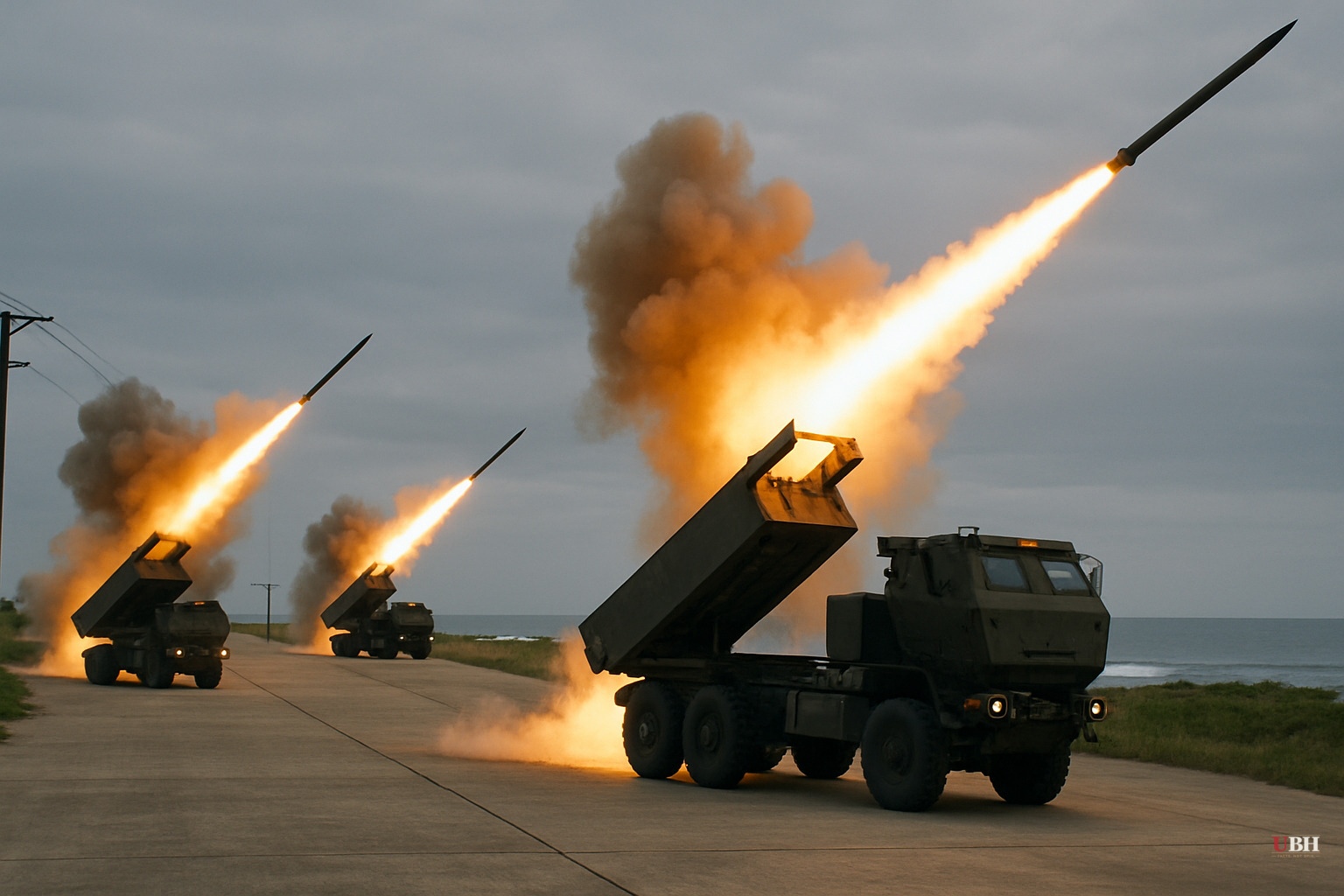
On June 10, 2026, Taiwan's army fired 36 rockets from High Mobility Artillery Rocket System (HIMARS) launchers positioned along the island's western coast into the Taiwan Strait.
This wasn't a range test in a field somewhere. The launchers were placed near sites that military planners have identified as likely Chinese amphibious landing zones, according to Crypto Briefing. The rockets flew into the narrow body of water that separates Taiwan from mainland China's Fujian province.
Army Sergeant Wang Ming-hui stated directly: "Due to the current enemy threat, we will continue HIMARS training with unwavering determination to protect Taiwan as the nation's strongest force," according to OODAloop.
No hedging. No diplomatic soft-pedaling. A military spokesperson named a specific enemy threat and promised to keep training.
Why This Exercise Is Different
HIMARS has been tested in Taiwan before. A live-fire exercise took place on May 12, 2025, according to Crypto Briefing. But that test didn't send rockets into the strait itself.
The June 10 exercise did. That's the line that was crossed — symbolically and operationally.
HIMARS is a truck-mounted, precision-guided rocket system with a range of approximately 300 kilometers, according to Crypto Briefing. That puts targets in Fujian province — the Chinese mainland directly across the strait — within reach. The "shoot-and-scoot" design means the launcher fires and relocates before an adversary can pinpoint and return fire, as the Washington Post and OODAloop both noted.
Taiwan currently operates 29 HIMARS systems, procured from the United States as part of a deliberate asymmetric defense strategy: make any invasion attempt so costly that Beijing calculates it isn't worth it.
Taiwan's Broader Military Buildup
The HIMARS exercise doesn't exist in isolation. Taiwan's defense budget has climbed to over 3% of GDP, according to Crypto Briefing. For context, most NATO members spent years failing to hit the 2% target the alliance requires.
On the missile side, Taiwan is targeting an inventory of more than 1,800 anti-ship missiles by 2029. That includes 450 Boeing Harpoon missiles secured in early June 2026, with 400 more units in the delivery pipeline, per Crypto Briefing.
The layered picture: mobile rocket artillery (HIMARS), a deep anti-ship missile stockpile, and a developing coastal air-and-missile defense network. The goal isn't to match China tank-for-tank. It's to make the beaches too expensive to storm.
What Mainstream Coverage Is Getting Wrong
Most coverage frames this as an "escalation" without giving the strategic logic its due. Taiwan firing rockets into the strait is being treated as provocative. The baseline context matters: China has conducted repeated large-scale military drills encircling Taiwan, and Beijing maintains it has the right to take the island by force.
Taiwan demonstrating HIMARS capability in the strait isn't unprovoked aggression. It's a deterrent signal — "we can hit your landing craft before they reach the beach."
The Washington Post's coverage, via the Associated Press, is straightforward on the mechanics but light on the strategic significance. Crypto Briefing provides more substantive military and procurement context, despite being a cryptocurrency-focused outlet.
The Strongest Counterargument
Critics of this trajectory — including analysts who favor a more cautious deterrence posture — raise a legitimate concern: provocative live-fire exercises in the Taiwan Strait could give Beijing a pretext or political cover to escalate its own military activity, potentially triggering a crisis neither side wants. There's a real debate among defense scholars about whether "porcupine" asymmetric deterrence stabilizes the strait or gradually normalizes military brinkmanship that could spiral. Advocates of diplomatic restraint argue that symbolic military demonstrations, while satisfying domestically, may harden Chinese Communist Party hardliners and compress the window for negotiated solutions.
Deterrence requires credibility. A weapon that Beijing doesn't believe Taiwan will use doesn't deter. Demonstrating operational capability — firing live rounds in the actual operating environment — is exactly what makes a deterrent credible. The United States has sold Taiwan these weapons precisely because deterrence requires more than a press release.
What the U.S. Commitment Looks Like Right Now
The United States supplied the HIMARS systems and, as of June 2026, continues delivering Harpoon missiles. No U.S. officials are named in these sources as commenting on the June 10 exercise specifically. The Biden-to-Trump transition and the current U.S. posture toward Taiwan arms sales are not detailed in the sourced material, so those specifics won't be invented here.
What is established: the hardware is American, the training is ongoing, and the stated purpose is repelling a Chinese attack.
Why It Matters Beyond Taiwan
Taiwan manufactures the vast majority of the world's most advanced semiconductors. A military conflict in the Taiwan Strait wouldn't just be a humanitarian catastrophe — it would detonate the global technology supply chain. Every major economy on Earth has a stake in this strait staying navigable and peaceful.
This isn't a regional military curiosity. It's a direct stress test of the deterrence architecture that keeps the global economy functioning.
Taiwan is building the capability and demonstrating the will to use it. Whether that's enough to keep Beijing from miscalculating remains the central uncertainty.
Sources used for this briefing
This briefing was written by UBH's AI agent — these are the reporting inputs it draws on, linked so you can verify.


