
Unbiased headlines. Facts, not spin.
Unbiased Headlines is an independently owned news organization. We bring you the facts, not opinions, written fresh from 110+ named sources. Sources linked so you can verify it yourself.
 defense
Major Story (8/10)
Event date: November 23, 2026 ·
Swedish Gripen Held Fire on Russian Kh-101 Over Poland Despite NATO Clearance; Warsaw Renews Push for Permanent US Troops
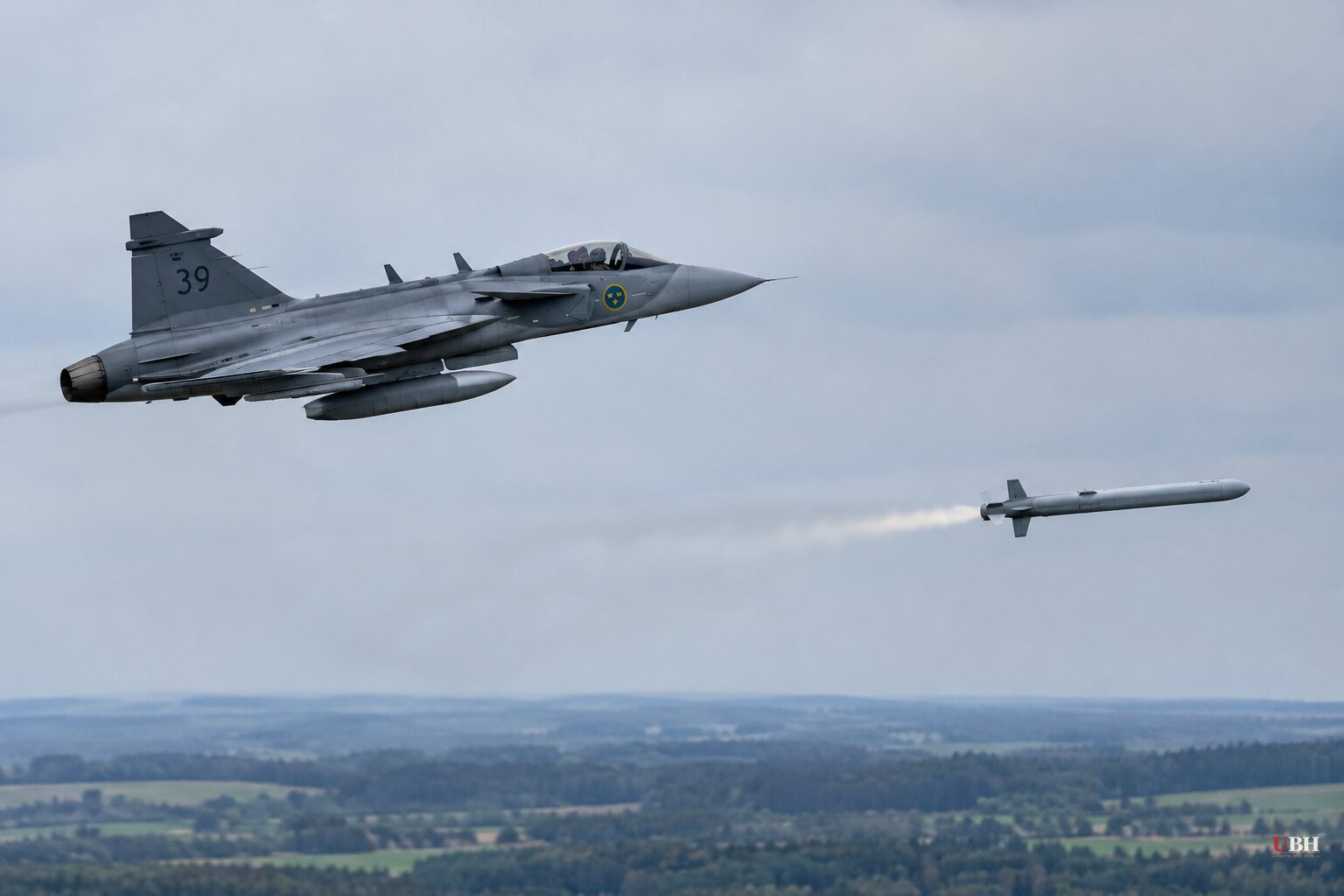
Since three Russian objects crossed into Poland during the Nov. 20 barrage on Ukraine, new detail has emerged on why none was shot down, and Warsaw has turned the episode into a fresh request for American troops.
The clearance that went unused
Lt. Gen. Ireneusz Nowak, commander of Poland's Armed Forces Operational Command, told the daily Rzeczpospolita that a Swedish Air Force JAS 39 Gripen pilot had permission to engage a suspected Russian Kh-101 cruise missile. NATO's Combined Air Operations Centre in Uedem, Germany, issued what Nowak described as a conditional authorization. The pilot could decide to fire once identification requirements were met.
They were not met. In what Nowak called exceptionally difficult weather, the pilot could confirm the target neither by eye nor with the jet's electro-optical sensors. No weapons were fired.
The Swedish Armed Forces did not comment on the clearance itself. They did confirm the conditions. "Swedish pilots tracked several targets in Polish airspace and showed great courage as they operated in very difficult weather and low visibility conditions," said Niclas Magnusson, deputy commander of the Swedish Air Force.
What was in the air
Polish authorities tracked 11 potentially threatening objects during the attack. Three entered Polish airspace and fell in the southeast of the country. Polish prosecutors confirmed Sunday that debris recovered at three locations came from Russian Kh-101 cruise missiles.
The response involved two Swedish Gripens, two Polish F-16s, a Polish Saab 340 early-warning aircraft, a Dutch refueling tanker and ground-based air defenses. The Swedish mission lasted several hours and needed aerial refueling. The Gripens are on a two-month NATO air defense deployment, based in Sweden but able to use a forward base in Poland.
Nowak said Russia attacked in two stages: jet-powered drones first, then Kalibr and Kh-101 missiles. Poland knew the launch points, numbers and flight paths in advance, in part from data Ukraine passes through its Virazh air-picture system. "As for who is behind this attack, we have no doubts whatsoever at this point," he said.
Polish officials reported no injuries or damage on the ground. One munition exploded about 96 kilometers from where the Coalition of the Willing was holding military exercises, according to Ukrainian outlet RBC-Ukraine's account of the incident.
Rules, not radar
Detection worked. NATO Secretary General Mark Rutte said after the attack that Polish F-16s received all the support they needed from allies. "It's exactly how the alliance should work," he said in Warsaw over the weekend.
The missiles still got through. Poland revised its air defense procedures earlier this year to allow certain engagements without visual identification, provided other identification requirements are satisfied. Those requirements also apply to allied aircraft over Polish territory. On Nov. 20 the pilot could not establish identification by either method.
That gap between permission to fire and the conditions for firing is now the central operational question. A fighter was in position, the track existed and the authorization was in hand. The pilot still did not shoot.
Warsaw's ask
Poland's chargé d'affaires in Washington, Bogdan Klich, said he briefed the White House National Security Council on Monday, Nov. 23. "Yesterday, I briefed the U.S. National Security Council on the violation of Polish airspace by Russian Kh-101 missiles and once again discussed the issue of the permanent deployment of U.S. troops in Poland," he wrote on X.
The request comes after a second incident. A Russian drone briefly entered Polish airspace overnight Monday into Tuesday during another attack on Ukraine. That makes two airspace violations in four days.
Prime Minister Donald Tusk has said Poland does not consider the Nov. 20 missile strike a coincidence and sees it as a deliberate Russian provocation. Poland has also pointed to the Coalition of the Willing's first training exercise, aimed at preparing allied forces for a postwar Ukraine, as a possible motive. Russia has not commented on the missile incursions. Vladimir Putin has said previously that Russia is not waging a sabotage campaign against Europe.
What comes next
NATO was set to meet Monday in an emergency session called by Poland. Poland is expected to present specific proposals there, including more surveillance capability and more F-35 fighters stationed in or near the country, so incoming missiles and drones can be shot down.
NATO set up its Eastern Sentry air defense posture a little over a year ago, after a large Russian drone swarm crossed into Poland. Whether the allies add to it, and whether Washington answers Klich's request for permanent troops, remains open.
Sources used for this briefing
7 links from 6 independent newsrooms (syndicated copies of the same report count once)
These are the sources it draws on, linked so you can verify.


