
Unbiased headlines. Facts, not spin.
Unbiased Headlines is an independently owned news organization. We bring you the facts, not opinions, written fresh from 110+ named sources. Sources linked so you can verify it yourself.
 defense
Major Story (8/10)
Event date: November 20, 2026 ·
Senate Could Vote Week of Nov. 30 on Blocking Trump's 30-Year Saudi Nuclear Deal
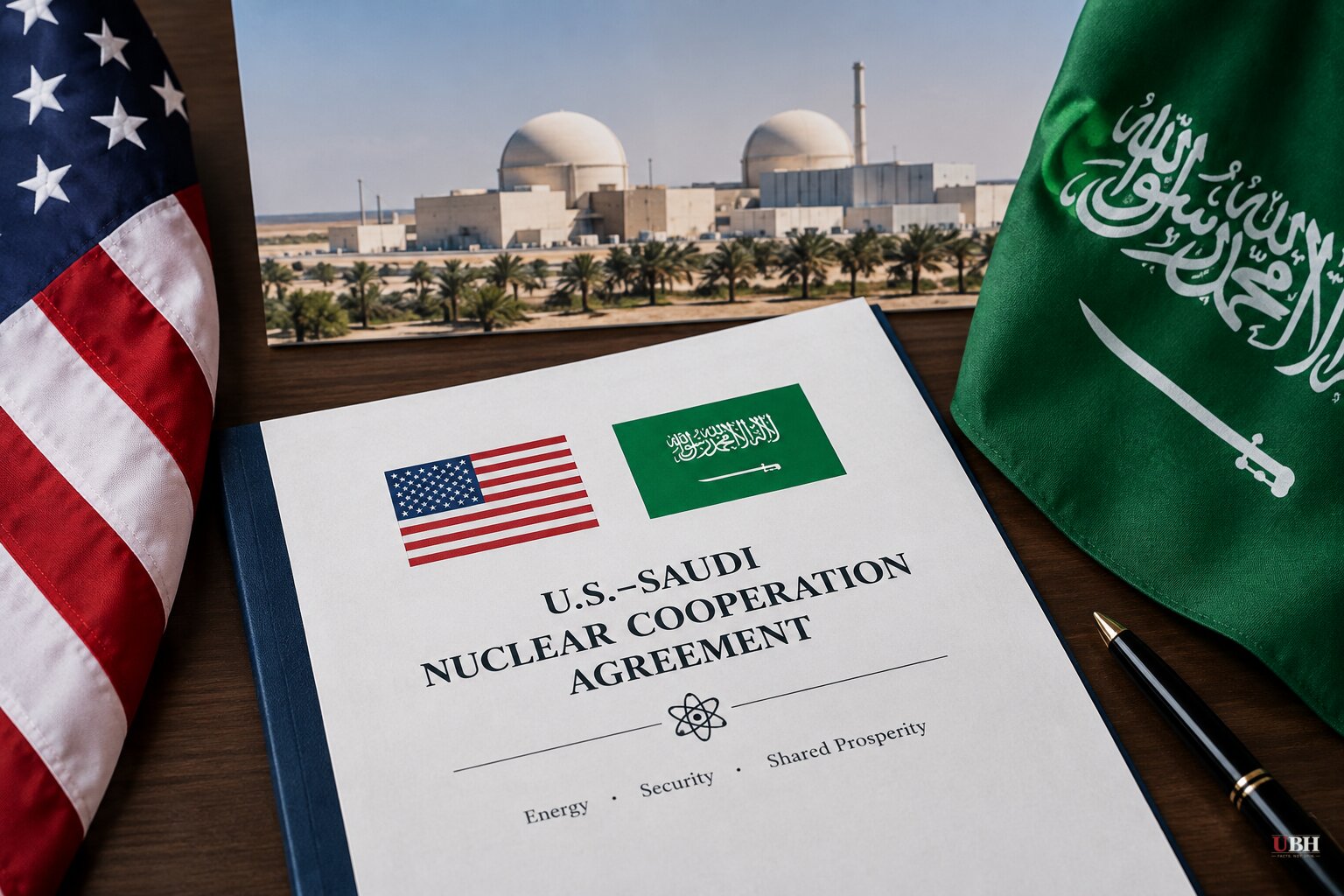
The Senate could vote as soon as the week of Nov. 30 on a resolution to block President Donald Trump's proposed nuclear cooperation agreement with Saudi Arabia, according to Republican and Democratic Senate aides. Those aides said they do not know whether the measure can reach the simple majority it needs. Republicans hold a 53-47 Senate majority.
The agreement is a 30-year pact under Section 123 of the Atomic Energy Act of 1954. The two countries signed it July 22, along with a draft Bilateral Safeguards Agreement. Trump sent both to Congress on Aug. 24, together with two side letters that have not been publicly released.
Per the Congressional Research Service, the review periods may end in December. After that, the deal can take effect unless a joint resolution of disapproval becomes law.
What the text says about enrichment
Enrichment is the sticking point. The same process that makes fuel for power reactors can also make material for a bomb.
The agreement says the two countries "may explore options to support the long-term commercial feasibility of civil uranium enrichment capacity." It also sets up a two-year Joint Enrichment and Conversion Study.
The CRS says the agreement does not authorize transferring enrichment technology for commercial enrichment operations. It does contemplate limited transfers of sensitive technology for the study. The Bilateral Safeguards Agreement must enter into force before the United States consents to enrichment or backs an enrichment facility in the kingdom.
The pact does not require Riyadh to give up enrichment or spent-fuel reprocessing. It also does not include the Additional Protocol, which gives the International Atomic Energy Agency powers such as snap inspections.
Previous administrations pushed Saudi Arabia to forgo domestic enrichment and reprocessing and accept tougher inspections. The United Arab Emirates agreed to those terms in its 2009 deal with Washington, which is known as the "gold standard."
Trump's words versus the document
In a July social media post, Trump wrote, "There will be no enrichment of material." He also said implementation would depend on Saudi Arabia signing the Abraham Accords and normalizing relations with Israel.
The agreement's text mentions neither Israel nor the Accords. It contains no flat ban on enrichment either. Trump's public description and the signed document do not match.
The unreleased side letters could address some of this. Congress is being asked to vote without public access to them.
The Houthi problem
A second worry has surfaced in recent weeks. Yemen's Iran-aligned Houthis have stepped up drone and missile strikes on Saudi airports, oil facilities and office buildings. On Friday, Nov. 20, they said they would attack Saudi Red Sea ports and warned everyone nearby to stay away.
Henry Sokolski of the Nonproliferation Policy Education Center and Sharon Squassoni of George Washington University argued in the National Interest that Washington should demand safety plans. "The last thing Washington should do is to build a bomb starter kit in Saudi Arabia, only for the Yemenis—or some other hostile group—to take it over," they wrote.
The Saudi embassy in Washington did not respond to Reuters' request for comment.
Rep. Brad Sherman, a California Democrat and senior member of the House Foreign Affairs Committee, makes the sharpest case against the deal. In a Washington Post op-ed, he wrote that Crown Prince Mohammed bin Salman wants the capacity to keep pace with Iran's nuclear program. A nuclear capacity "may be in the kingdom's national security interests," Sherman wrote, "but it is not in the interests of the United States."
The administration's case
The deal advances Trump's goal of at least 20 new nuclear cooperation agreements under Executive Order 14299, aimed at boosting U.S. nuclear exports. Some lawmakers see an opportunity to deepen commercial and strategic ties with Riyadh, the CRS notes.
Supporters can also point to the text. It does not authorize commercial enrichment technology transfers. It conditions any U.S. consent to enrichment on a safeguards agreement entering into force first. Saudi Arabia is a party to the Nuclear Nonproliferation Treaty, which bars it from building nuclear weapons.
Critics answer that the pathway exists and the permanent renunciation does not. One analysis argues the omission threatens to unravel the regional standard set by the UAE deal. That UAE agreement carried a caveat that Abu Dhabi would get treatment no less favorable than what Washington extends to others.
The vote math
Senate aides could not say whether the resolution has the votes. Some Republicans have joined Democrats in requesting more information on the proposal.
A resolution that passes the Senate still has to become law to stop the agreement. That means clearing the House and getting past the president, who negotiated the deal.
The open questions are specific. Will the Senate vote the week of Nov. 30? Will any Republicans break ranks? And will the administration release the two side letters before senators have to decide?
Sources used for this briefing
5 links from 5 independent newsrooms (syndicated copies of the same report count once)
These are the sources it draws on, linked so you can verify.
More coverage: Donald Trump and Congress


