
Unbiased headlines. Facts, not spin.
Unbiased Headlines is an independently owned news organization. We bring you the facts, not opinions, written fresh from 110+ named sources. Sources linked so you can verify it yourself.
 defense
Major Story (8/10)
Houthi Attacks on Riyadh Financial District Continue as Tower Strike Injures 11, Saudi Civil Defense Says
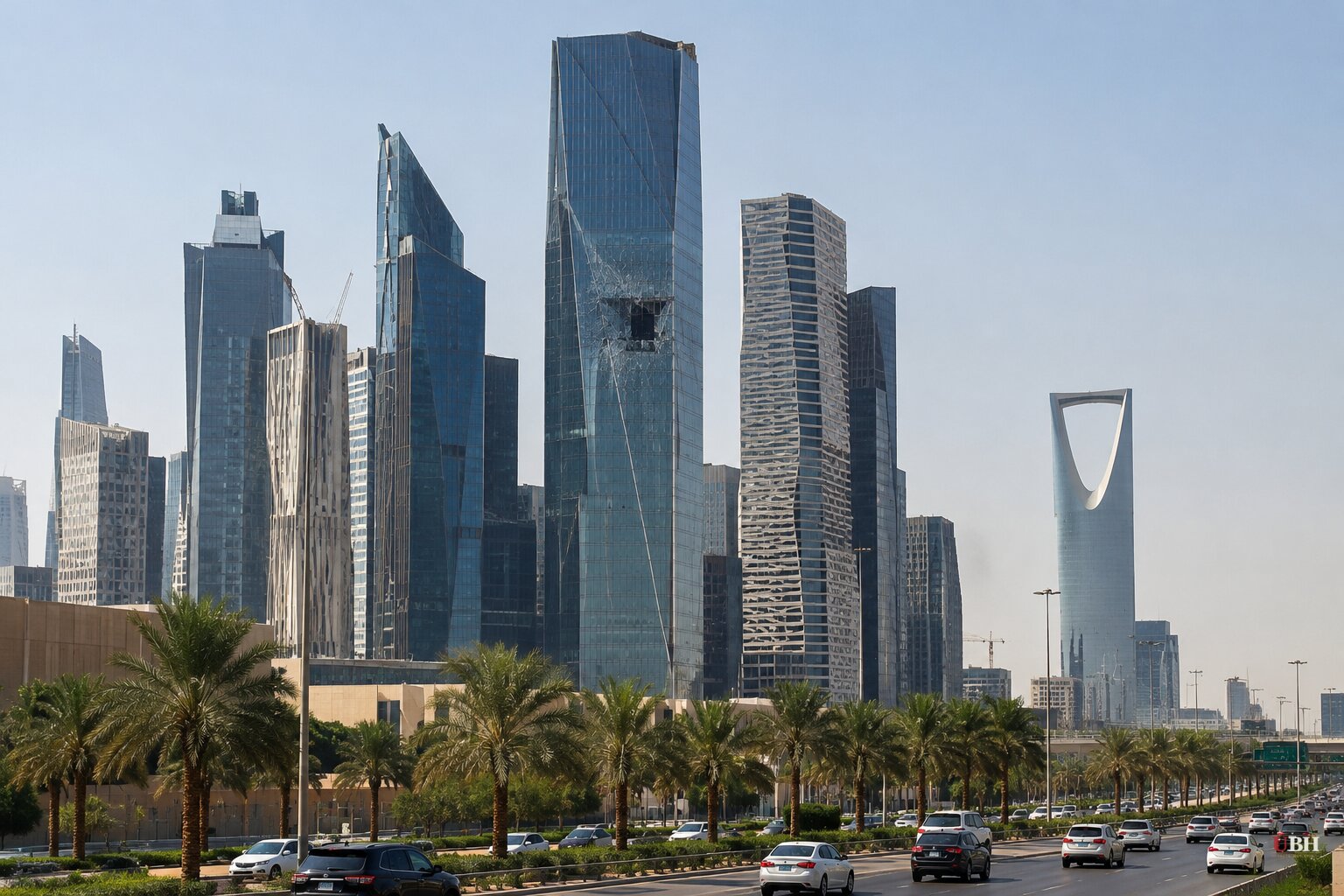
Since a Houthi missile damaged the Public Investment Fund Tower in Riyadh on Nov. 19, attacks on the capital's King Abdullah Financial District have continued. On Tuesday, Nov. 24, a second tower in the district was hit, and the Saudi General Directorate of Civil Defense says 11 people were injured.
Who was hurt
Civil Defense said the injured were two Saudi citizens, two Indian residents, three Nepalese residents and four Egyptians. The agency called the strike a "terrorist attack" by the Houthis. It did not provide details on the nature or severity of the injuries.
Civil Defense said authorities responded immediately and implemented the approved emergency measures and procedures, taking necessary steps to protect lives and property. Earlier Tuesday, coalition spokesman Turki al-Malki called it a "cowardly terrorist attack" on one of the district's towers.
Strikes on the same district
The Nov. 19 strike hit the 80-story Public Investment Fund Tower, the tallest skyscraper in Riyadh and the headquarters of the Saudi Public Investment Fund. It blew out windows across seven or eight floors and bent parts of the metal facade. Civil Defense said at the time there was "material damage but no injuries."
That same day, al-Malki said Saudi air defenses destroyed four ballistic missiles fired toward the southern region. He said the coalition also destroyed a ballistic missile launch platform in Dhamar that the Houthis had used in an attempt to attack Riyadh.
The district was also hit on Nov. 8, when an administrative building belonging to Saudi Aramco was struck. Saudi officials said falling shrapnel caused minor damage and no injuries, though video verified by CNN showed windows blown out across several floors.
On Sunday, Nov. 22, the Houthis claimed a "direct hit" on the Petro Rabigh refinery on the Red Sea coast. The Saudi government did not immediately confirm any damage, and unverified video posted to social media showed fires burning at the refinery.
What the Houthis say they are doing
The Houthis frame the campaign as retaliation. They have said they will keep firing missiles and drones at Saudi Arabia as long as the Kingdom carries out airstrikes on Houthi-held parts of Yemen and enforces a blockade against the territory.
Mahdi al-Mashat, a senior Houthi official, said on Saturday, Nov. 8: "We will punish the Saudi regime for its crimes against the Yemeni people." That came a day after Yemen's Houthi-run health ministry said Saudi airstrikes killed at least 33 people near Sanaa, including women and children.
In the days before the latest strikes, the Houthis said they would hit targets across Saudi Arabia with missiles and drones in retaliation for a Saudi "special operation" against Houthi weapons shipments and smuggled goods at the port of Hodeida. They also advised civilians to evacuate Riyadh's financial district, which they deemed a "military target." The Houthi-run "Humanitarian Operations Coordination Center" warned shipping companies it was "unsafe" to dock at the Saudi port of Jeddah.
The Saudi Foreign Ministry's response after the Nov. 19 strike was to affirm the Kingdom's "full and legitimate right to take all necessary measures to defend its sovereignty." It called on the permanent members of the U.N. Security Council to condemn the attacks and implement relevant resolutions. The Council adopted a resolution condemning the Houthis' military escalation on Nov. 12.
The defense problem
Saudi Arabia spent $83 billion on defense last year, according to the Stockholm International Peace Research Institute, which puts it firmly among the world's top 10 military spenders. The Kingdom has acquired Patriot and THAAD air defense systems, U.S. fighter jets and advanced weaponry from France and the United Kingdom.
It also has a lot of territory to cover. CNN notes the country is roughly one-fifth the size of the United States, with threats from Iran, Iranian-backed militias in Iraq and the Houthis. Analysts say the Houthis have learned to combine ballistic and cruise missiles with long-range drones to overwhelm Saudi defenses.
The U.S. Embassy and consulates in Saudi Arabia warned Americans this week to exercise "heightened vigilance" over the increased threat of armed attacks by Iranian-supported Houthis. Last month, 13 people were killed in one missile strike on Riyadh's international airport, with several more dying in other strikes there, according to CNN.
Civil Defense has not said how badly the 11 injured people were hurt.
Sources used for this briefing
7 links from 7 independent newsrooms (syndicated copies of the same report count once)
These are the sources it draws on, linked so you can verify.


