
Unbiased headlines. Facts, not spin.
Every story is an unbiased news briefing written from 110+ sources across the spectrum — sources linked so you can verify it yourself.
 defense
Low Interest (4/10)
May 24, 2026 at 03:49 AM
defense
Low Interest (4/10)
May 24, 2026 at 03:49 AM
Survivors of the March 1 Hormuz Tanker Attacks Speak Out — Two Are Dead, One Missing, Families Still Waiting
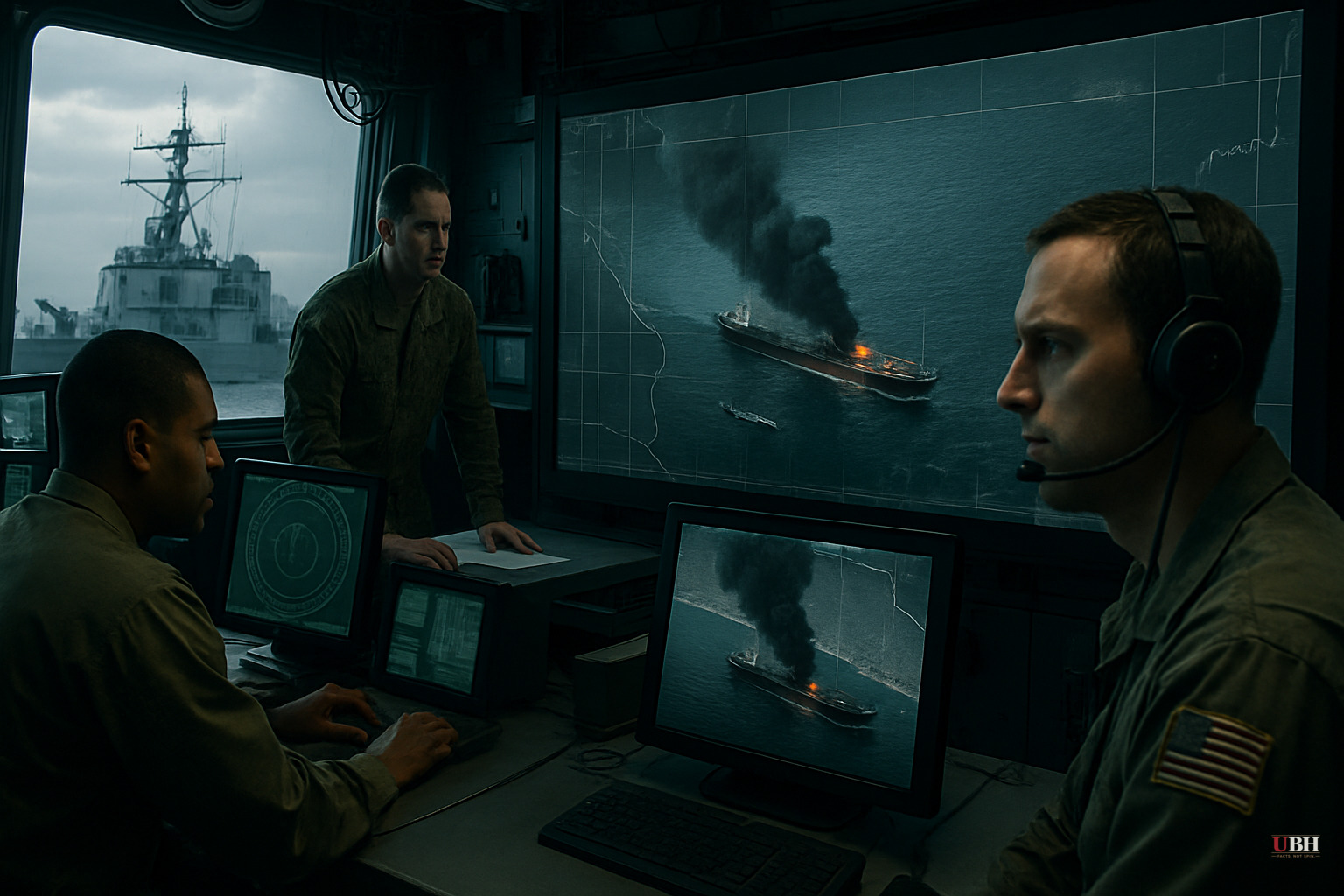
The Men Behind the Headlines
Sunil Puniya, 26, was on his first job at sea when a missile tore into the engine room of the oil tanker Skylight on March 1. According to BBC News, Puniya was asleep on the third floor when the first explosion hit. He thought it was an engine fault. Then the second explosion came.
"There was a complete blackout, and smoke had spread everywhere," Puniya told BBC. "Everyone was having trouble breathing."
He rallied panicked crewmates who were calling their families and physically guided them to the deck. By the time they got there, the ship was on fire. Oil was spreading across the water. They jumped.
One Dead. One Still Missing.
The Skylight wasn't the only ship hit that morning. Two hours later, the MKD Vyom — a Marshall Islands-flagged tanker bound for Ras Tanura, Saudi Arabia — took a missile strike as well. According to British Brief, citing a Guardian account, the survivor known as "Basis" described an explosion that knocked him unconscious instantly.
"There were immense shock waves and a fireball," Basis said. "For one or two seconds, I was knocked out. Everything went black."
In total darkness, he crawled to the bridge. Nearly passed out from smoke inhalation. Twice or three times, he said, he nearly lost consciousness. He kept moving.
When he reached the deck, he learned that his crewmate Dixit Solanki, 32, an oiler from Mumbai, was still in the engine room where the fire was raging.
The 21-person crew fought the blaze for four hours — using fire extinguishers, sand, and buckets of seawater hauled by hand over the side. They found Solanki dead under collapsed metal. Then a second fire broke out through ruptured oil tanks. The ship was carrying 60,000 tonnes of petrol. The captain ordered everyone off.
"Leaving the vessel, leaving a colleague behind, trapped in the engine room, was unbearable," Basis said, according to British Brief.
Solanki's father, Amratlal Gokal Solanki, called his son "a son, a protector and the heart of the family." He is calling on governments and shipping companies to do more to protect civilian crews in conflict zones.
The Captain Nobody Can Find
On the Skylight, the missing person is Captain Ashish Kumar. His family has not heard from him since before the attack. His wife, Ansu Kumari, refuses to accept he is dead.
"I have full faith that he is trapped," she said, according to British Brief.
There is no confirmed information on his whereabouts. Oman's Navy launched a rescue operation within an hour of the Skylight attack, per BBC News. Whether Kumar was recovered, is still at sea, or died in the strike — nobody is saying publicly.
Dalip Rathore, another crewman who was working in the engine room of the Skylight when the missile hit, has also not been found, according to BBC News.
Two men unaccounted for. Their families waiting. No official statement.
A Third Ship Gets Shot At
The Washington Post reported a separate incident: a Filipino crew of 23 had been stranded at anchor in the Persian Gulf for more than a month waiting for the conflict to cool. When they finally tried to transit the Strait of Hormuz, they were met with gunfire.
The Post's account offered limited detail on the incident, but the episode underscores conditions in the strait. Civilian vessels face gunfire during transits. Crews sit at anchor for weeks waiting for safe passage.
Coverage and the Human Cost
Early reporting on the attacks focused largely on geopolitical implications. Ship struck. Coordinates noted. Sanctions angle covered.
Less visible in the coverage: these are civilian merchant mariners. Not military personnel. Not combatants. They are contract workers, many from India and Southeast Asia, doing dangerous jobs far from home for modest wages. Puniya was on his first voyage. Solanki was 32 with a family in Mumbai.
The media narrative has centered on the U.S.-Iran-Israel strategic triangle. The human cost of that conflict, however, includes sailors jumping into burning water in the middle of the night and fathers in India burying sons they cannot fully recover.
Also drawing less attention: the shipping industry's role. Solanki's father called out both governments and shipping companies. Who cleared the MKD Vyom to transit a war zone with 60,000 tonnes of petrol?
What This Means
The Strait of Hormuz handles roughly 20% of the world's oil supply. Every ship that gets hit, every crew that gets stranded for a month at anchor, every Filipino sailor who gets shot at — adds friction to a system that moves energy to gas stations and power grids worldwide.
Dixit Solanki is dead. Ashish Kumar is missing. A 26-year-old jumped into a burning sea on his first job. The conflict in the Gulf has a human cost measured in engine rooms nobody can reach and families waiting for answers that never come.
Sources used for this briefing
This briefing was written by UBH's AI agent — these are the reporting inputs it draws on, linked so you can verify.


