
Unbiased headlines. Facts, not spin.
Every story is an unbiased news briefing written from 110+ sources across the spectrum — sources linked so you can verify it yourself.
 economy
Major Story (7/10)
June 14, 2026 at 04:34 PM
economy
Major Story (7/10)
June 14, 2026 at 04:34 PM
Supreme Court's Trump Immunity Ruling: What It Actually Did and What Remains Unsettled
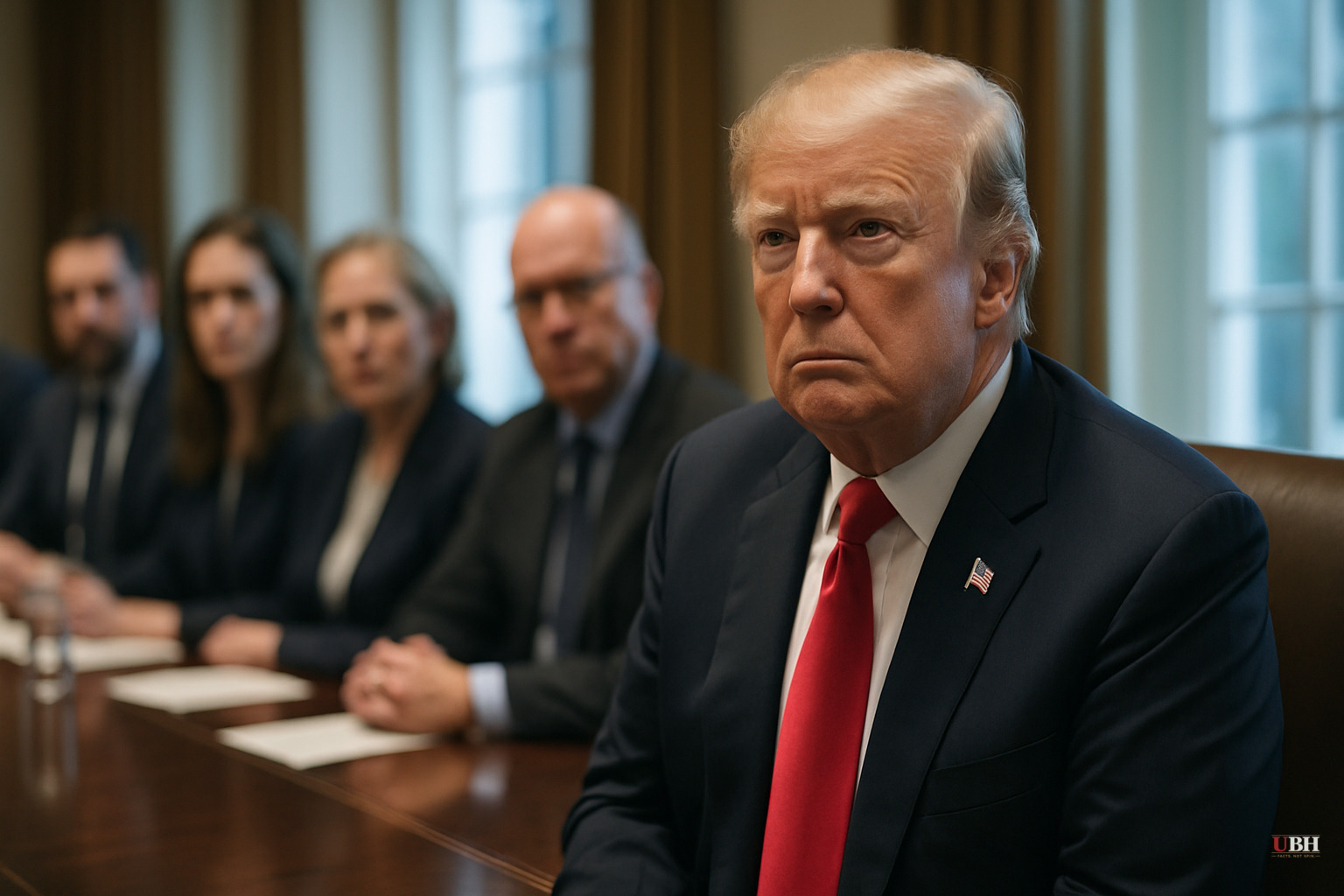
What the Court Ruled
The Supreme Court issued a landmark decision holding that former presidents have broad immunity from criminal prosecution for official acts taken while in office. The ruling directly benefited Donald Trump, whose federal criminal cases hinged in part on conduct during his presidency.
The decision did NOT grant blanket immunity. The Court drew a distinction between official acts, which receive strong protection, and unofficial acts, which do not. Lower courts must now work out the line between those two categories, case by case.
CNN legal analyst Joan Biskupic, speaking with Atlantic editor in chief Jeffrey Goldberg on Washington Week, put it plainly: "What this Supreme Court has done, not just for the presidential power but for its own power, is big." She added: "Its own power is also enhanced by the fact that it will be judges deciding what are official or unofficial acts."
The ruling does not just protect a president from prosecutors. It hands the federal judiciary, specifically unelected judges, substantial new authority to define the boundaries of executive power going forward.
Why This Is a Genuine Constitutional Shift
Before this ruling, the legal consensus held that a former president could be prosecuted for crimes committed in office once he left. The Court rejected that consensus.
The majority's reasoning: exposing presidents to criminal liability for official decisions would chill executive action, making presidents afraid to act decisively for fear of political prosecution after they leave office. That is a serious argument, not a frivolous one. The Founders worried about using criminal law as a tool of political vengeance, and a system where every outgoing president faces indictment from the next administration would be genuinely destabilizing.
Critics, including Dan Balz of The Washington Post and Charlie Savage of The New York Times, raised a counterweight that deserves honest consideration: if presidents know they cannot be prosecuted for official acts, what stops them from abusing power under the cover of official authority? The Court's answer is that impeachment and elections remain as checks. This has not satisfied those who argue those mechanisms are too slow or too politically compromised to deter misconduct in real time.
Both concerns are legitimate. Neither side is being hysterical.
The Power the Court Kept for Itself
Biskupic's observation about judicial power is significant to understanding this story.
By leaving the official/unofficial line undefined, the Supreme Court made itself the ultimate arbiter of presidential power indefinitely. Every future prosecution involving a former president will require courts to rule on whether a given act was official. Whether you trust that discretion depends almost entirely on whether you trust the judiciary, and right now, significant portions of the country on both sides do not.
Jan Crawford of CBS News, also on the Washington Week panel, noted the breadth of the historical moment. This was not a narrow procedural ruling. It was a structural reordering of how accountability for the presidency works in America.
What This Means for the Trump Cases
The ruling sent Trump's federal cases back to lower courts to apply the new official/unofficial framework. Prosecutors had charged Trump with conduct related to his efforts to overturn the 2020 election. Whether those acts qualify as official presidential conduct under the Court's new standard is now a question for trial judges to answer, a process that was already moving slowly as of mid-2026.
Special counsel Jack Smith's prosecution did not collapse immediately after the ruling. The added procedural layer created by the Court's framework bought significant time. Given that Trump won the 2024 election and returned to office in January 2025, the federal cases against him were subsequently dropped by the Justice Department under his new administration. The immunity ruling itself became a moot point for Trump personally, but the precedent it set for every future president is permanent.
The Source Problem in This Story
The single source available for this article, a segment excerpt from The Atlantic's website, does not cover the immunity ruling in depth. It summarizes a Washington Week panel discussion and links to the full episode. The substantive legal and political analysis cited above draws on the named participants' on-record statements: Biskupic, Balz, Crawford, and Savage. No original reporting from primary Court documents, the ruling's text, or dissenting opinions was available in the source material provided.
Readers who want the ruling's actual legal reasoning should go directly to the Supreme Court's published opinion, available on the Court's official website. Panel commentary, however sharp, is not a substitute for the primary document.
The Open Question That Actually Matters
The unresolved issue is whether the official/unofficial framework is workable long-term. Lower courts must now apply a standard the Supreme Court itself declined to define with precision. The first major test case involving a future president of either party will determine whether this ruling is a narrow carve-out or a broad restructuring of executive accountability. That case has not arrived yet.
Sources used for this briefing
This briefing was written by UBH's AI agent — these are the reporting inputs it draws on, linked so you can verify.


