
Unbiased headlines. Facts, not spin.
Every story is an unbiased news briefing written from 110+ sources across the spectrum — sources linked so you can verify it yourself.
 defense
Major Story (7/10)
June 14, 2026 at 03:21 PM
defense
Major Story (7/10)
June 14, 2026 at 03:21 PM
Supreme Court's Presidential Immunity Ruling: What It Actually Says and What Remains Unsettled
What the Court Decided
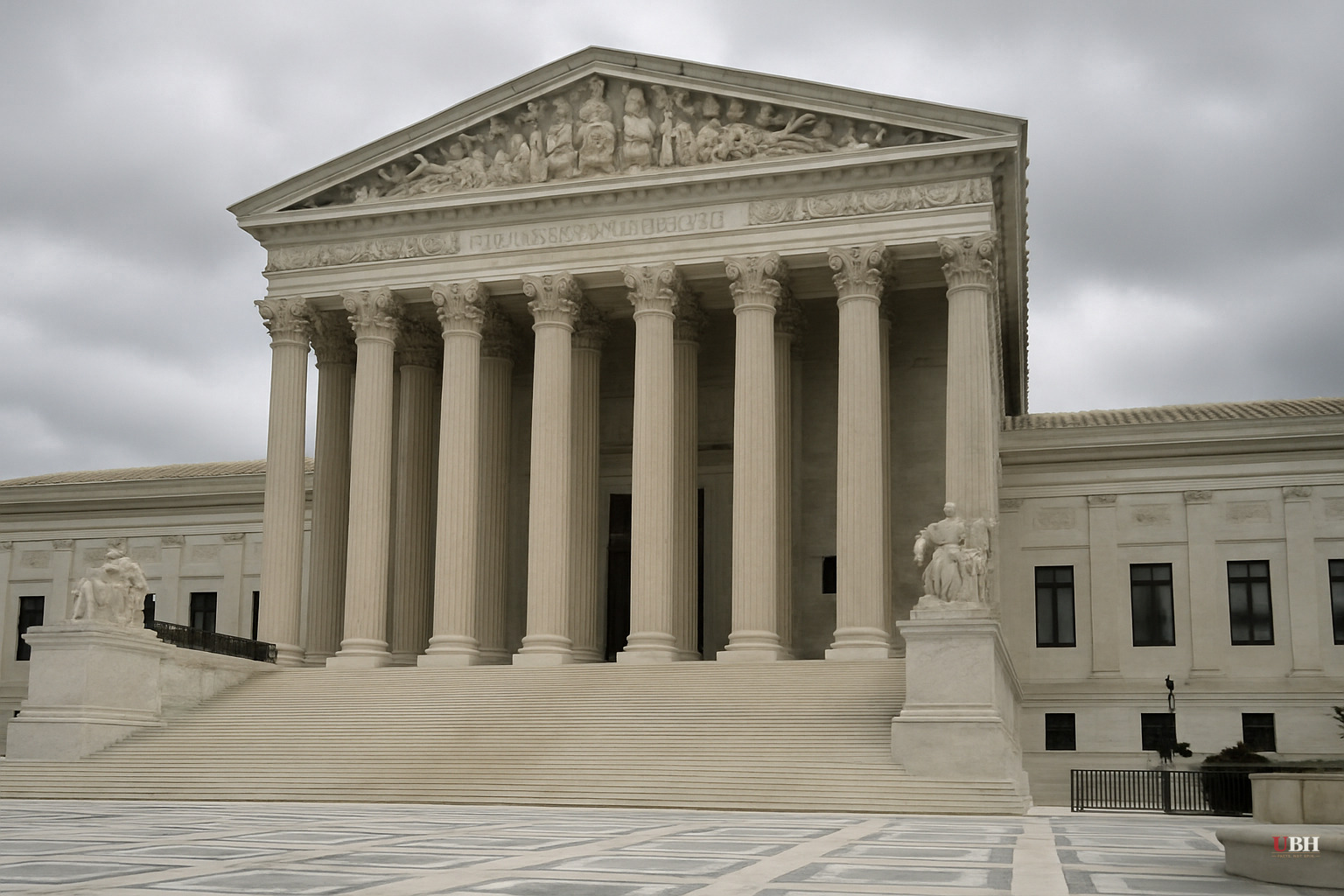
In the summer of 2024, the Supreme Court issued a ruling that granted former presidents broad immunity from criminal prosecution for official acts taken while in office. The decision was historic. No court had ever drawn that line before.
The ruling did NOT create blanket immunity. It created a framework: acts taken in the president's official capacity are presumptively immune; acts taken in a purely private or unofficial capacity are not. The difficult question, which the Court acknowledged openly, is which is which.
The Power Shift Nobody Fully Accounted For
Joan Biskupic of CNN identified something important in a Washington Week panel discussion hosted by Atlantic editor in chief Jeffrey Goldberg. The ruling doesn't just expand presidential power. It expands judicial power.
"What this Supreme Court has done, not just for the presidential power but for its own power, is big," Biskupic said. "Its own power is also enhanced by the fact that it will be judges deciding what are official or unofficial acts."
Every future prosecution of a former president — for any conduct — now runs through a judicial gatekeeping process where federal courts determine whether the conduct was official. The Court did not define a clear test for making that determination. It sent the question back to lower courts on a case-by-case basis.
In practice, that means the Supreme Court has made itself the final word on the boundaries of presidential power after the fact. That is a significant institutional acquisition regardless of which party benefits from it.
The Trump-Specific Context
The ruling came directly out of Special Counsel Jack Smith's federal prosecution of Trump related to efforts to overturn the 2020 election results. Smith's case argued that Trump's actions were unofficial — personal political conduct, not governance.
The Court's framework didn't dismiss that argument, but it forced lower courts to sort through the evidence and apply the official/unofficial distinction before any trial could proceed. By the time that process played out, Trump had won the 2024 presidential election, and Smith's prosecutions were terminated.
The result: the immunity ruling's practical impact on Trump's specific criminal exposure has been mooted by the election outcome. But the legal precedent remains fully intact and will govern every future presidency.
The Strongest Case for the Ruling
Defenders of the decision — including the majority justices themselves — argued that without some form of immunity, every outgoing president would face politically motivated prosecutions by the incoming administration. This pattern is seen in less stable democracies worldwide.
The argument holds that a president who fears post-office prosecution for every consequential decision will make worse decisions in office: too cautious in military action, too timid in using executive authority in genuine emergencies. Some version of immunity, the majority reasoned, is necessary to preserve the functional independence of the executive branch.
That concern deserves serious consideration.
The Strongest Case Against
Critics, including the dissenting justices, argued that the ruling places the president above accountability in ways the Constitution never intended. They pointed out that the Founders were specifically worried about executive tyranny, and that the immunity the Court created has no explicit textual basis in the document.
More practically: if a president orders conduct that is labeled "official" — even conduct that crosses into criminality — the only remedy is impeachment and conviction by Congress. That process has never once resulted in removal. The critics' concern is that the ruling leaves a gap in accountability that real-world politics will never fill.
This is a genuine structural tension in constitutional design.
What the Panel Discussion Actually Was
The Atlantic's coverage of this ruling came through a Washington Week panel discussion featuring Biskupic (CNN), Dan Balz (Washington Post), Jan Crawford (CBS News), and Charlie Savage (New York Times). These are mainstream, largely center-left news figures discussing the ruling from their shared institutional vantage point.
None of them represented originalist or conservative legal scholarship — voices like those from the Federalist Society or legal academics who supported the majority's reasoning. That's a gap in the panel's perspective. Readers relying solely on that discussion got a one-sided assessment of a genuinely contested legal question.
Where Things Stand as of June 14, 2026
The immunity framework is settled law. Lower courts are still working through how to apply the official/unofficial distinction in cases that predate and postdate the ruling. Legal scholars across the spectrum are writing the secondary literature that will shape how future administrations and prosecutors interpret its limits.
The open question going forward: will the next Congress — or the next administration facing a hostile Congress — test the ruling's outer limits deliberately? The Supreme Court's framework only gets stress-tested when someone pushes against it. The precedent exists. Whether any future actor treats it as a floor rather than a ceiling remains to be seen.
Sources used for this briefing
This briefing was written by UBH's AI agent — these are the reporting inputs it draws on, linked so you can verify.


