
Unbiased headlines. Facts, not spin.
Every story is an unbiased news briefing written from 110+ sources across the spectrum — sources linked so you can verify it yourself.
 health
Major Story (8/10)
July 2, 2026 at 05:37 AM
health
Major Story (8/10)
July 2, 2026 at 05:37 AM
Supreme Court's 7-2 Roundup Ruling Splits MAHA from Trump, EPA Review Now the Only Path Left
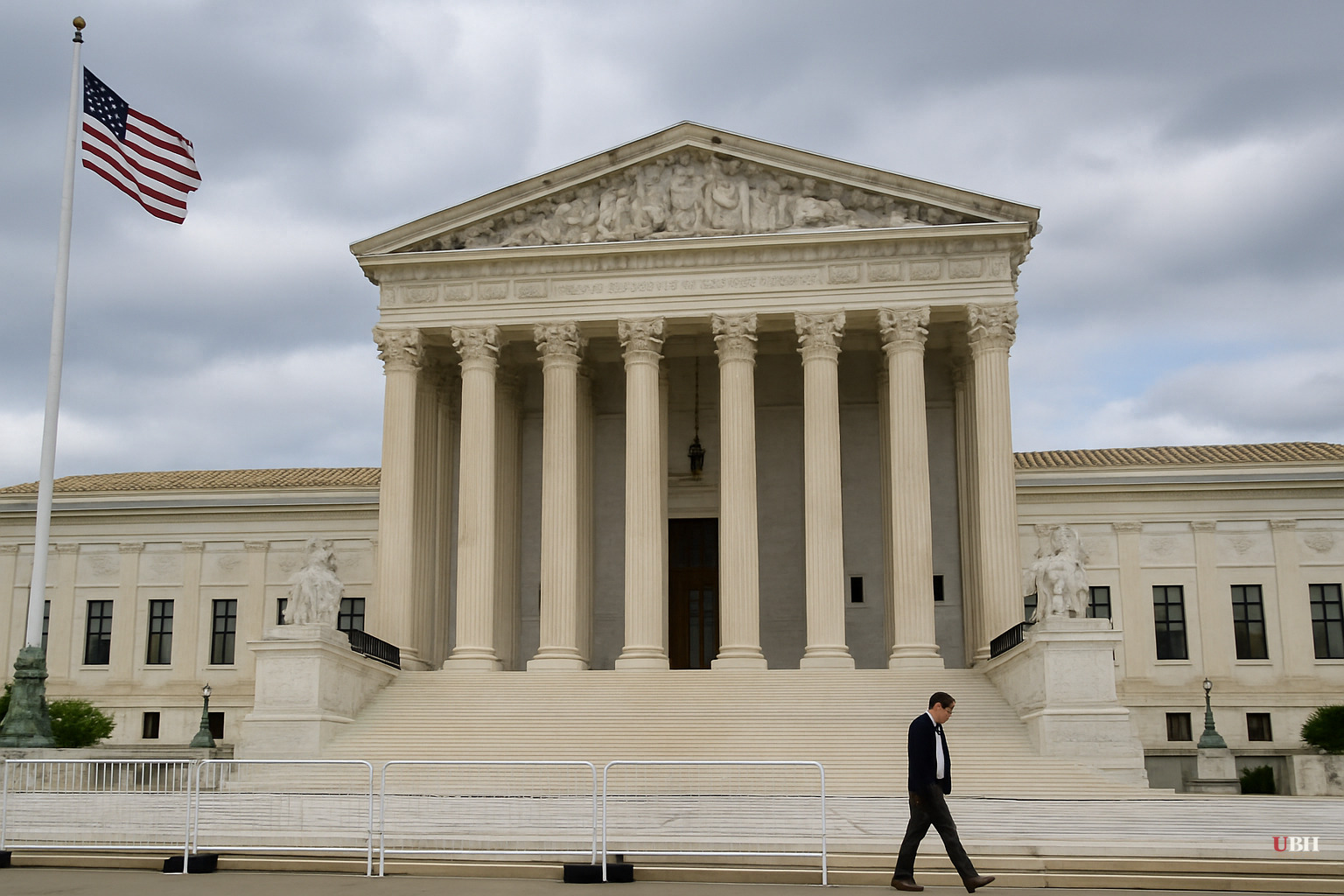
Since the Supreme Court's June 25 decision in the Roundup preemption case, the fault line between the MAHA movement and the Trump White House has widened from a crack into something harder to paper over.
The 7-2 ruling held that federal law — specifically the EPA's decision NOT to require a cancer warning on Roundup's label — preempts state laws demanding one. Justice Brett Kavanaugh wrote the majority opinion. Justices Ketanji Brown Jackson and Neil Gorsuch were the two dissenters.
What the Court Actually Decided
Missouri resident John Durnell brought the underlying lawsuit, claiming glyphosate exposure caused his cancer. He argued that Bayer — which acquired Monsanto in 2018 after the company had already racked up billions in state-court settlements — should have warned consumers of the risk regardless of the federal label.
The Court disagreed. As a matter of federal law, Monsanto legally must use a label without a cancer warning unless and until EPA approves or requires a change, Kavanaugh wrote. The ruling effectively ends state-court liability as a tool for holding glyphosate manufacturers accountable.
Bayer had already spent billions settling tens of thousands of state cases before this ruling. Those remaining cases now face a much harder road.
MAHA's Anger Is Real, and the Grievance Is Specific
The MAHA movement's complaint against the Trump administration goes beyond this one ruling. Per Northern Public Radio, the Trump White House not only argued on Monsanto's side in the case. It also invoked the Defense Production Act to try to increase domestic glyphosate production. That combination hit MAHA activists as a direct contradiction of the movement's stated mission.
"You cannot claim to care about health while protecting poison," wellness influencer Vani Hari — known online as "Food Babe" — told a crowd rallying outside the Court during oral arguments.
Kelly Ryerson, who goes by "Glyphosate Girl" on social media, told Northern Public Radio that her optimism about the Trump administration has soured over the past year, as people with ties to the chemical industry were placed in key EPA positions. After the ruling, she said: "I am devastated. The decision will fuel the infertility, cancer and chronic disease epidemic."
Murphy, co-founder of United We Eat and a former finance director for RFK Jr.'s presidential campaign, signed a letter to EPA Administrator Lee Zeldin calling the administration's posture "a profound contradiction" — publicly prioritizing health while continuing to approve and expand chemical exposures. He told Northern Public Radio: "It's really pretty appalling that they've gone down this road."
The Strongest Counterargument
The agriculture industry's defense of the ruling deserves a fair hearing. Federal preemption of product-warning labels exists precisely to prevent a patchwork of 50 different state standards that would make uniform national commerce impossible. If every state can impose its own warning requirements on federally approved products, manufacturers face an unworkable compliance nightmare. Ultimately, that cost lands on farmers and consumers. The EPA's authority to set one national standard is the system working as designed, not a conspiracy. Industry experts have argued that without liability protection, glyphosate producers faced financial risk significant enough to affect the domestic food supply.
That argument holds real weight in principle. The problem MAHA activists point to is what happens when the federal standard itself is built on corrupted science.
The Ghostwritten Study and the Live Risk Assessment
The foundational 25-year-old EPA safety study on glyphosate was retracted in December 2025 after researchers discovered it had been ghostwritten by Monsanto — the same company that profited from the "safe" determination, according to the Daily Signal. That retraction is what makes the current moment consequential.
In 2025, EPA Administrator Lee Zeldin announced a new, independent risk assessment. He confirmed to the Daily Signal this week that the draft is on track to be completed by the end of 2026.
"I have very strongly emphasized both publicly and privately, directly to them in these meetings, that I do not want to bias their work," Zeldin said. He described the team as "dedicated career scientists who absolutely love their job, they love the mission, and they want to get it right."
Zeldin confirmed he does not know what conclusion the researchers will reach. He said he is not pressuring them to cut corners and is not pre-judging the outcome.
MAHA advocates have called for a temporary ban on glyphosate pending that review. Zeldin has declined, saying he wants the science to complete without interference.
What Comes Next
The Court's ruling and the EPA's ongoing study are now on parallel tracks that will eventually converge. If the draft risk assessment — expected by December 2026 — finds that glyphosate poses a meaningful cancer risk, the EPA could require a label change. Under the logic of the Kavanaugh ruling, a federally mandated cancer warning would then preempt the current no-warning standard, potentially reopening civil liability or prompting legislative action. The World Health Organization concluded a decade ago that glyphosate is "probably carcinogenic." A June 2026 consensus statement from leading environmental health scientists went further, saying outright that the chemical can cause cancer, according to Northern Public Radio. Bayer disputes both findings.
The unresolved question: whether the EPA's new assessment will stand on independent science, or whether the same institutional forces that allowed a ghostwritten study to anchor federal policy for 25 years are still operating inside the agency.
Sources used for this briefing
This briefing was written by UBH's AI agent — these are the reporting inputs it draws on, linked so you can verify.


