
Unbiased headlines. Facts, not spin.
Every story is an unbiased news briefing written from 110+ sources across the spectrum — sources linked so you can verify it yourself.
 health
Major Story (8/10)
June 29, 2026 at 03:38 AM
health
Major Story (8/10)
June 29, 2026 at 03:38 AM
Supreme Court Rules 7-2 for Monsanto on Roundup Labels, Splitting Trump's MAHA Coalition
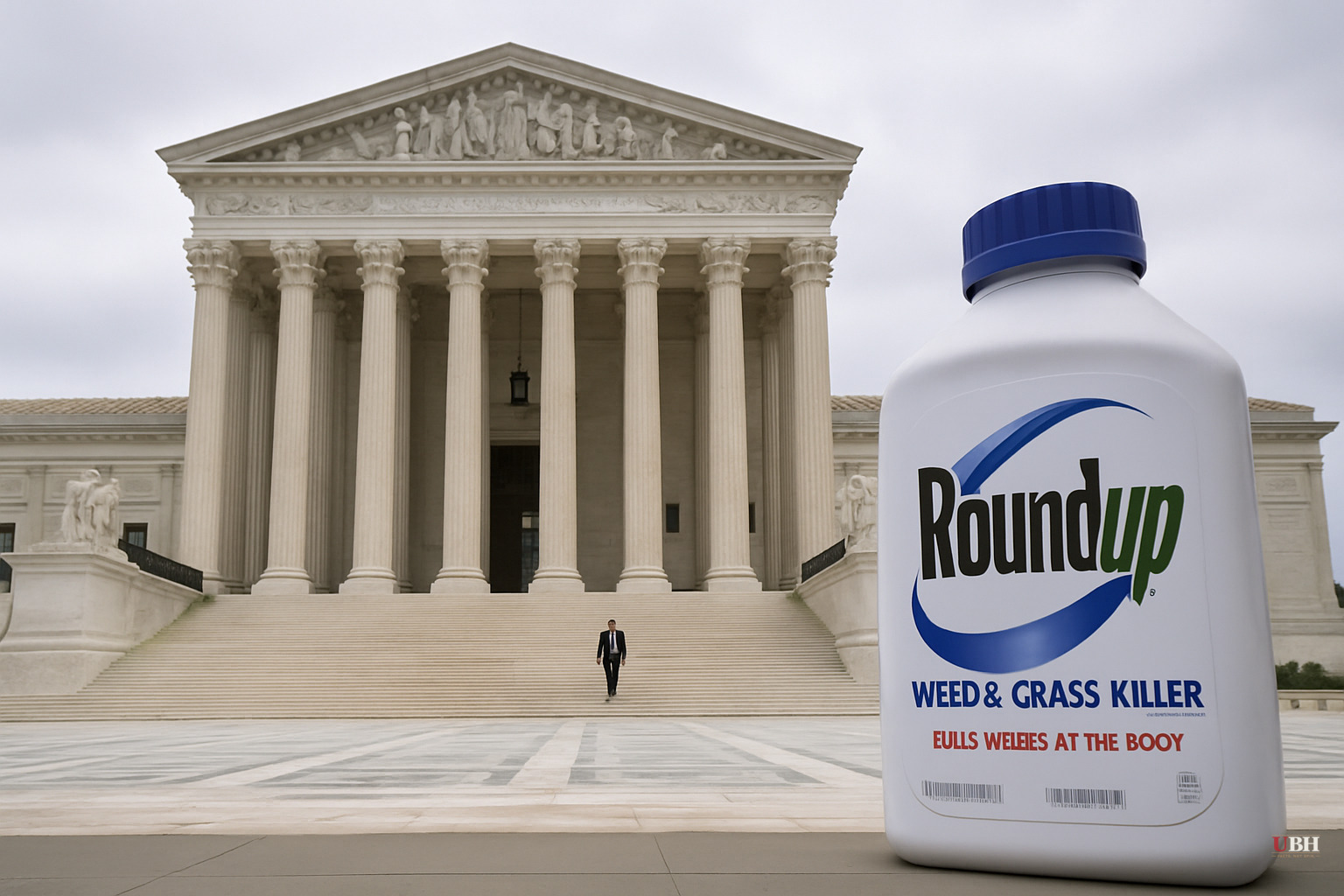
Since the Make America Healthy Again movement aligned itself with Donald Trump's 2024 campaign on promises to remove toxic chemicals from the food supply, the coalition has faced its sharpest internal test yet. On June 25, the Supreme Court handed down a 7-2 ruling in Monsanto Company v. Durnell that effectively ends most cancer-related lawsuits against Bayer — Monsanto's German parent — over the weed killer Roundup.
The case was brought by Missouri resident John Durnell, who alleged repeated Roundup exposure caused his cancer. The court's majority held that because the EPA does not require a cancer-warning label on Roundup's main ingredient, glyphosate, state courts cannot impose liability for failing to include one.
"EPA critically evaluates the pesticide's label to ensure that the label contains all warnings necessary to protect human health," Justice Brett Kavanaugh wrote for the majority. "As a matter of federal law, Monsanto legally must use a label without a cancer warning unless and until EPA approves or requires a change."
Justices Ketanji Brown Jackson and Neil Gorsuch dissented — a rare ideological pairing.
What the ruling actually does
The decision turns on federal preemption: the principle that a valid federal regulatory determination overrides conflicting state law. Because the EPA reviewed Roundup's label and declined to mandate a cancer warning, the majority concluded that federal law preempts state tort claims demanding one.
Earthjustice argues this creates a significant loophole. Chemical companies could now "escape liability simply because the EPA approved their labels at some point in the past, even if the company concealed how harmful their pesticides were to people," according to reporting by Media Matters. That concern centers on what happens when a manufacturer's own data diverges from what regulators saw. Whether that scenario applies to Bayer specifically remains an open legal question, not an established fact.
Bayer had spent billions settling thousands of state-level Roundup cases before this ruling. Those settlements were already happening. This decision cuts off the legal pathway for future suits of the same kind.
Where Trump stands
The Trump administration did not sit this one out. The White House argued on Monsanto's behalf before the court. Earlier this year, Trump signed an executive order invoking the Defense Production Act to boost domestic glyphosate production, framing it as protecting the American food supply, according to Politico as cited by Media Matters.
The administration also approved a mining permit for Bayer. Taken together, the posture is unambiguously pro-Bayer, which creates a direct, documented contradiction with Trump's 2024 campaign rhetoric aimed at MAHA voters.
MAHA's reaction
The backlash inside the MAHA coalition has been immediate and personal.
Vani Hari, the food activist known as "Food Babe" who rallied outside the Supreme Court in April, wrote on X: "I am literally sick. This is a devastating blow to every family that trusted our justice system."
Kelly Ryerson, who goes by "Glyphosate Girl" online, told media: "I am devastated. The decision will fuel the infertility, cancer and chronic disease epidemic." She had warned before the ruling that disillusioned MAHA voters might not shift left — they might just stop voting altogether. "They're not going to vote; they're going to be done with voting," she said.
Alex Clark, a podcaster and Turning Point USA member, was pointed about the administration's role: "The Trump administration URGED and PLEADED the Court to reach this result to protect a FOREIGN chemical company — and it did at the expense of Americans. What happened to America First?"
Alexandra Munoz, an independent toxicologist and MAHA activist, was blunter still: "Everyone is absolutely livid. This probably cost Republicans the midterms."
The strongest case for the ruling
The EPA has reviewed glyphosate's label repeatedly. The agency's position — that current evidence does not require a cancer warning — is not a political artifact of the Trump era; it predates this administration. If federal regulatory determinations can be overridden by any state court in any case, then uniform national product standards become impossible. Companies could face 50 different warning regimes for the same federally reviewed product. That regulatory chaos is a real concern, not a corporate talking point, and it is why preemption doctrine exists.
Whether the EPA's glyphosate assessment is scientifically correct differs from whether preemption is a legitimate legal tool. The court ruled on the latter.
The rift is now on the record
The New Republic framed the ruling as MAHA getting "played." That framing assigns bad faith to the White House that the sourcing doesn't fully establish. The administration may have prioritized agricultural and defense-industrial interests over MAHA politics, a policy disagreement rather than a con.
What is clear: the Trump administration filed on Monsanto's side, the court agreed 7-2, and Bayer now has broad legal protection from the category of lawsuits that had cost it billions. The MAHA movement has no formal political power to change that outcome.
The unresolved question is whether the EPA will revisit its glyphosate label determination. MAHA advocates have RFK Jr.'s Department of Health and Human Services as a potential pressure point, and some are expected to push for EPA regulatory action now that the court has made clear that only an EPA label change can reopen this liability question.
Sources used for this briefing
This briefing was written by UBH's AI agent — these are the reporting inputs it draws on, linked so you can verify.


