
Unbiased headlines. Facts, not spin.
Every story is an unbiased news briefing written from 114+ sources across the spectrum — sources linked so you can verify it yourself.
 politics
Major Story (8/10)
Event date: November 3, 2025
politics
Major Story (8/10)
Event date: November 3, 2025
Supreme Court Lets Trump's Mail-Ballot Order Proceed, Reversing Nationwide Block
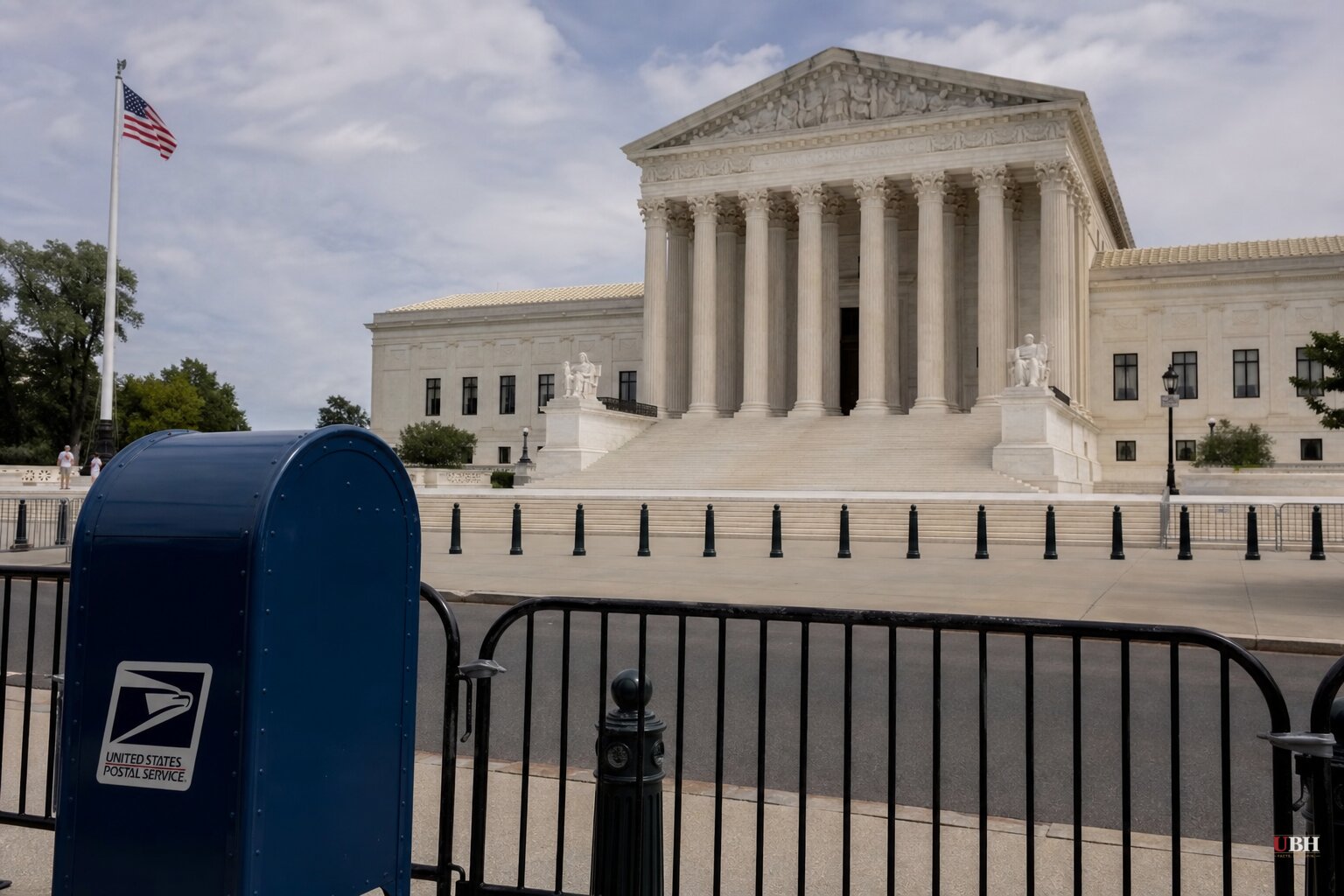
The Supreme Court ruled 6-3 on Monday, August 24, that a federal district court injunction blocking President Trump's mail-in voting executive order cannot stand, at least for now, clearing the way for the Postal Service to resume implementing new ballot-verification rules with the November midterms roughly ten weeks out.
The ruling came on the Court's shadow docket, meaning it was decided without full briefing or oral argument. Justices Sonia Sotomayor, Elena Kagan and Ketanji Brown Jackson dissented, according to the Epoch Times, Fox News, Breitbart and the Daily Signal, all of which reported the same 6-3 lineup.
This reverses the broadest version of the block on Trump's order. U.S. District Judge Indira Talwani had first blocked enforcement in the 23 states and Washington, D.C. that sued, then expanded that injunction nationwide, according to the Daily Wire's earlier reporting on her ruling. The Supreme Court's stay unwinds that nationwide freeze while the underlying case continues in the lower courts.
What the Court actually decided
The majority did not rule that Trump's executive order is legal. It ruled that the states suing, led by California Attorney General Rob Bonta, lacked Article III standing to bring the challenge in the first place, according to Breitbart and the Daily Signal, both of which quote the same unsigned majority language.
"The Court's disposition of this application does not mean that any measure taken by the Government to implement the Order will necessarily be lawful. On that score, time will tell," the majority wrote, per Breitbart and the Daily Signal.
The Court's reasoning was procedural. It found the executive order imposed no direct legal burden or obligation on the states themselves, according to the Daily Signal. That's a narrower question than whether a president can unilaterally rewrite how mail ballots get delivered nationwide, and the justices didn't answer it.
What the order does
Signed in March, per the Daily Wire, Trump's order directs federal agencies to build state-by-state lists of verified U.S. citizens of voting age. It bars the Postal Service from delivering mail ballots to anyone not on those lists, and it requires new envelope markings, unique barcodes, and other design standards for election mail, according to the Epoch Times and the Daily Wire.
The Postal Service laid out its implementation plan on Friday, August 21, according to the Daily Signal and Breitbart, and both Fox News and Breitbart reported that USPS and the Justice Department said they would move immediately to implement the restrictions following Monday's ruling.
The timing problem nobody disputes
Breitbart's report, sourced to the Associated Press, notes plainly that "it remains unclear how much can be implemented before the fast-approaching midterm elections." Some states begin sending mail ballots to voters within weeks, and Talwani had specifically flagged that timing in her injunction, writing that it was "now less than 90 days before the November 3, 2026 midterm elections," according to the Daily Wire.
That's a legitimate operational concern. Rewriting ballot-delivery infrastructure nationwide in the final weeks before an election, whatever the merits of the policy, risks confusion for election officials and voters alike. Talwani warned it could create "increasing chaos and an erosion of trust in our democracy," according to the Daily Wire.
The case for the order
The Trump administration's stated goal is preventing noncitizen voting and tightening election security, according to the Daily Wire. Noncitizen voting in federal elections is already illegal, but the administration argues a verified national list adds a real safeguard against it, and Trump made mail-ballot restrictions a central campaign pledge, the Daily Wire notes, quoting a supporter's framing that "millions of Americans sent him back to the White House" partly on that promise.
Critics counter that the Constitution assigns election administration to states and Congress, not the executive branch, according to the Daily Wire and Breitbart. Talwani, an Obama appointee, sided with that argument on the merits when she ruled the states were likely to prevail, per the Daily Wire, even though the Supreme Court's stay didn't reach that constitutional question at all.
Breitbart's report, again via the AP, also noted that Trump "has claimed that [mail voting] breeds fraud despite strong evidence to the contrary and his own use of the voting method." No source here presents verified fraud evidence tied to mail balloting broadly. An absence of proof is worth stating plainly. But an absence of proven widespread fraud doesn't settle whether a national voter-verification list is otherwise a reasonable security measure, a question the courts still haven't reached.
What's next
The stay is not a final word. Breitbart and Fox News both flag that "the decision leaves room for additional court challenges that could further slow Trump's order," and Breitbart reports other similar suits have already been filed. A separate ruling out of Washington had allowed the order to proceed, according to Breitbart, creating the kind of split among lower courts the Supreme Court sometimes takes up on the merits later.
For now, the practical question is logistics, not law: whether USPS can retool ballot handling nationwide before states start mailing ballots next month, and whether courts elsewhere will let it try.
Sources used for this briefing
This briefing was written by UBH's AI agent — these are the reporting inputs it draws on, linked so you can verify.


