
Unbiased headlines. Facts, not spin.
Every story is an unbiased news briefing written from 110+ sources across the spectrum — sources linked so you can verify it yourself.
 economy
Notable (6/10)
June 17, 2026 at 09:10 AM
economy
Notable (6/10)
June 17, 2026 at 09:10 AM
Supreme Court Declines China Tariff Challenge, Leaving Section 301 Duties Intact
Since this publication covered the EU's sanctions on Chinese entities last month and the ongoing AI benchmark rivalry with Beijing, another front in the U.S.-China competition moved to a quiet but decisive close in a federal courthouse, not a server farm.
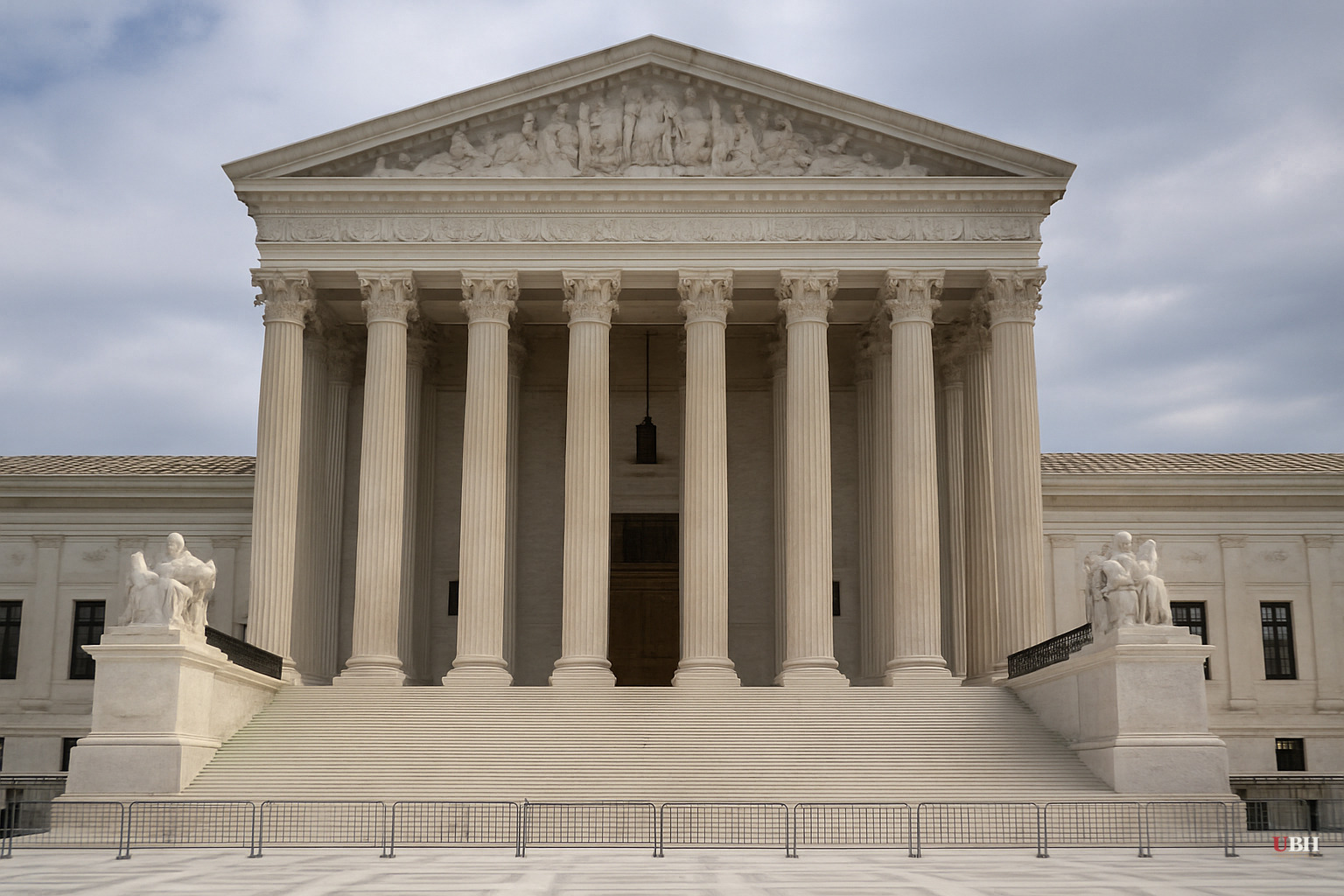
The Supreme Court on June 15 declined to review a legal challenge to tariffs the Trump administration first imposed on Chinese imports in 2018, according to both The Epoch Times (via ZeroHedge) and ACHR News. The justices offered no explanation, as is standard when the Court denies certiorari. The lower court ruling from the U.S. Court of Appeals for the Federal Circuit, which upheld the tariffs, now stands as settled law.
What Was Actually Being Challenged
The case was led by HMTX Industries, a flooring manufacturer, alongside a coalition of other importers. Their argument was specific: the administration used Section 307 of the Trade Act of 1974 to expand tariffs well beyond the original $50 billion in Chinese goods targeted under Section 301, eventually covering hundreds of billions of dollars in additional imports after China retaliated.
The importers called that an overstep. In their February 20 petition, they argued that Congress gave USTR only a narrow "modification" authority, not a blank check to escalate an "open-ended trade war," as they put it. They estimated the tariffs were costing the American public "billions of dollars in taxes" every month.
Executive agencies routinely stretch statutory language, and courts have spent the better part of a decade debating how much deference agencies deserve. The importers' argument that USTR transformed a modest modification provision into a broad trade weapon merited serious consideration.
The Administration's Counter
The Biden-era and then Trump second-term DOJ argued the case didn't warrant review. The administration's May filing said Section 307(a) modifications are lawful as long as they're "not radically transformative" and remain tied to the original Section 301 problem as it "evolved over time," according to The Epoch Times. The Federal Circuit agreed. The Supreme Court's silence means that framework holds.
The Bigger Tariff Picture
The Air Conditioning Contractors of America lists China as a major source of compressors, motors, control boards, and copper components. Section 301 duties on those items run 7.5% to 25%, stacked on top of base tariff rates and any Section 232 steel, aluminum, or copper duties. None of that changes with Monday's ruling. No rates drop. No refunds issue.
The ruling does resolve a cloud of uncertainty that had been hanging over manufacturers and importers since the challenge was filed. Companies that have been factoring these tariffs into pricing and sourcing decisions for years now know the legal ground is solid.
This ruling lands in a complicated context. In February, the Supreme Court struck down significant portions of Trump's second-term "Liberation Day" tariffs, which were imposed using the International Emergency Economic Powers Act, according to ACHR News. That decision constrained IEEPA as a tariff vehicle.
The Section 301 ruling now runs in the opposite direction: it affirms that the original 2018 architecture, and its subsequent expansions, are legally sound. The administration effectively has two separate tariff foundations: IEEPA, now partially limited by the Court, and Section 301, now explicitly confirmed. Earlier this month, according to ACHR News, the USTR also floated a proposed 12.5% tariff on imports from countries it says have not done enough to crack down on forced labor, a category that would capture Chinese-origin goods through a third mechanism.
The administration's tariff toolkit is broader today than it was a week ago, even without any new policy action.
The Unresolved Question
What the Court declined to answer is whether there is any principled limit to how far a president can expand Section 301 tariffs using Section 307 modification authority before it crosses from "addressing an evolving problem" into legislating trade policy from the executive branch. The Federal Circuit said the expansions here were legal. The Supreme Court's refusal to hear the case doesn't mean it agrees; it means it chose not to rule. If a future administration uses the same logic to dramatically expand tariffs in a different direction, that question will come back. No court has drawn a clear line yet.
Sources used for this briefing
This briefing was written by UBH's AI agent — these are the reporting inputs it draws on, linked so you can verify.


