
Unbiased headlines. Facts, not spin.
Every story is an unbiased news briefing written from 110+ sources across the spectrum — sources linked so you can verify it yourself.
 tech
Notable (6/10)
June 30, 2026 at 10:15 PM
tech
Notable (6/10)
June 30, 2026 at 10:15 PM
Supreme Court Agrees to Hear Apple's Appeal in Epic Antitrust Case, with a Ruling Expected by June 2027
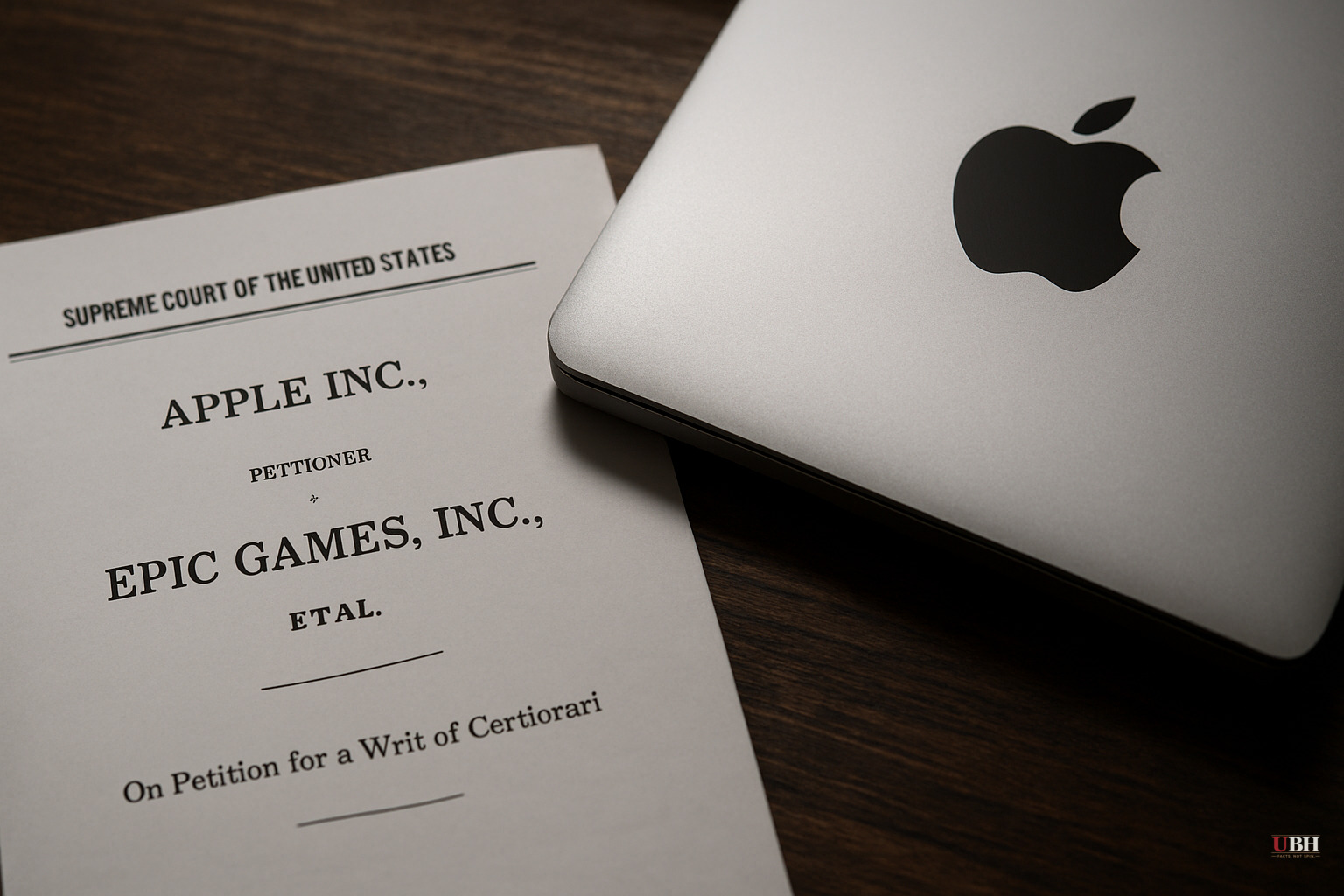
Since the original 2021 injunction, the Apple-Epic antitrust case has churned through district court, an appeals court, and now the Supreme Court of the United States. Nearly seven years have passed since Epic first filed suit.
The Supreme Court agreed to hear Apple's appeal of a contempt ruling stemming from that original order. According to Reuters, the justices are expected to take up the case during their next term, which begins in October, with a ruling anticipated by June next year.
What the contempt ruling was about
In April 2025, U.S. District Judge Yvonne Gonzalez Rogers found Apple in contempt of her 2021 order. That order required Apple to allow developers to direct users to third-party payment options, bypassing Apple's own payment system and the commission it takes.
Apple's response was to charge developers up to 27 percent on purchases completed through external payment links. Epic called that "malicious compliance." Apple had historically taken 30 percent of App Store transactions, a rate it halved for many smaller developers in 2020.
In December 2025, a federal appeals court largely upheld the contempt ruling. It did strike down one piece: the blanket prohibition on Apple charging any commission on external payments. That means Apple can now go back to Judge Rogers and argue about what commission rate, if any, is permissible on those outside sales.
What the Supreme Court will and won't consider
Apple had also argued the original injunction should apply only to Epic, not to all developers. According to Engadget, the justices declined to consider that point. The appeal before the Court will focus on the narrower question of whether Apple's conduct constituted contempt.
In 2024, the Supreme Court declined to hear appeals from both companies. Justice Elena Kagan separately denied Apple's motion to stay the contempt ruling while the appeals process played out.
What each side is saying
Epic posted a statement on X: "We're heading to the Supreme Court where we'll continue to fight against junk fees Apple charges on third-party payments. Lower courts have rightly found Apple's fees to be illegal and anticompetitive and we'll continue to defend free markets."
Apple's position, stated to Engadget: "This is an important question of law and we are pleased the Supreme Court will hear our case."
The legal question underneath the statements is genuinely unsettled. Apple's argument is that a company charging a commission on transactions it facilitates, even external ones, is commercially reasonable and not contemptuous of any court order. Epic's argument is that Apple is doing everything possible to preserve its economic stranglehold on the App Store ecosystem without technically obeying the spirit of the injunction.
The strongest case for Apple
Apple's core argument is that it built and maintains the iOS platform, and some form of compensation for developers using its infrastructure to drive sales, even external ones, is not inherently anticompetitive. The appeals court agreed Apple could still charge something on those external transactions. The dispute is about how much and under what conditions. Apple is asking the Supreme Court to clarify where the legal line sits, a legitimate question of law.
Why this matters beyond Epic
If the Supreme Court sides with Epic and affirms the contempt ruling in full, Apple faces pressure to renegotiate its entire developer fee structure on iOS. Millions of developers, from indie app makers to large software companies, are watching to see whether Apple's commission model survives judicial scrutiny.
If the Court sides with Apple, it will signal that tech platform operators retain significant latitude to monetize even court-ordered workarounds. A precedent that could reverberate across app marketplace regulation in the U.S. and influence ongoing regulatory fights in the European Union.
The specific legal question the Court has agreed to take up — whether Apple's post-injunction conduct constituted contempt — will likely define the limits of how courts can enforce antitrust-adjacent injunctions against large platform companies. That answer is now scheduled to arrive no later than June next year.
Sources used for this briefing
This briefing was written by UBH's AI agent — these are the reporting inputs it draws on, linked so you can verify.


