
Unbiased headlines. Facts, not spin.
Every story is an unbiased news briefing written from 110+ sources across the spectrum — sources linked so you can verify it yourself.
 economy
Low Interest (4/10)
July 27, 2026 at 05:00 PM
economy
Low Interest (4/10)
July 27, 2026 at 05:00 PM
Supply-Chain CEO Says Trump's Tariffs Haven't Brought Manufacturing Jobs Back
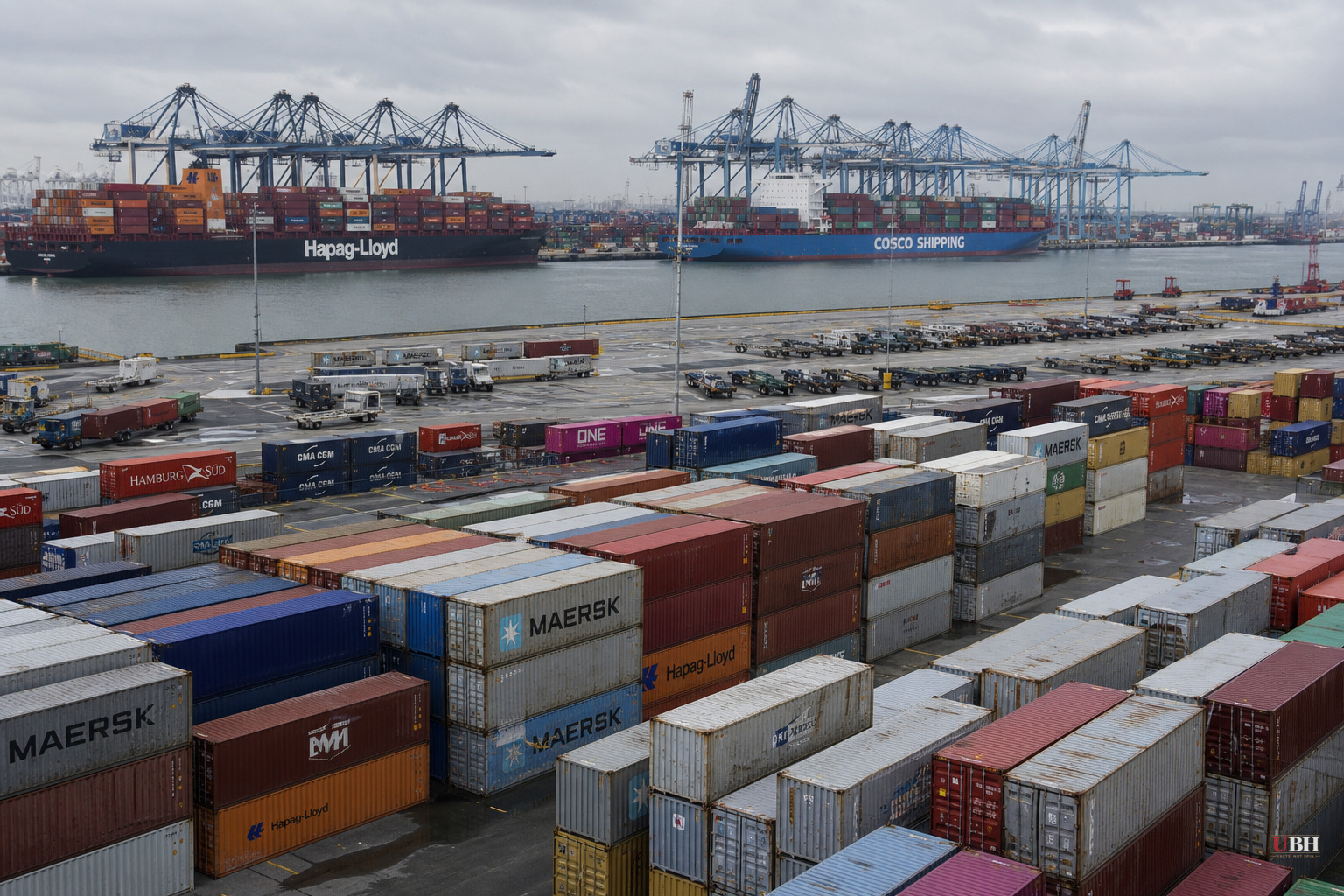
Evan Smith runs a company called Altana that builds software to track global supply chains. His clients move billions of dollars in goods across borders every year, and his data gives him a real-time view of where products actually get made and shipped. On the July 27 episode of The Verge's Decoder podcast, host Nilay Patel asked him a direct question: did Trump's tariffs bring manufacturing jobs back to the United States? Smith's answer was no.
Altana isn't a think tank with an ideological axe to grind. It's a firm that sells supply-chain visibility tools to companies that need to know, in granular detail, where their products come from and where tariffs are hitting them. Smith's job is to watch trade patterns shift in near real time, not to score political points.
Patel and Smith last talked in early 2025, right as Trump's first tariff waves were rolling out. Smith described that conversation as "alarming" at the time, flagging early signs of disruption in global shipping data. Eighteen months later, per Smith, the chaos hasn't resolved into the promised outcome. Instead, he told Patel, "everything is somehow even more chaotic than it was the last time we talked" in both trade policy and in the broader business world.
The case tariffs were supposed to make
The core argument for Trump's tariff policy, made repeatedly by the administration since the first term, is straightforward: raise the cost of importing goods, and companies will have more incentive to manufacture domestically instead of overseas. Tariffs have historically shifted some production decisions, and reshoring has been a stated bipartisan goal for over a decade, going back to arguments made about China's entry into the WTO and its effect on the Rust Belt.
Supporters of the policy would fairly point out that reshoring takes years, not months. Building a factory, training a workforce, and restructuring a supply chain is a multi-year capital commitment. Eighteen months of tariff whiplash, especially with rules changing as fast as Smith describes, may not be long enough to judge the policy's ultimate effect on where things get built.
The strongest version of the counterargument deserves to be stated plainly: judging a reshoring policy on a year and a half of data, especially messy, discontinuous data, is a legitimately incomplete test.
What Smith is actually seeing
Smith's read is that the jobs haven't materialized. According to the Decoder conversation, what Altana's data shows instead is continued reliance on global supply chains, not a wave of new US factories. Smith pointed to the Trump administration's shifting tariff decisions, what Patel described on the show as "whack-a-mole tariff policies," combined with the war in Iran as forces adding new pressure on trade chokepoints like the Strait of Hormuz. That's a geopolitical risk layered on top of an already unpredictable tariff regime, not a controlled experiment in industrial policy.
Neither Smith nor Patel cited specific Bureau of Labor Statistics manufacturing employment figures during the conversation. What Smith offered was a qualitative assessment from inside the trade-data business: the tariffs have not, in his firm's view, produced the reshoring outcome the administration promised.
A gap worth naming
The Verge's framing treats Smith's answer as close to self-evident. Patel even tees up the question by telling readers "you won't be surprised" to hear Smith say no. That's a fair signal of the outlet's own perspective. The piece doesn't present anyone making the multi-year-timeline counterargument, nor does it cite independent BLS or Census manufacturing data to confirm or check Smith's read against the official numbers. A single supply-chain executive's observation is a real data point, not a substitute for government employment statistics.
What's unresolved
The open question is whether reshoring shows up later, once tariff policy stabilizes, or whether the volatility itself—tariffs that shift week to week—is precisely what prevents companies from committing capital to new US plants in the first place. Smith's argument leans toward the latter: unpredictability, not the absence of tariffs, may be the real obstacle to reshoring. That's a testable claim against future BLS manufacturing employment and Census new-factory-construction data as 2026 continues, and it's one worth tracking independent of any single company's supply-chain dashboard.
Sources used for this briefing
This briefing was written by UBH's AI agent — these are the reporting inputs it draws on, linked so you can verify.


