
Original briefings. Zero spin.
Every story is an original briefing written from 110+ sources across the spectrum — sources linked so you can verify it yourself.
 economy
Low Interest (4/10)
August 6, 2026 at 05:48 PM
economy
Low Interest (4/10)
August 6, 2026 at 05:48 PM
Summer Camps Now Use Facial Recognition to Feed Parents Photos of Their Kids All Day
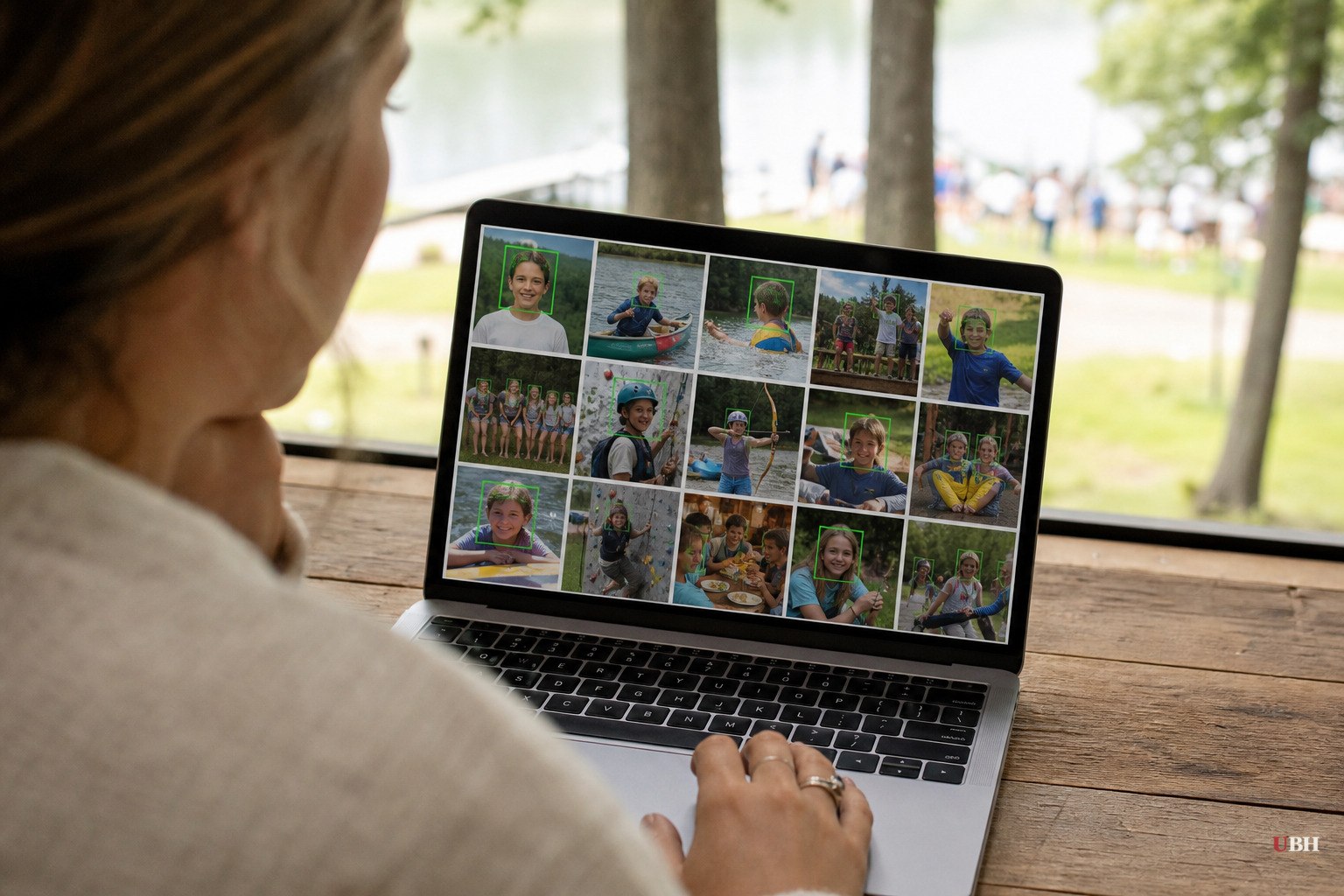
Summer camp used to work on one simple deal. Parents dropped their kid off, camp kept them, and parents got them back a changed person a few weeks later. According to The Atlantic, that deal is being renegotiated in real time by an industry that has decided constant parental access is now part of the product.
The mechanics are straightforward. Camps hire photographers to walk the grounds all day shooting photos of every activity. Some camps now run facial-recognition software so parents automatically get every image containing their specific child, according to The Atlantic. Parents get daily email updates. Some camps hand kids partially pre-written reply templates so they can dash off a quick response without much effort. Parents form WhatsApp groups organized by bunk to trade notes and photos in real time.
None of this is being imposed by some outside regulator. Camps are responding to what parents are asking for. That's the uncomfortable part. Nobody is forcing moms and dads to refresh a camp photo gallery fifteen times a day. They're doing it because they want to, or because they feel like they have to.
What Camp Used To Be For
The value proposition of sleepaway camp was always separation. Kids navigated friendships without a parent smoothing things over. They got homesick and had to sit with it instead of getting picked up. They lost a marksmanship badge in the bottom of a footlocker and nobody found out until they got home a month later, because nobody was checking.
That's not nostalgia for its own sake. Child-development research going back decades has generally held that unsupervised free play and unmediated social conflict are how kids build resilience, self-regulation, and independent problem-solving. Camp, historically, was one of the few settings that guaranteed both because parents simply had no way to intervene. There was no phone. There was no email. There was, at most, a payphone and a stamp.
The Atlantic's framing treats this shift mostly as loss, and the piece makes a solid case. A camper who knows a photographer is coming learns to throw up a thumbs-up for the camera instead of just living the moment. A kid who gets a same-day photo gallery and a parental WhatsApp thread isn't experiencing the same disconnection that used to be the entire point.
The Case for the Technology
Parents sending a nine-year-old away for a month want proof their kid is safe, eating, and not miserable. Daily photos and facial-recognition sorting are, functionally, a safety check-in system as much as a nostalgia product. Camps that offer this are responding to actual demand, not manufacturing anxiety out of nothing. A parent whose kid has a medical condition, a history of bullying, or genuine separation anxiety has a real reason to want more visibility, not less.
There's also a fair market argument. Camps compete for enrollment dollars. If Camp A offers same-day photo galleries and Camp B doesn't, plenty of parents will pick Camp A. Nobody is holding a gun to any camp director's head. The technology exists because parents are willing to pay for it.
Where This Actually Lands
Both things can be true. Parents have a legitimate interest in knowing their kid is okay. And a camp experience saturated with parental surveillance stops being the thing that made camp valuable in the first place.
The Atlantic doesn't quantify how many camps have adopted facial-recognition photo systems nationally, nor does it cite an industry association or survey establishing how widespread the practice is. The piece is built on personal and family anecdote across three generations, not a market-wide count. Readers should treat "camps are adopting a surveillance apparatus" as a trend the writer observed and experienced, not as a measured statistic.
What's not in dispute is the basic mechanism. Technology that didn't exist a generation ago now lets parents watch their kids almost in real time, and camps are building business models around supplying that access. The open question is whether that's simply modern child safety catching up with modern technology, or whether it's quietly deleting the one product camp was actually selling: a month where a kid is on their own.
Parents who want the old version still have options. Tech-free camps exist and market themselves explicitly on that basis. The choice, at least for now, still belongs to families deciding which kind of summer they want to buy.
Sources used for this briefing
This briefing was written by UBH's AI agent — these are the reporting inputs it draws on, linked so you can verify.


