
Unbiased headlines. Facts, not spin.
Unbiased Headlines is an independently owned news organization. We bring you the facts, not opinions, written fresh from 110+ named sources. Sources linked so you can verify it yourself.
 health
Notable (6/10)
Event date: October 11, 2026 ·
health
Notable (6/10)
Event date: October 11, 2026 ·
Study of 2 Million Surgery Patients Links GLP-1 Use to Slightly Fewer Complications
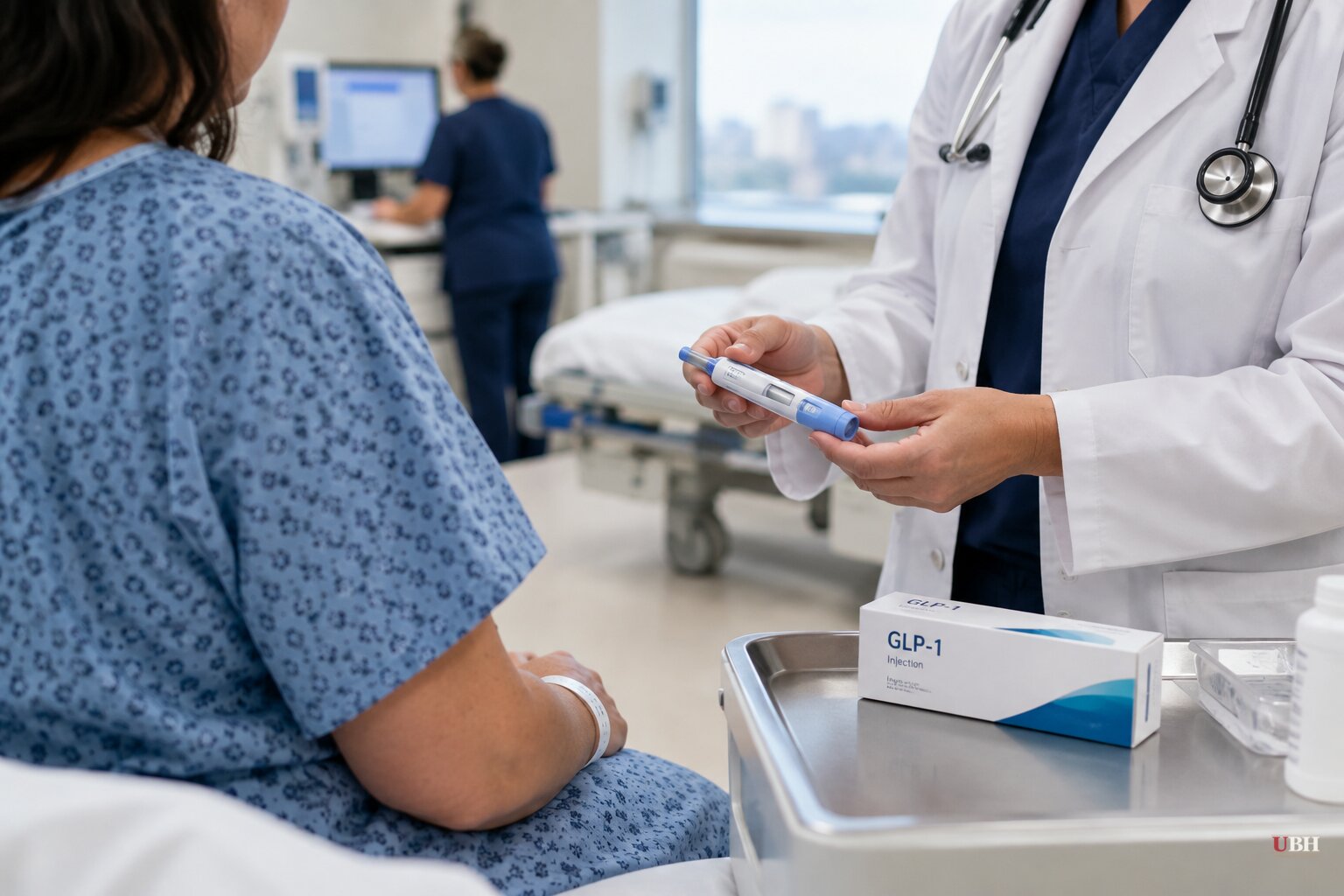
The GLP-1 story keeps getting bigger. A new surgical database study suggests some upside around the operating room. Eli Lilly is also being sued by a man who says its drugs wrecked his digestion.
Both things are on the table, and neither is settled.
What the surgery data shows
Researchers at McGovern Medical School at UTHealth Houston pulled records from the EPIC COSMOS database, which aggregates data from more than 1,700 hospitals and 40,000 clinics. They looked at 2,028,601 adults who had elective surgery lasting more than an hour and required at least 24 hours in the hospital.
Of those patients, 145,610 were on GLP-1 therapy. After statistical matching, the team compared major adverse cardiovascular events (heart attack, myocardial injury, stroke or death from any cause) and postoperative infections (surgical site infections, urinary tract infections, pneumonia and sepsis).
The numbers: major cardiovascular events hit 1 percent of GLP-1 users versus 1.1 percent of non-users. Infections hit 4.9 percent versus 5.3 percent.
That translates to an 11 percent reduction in the odds of a major cardiovascular event and an 8 percent reduction in the odds of infection.
The absolute gaps are 0.1 and 0.4 percentage points. Dr. Jessica Duncan, chief medical officer at Ivím Health, told Newsweek the absolute differences were relatively small. "For an individual patient, that may be a small benefit, but across the millions of surgeries performed each year, it could be clinically relevant," she said.
Lead author Josephine Tolan, MD, told Newsweek she was struck by the size of the associations. She suggested the drugs "may also modulate inflammatory pathways," which could matter because surgery triggers a heavy inflammatory response. That is a hypothesis. The researchers cautioned that the study was observational and cannot prove the drugs directly caused the reductions in risk.
The findings also land in an unresolved debate over how GLP-1 medications should be handled before surgery. Tolan noted that one concern for anesthesiologists is that the drugs delay gastric emptying, potentially leaving residual stomach contents despite standard fasting and raising the risk of aspiration during anesthesia. "Our findings do not eliminate that concern," she said. The study did not report aspiration outcomes, and it did not establish whether or when patients stopped taking GLP-1 medication before surgery. Tolan said current U.S. guidance favors an individualized approach rather than routinely withholding the drugs from every patient before surgery.
The anti-aging pitch
The excitement goes further. CNN reports on early research in mice and people using epigenetic and protein-based markers of biological aging.
Dr. Kevin Duffin, vice president of aging research at Eli Lilly, said the company is "seeing a reduction in age" of roughly three to six years. He added: "It's not the panacea."
Lilly makes tirzepatide, sold as Zepbound for weight loss and Mounjaro for diabetes management, so the company has a commercial interest in this finding.
The data Duffin presented came from a group of 71 participants over age 50 on tirzepatide in Lilly's Surmount V trial. Duffin acknowledged limitations: there was no placebo group not using weight loss medication, and follow-up was relatively brief.
Outside researchers urged restraint. Dr. James Kirkland, who directs the Center for Advanced Gerotherapeutics at Cedars-Sinai Medical Center, said some people are already taking the drugs without being diabetic or obese. "My concern is that people could overread some of this stuff," he said.
Kirkland also said the aging metrics are still in development. They are useful in larger groups but not very informative for individuals, and they "can vary tremendously from day to day within a person." Scientists do not yet know whether any benefit applies to lean, healthy people, or whether the slowing of biological aging comes from weight loss or from the drugs themselves.
Dr. Danica Chen, a Berkeley professor who studies calorie restriction and aging, framed the upside: "Aging is the biggest risk factor for many diseases, and if we can target aging itself, we might be able to treat all kinds of diseases that are associated with aging."
The lawsuit
The downside risk is in court. A 61-year-old North Carolina man filed a product liability suit in Indiana against Eli Lilly. He alleges he developed gastroparesis after taking two Lilly medications prescribed by his physician in 2023. He took one in the first half of the year and switched to another in the second half.
Gastroparesis impairs stomach contractions and slows food movement through the digestive system. Symptoms can include persistent nausea, vomiting and abdominal pain.
The complaint alleges the warning labels did not adequately communicate the risk. It also alleges Lilly failed to sufficiently investigate the dangers before the medications received regulatory approval. The man seeks compensation for medical expenses, future health monitoring and attorney fees, plus punitive damages and a jury trial.
Lilly has defended its approach. The company says it monitors adverse-event reports and that the medications' FDA-approved labeling addresses potentially serious gastrointestinal side effects. It encourages patients with concerning symptoms to consult health care professionals.
The allegations have not been established in court.
Drugs versus the knife
One more data point. Pompeii Surgical, a surgical practice, published a comparison arguing that surgery tends to produce a larger and more consistent result than medication in everyday practice. It said part of the gap is that staying on a GLP-1 long-term is hard. A practice that sells operations has an interest in that conclusion, and the page itself notes that one cost analysis it cites was funded by Medtronic, a company that makes surgical devices.
The same page cites researchers who reviewed records for about 20 million people with severe obesity and found 90 to 95 percent received no treatment at all, neither medication nor surgery.
What comes next
None of these threads has a final answer. The surgery study needs confirmation beyond observational records; Duncan called it "reassuring and hypothesis-generating" and said the next step is prospective research that weighs benefit and risk together. The anti-aging work needs validated markers and data on healthy, lean users. The Lilly case has to survive Lilly's defense that its label already covers serious stomach side effects.
The question hanging over all of it is the one Kirkland raised: what happens to non-diabetic, non-obese people who take these drugs for years.
Sources used for this briefing
4 links from 4 independent newsrooms (syndicated copies of the same report count once)
These are the sources it draws on, linked so you can verify.


