
Unbiased headlines. Facts, not spin.
Unbiased Headlines is an independently owned news organization. We bring you the facts, not opinions, written fresh from 110+ named sources. Sources linked so you can verify it yourself.
 health
Notable (6/10)
health
Notable (6/10)
India Caps Trade Margins on 137 Cancer Drugs at 30%, Government Expects Prices to Fall Up to 70% From Nov. 9
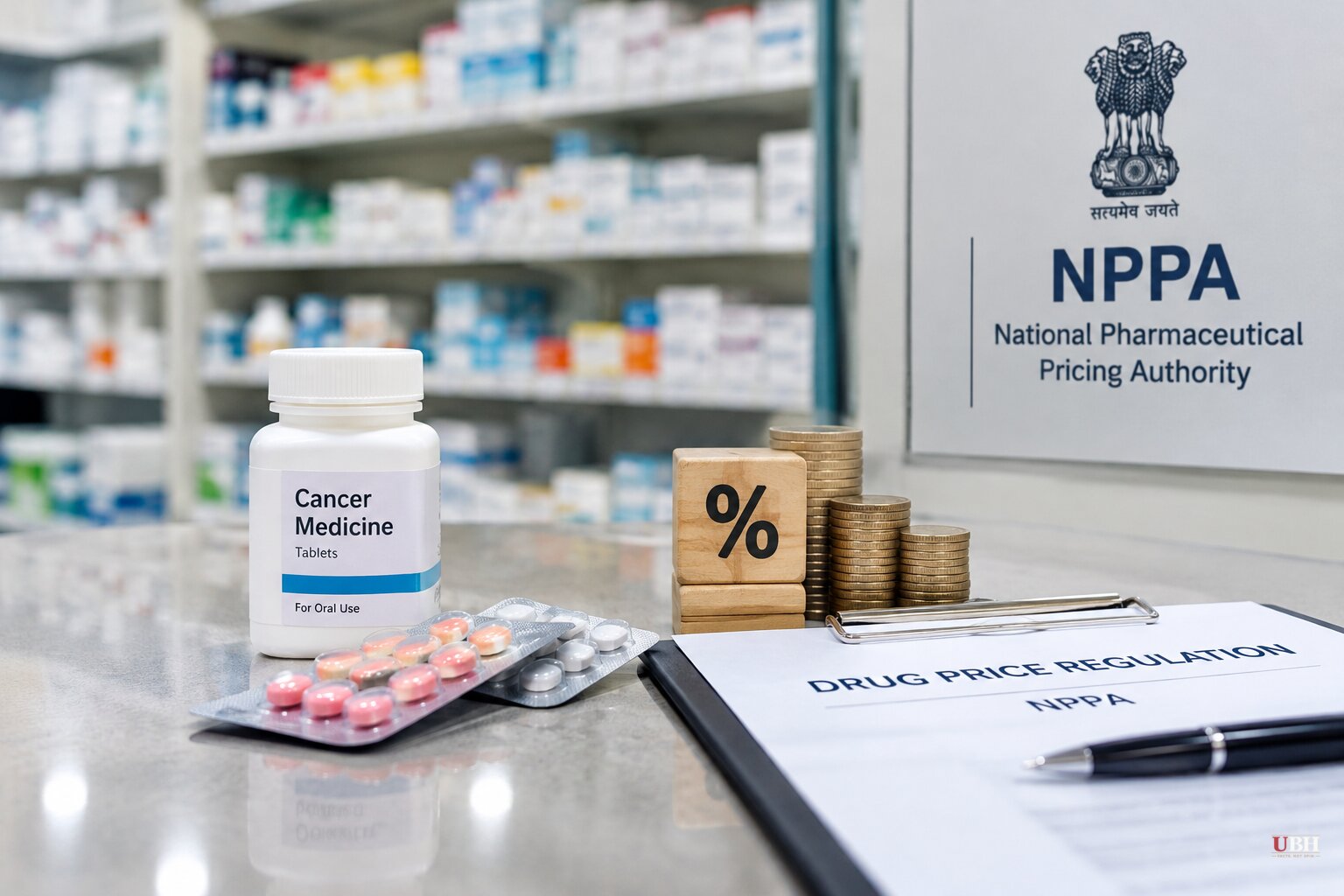
Since a plan for a 30% margin cap on cancer drugs was first reported on Oct. 8, following the Supreme Court's attack on hospital markups, the government has made it official. The National Pharmaceutical Pricing Authority (NPPA) notified the order on Saturday, Oct. 17, through Gazette notification S.O. 5690(E).
The order covers 137 non-scheduled anti-cancer drugs. It invokes the regulator's extraordinary public-interest powers under Paragraph 19 of the Drugs (Prices Control) Order, 2013. The revised prices take effect Nov. 9.
How the cap works
Trade margin is the gap between the manufacturer's selling price to the stockist or distributor and the MRP the patient pays, excluding GST. The NPPA capped it at 30% of MRP. According to the minutes of the NPPA meeting, that corresponds to a mark-up of about 42.9% on the price to stockist or distributor (PTS/PTD).
Manufacturers must calculate MRPs from the PTS/PTD using the formula MRP = PTS/PTD × {1 + [TM ÷ (100 − TM)]} + applicable GST, where TM is the trade margin and cannot exceed 30. The notification illustrates this with a formulation that has a PTS/PTD of ₹70 and an existing MRP of ₹300 plus GST. Its maximum permissible revised MRP would be ₹100 plus applicable GST.
The order applies to any non-scheduled formulation containing a listed drug, alone or in combination, across all strengths, dosage forms and routes of administration. It also applies when the drugs are prescribed for other therapeutic uses. Patented medicines are included unless specifically exempted under Paragraph 32 of the DPCO.
Products already priced below the ceiling keep their current MRP. The revised MRP calculation uses March 2026 as the reference month. The NPPA said patient assistance programme quantities, which are free supplies typically run by multinational companies, may be excluded from the PTS/PTD and MRP calculation for margin-capping purposes only.
What is on the list
The government says the list includes immunotherapy drugs used across more than 20 cancer types. Named drugs include pembrolizumab, nivolumab, durvalumab, atezolizumab, bevacizumab, osimertinib, palbociclib, ribociclib, daratumumab, olaparib, enzalutamide, trastuzumab, denosumab and pegfilgrastim.
An expert committee under the Directorate General of Health Services drew up the list. Its members were oncologists, medical specialists, hospital experts and government officers. The government says the list will be updated periodically.
Why the regulator moved
The Supreme Court flagged gaps of up to ten times between what retailers pay and the MRP billed to patients. In one case, a cancer medicine bought by retailers for ₹2,700 carried an MRP of ₹27,000. The court called such practices "broad daylight dacoity" and "carnage."
The NPPA said patients, state authorities and civil society had raised concerns about the gap between procurement costs and MRPs. It said the resulting out-of-pocket costs were catastrophic for families. Some drugs on the list, including pertuzumab with trastuzumab, atezolizumab, teclistamab, inotuzumab ozogamicin and daratumumab, carry MRPs of up to ₹5 lakh per vial or pack.
The NPPA meeting minutes put the average trade mark-up on non-scheduled anti-cancer drugs at approximately 170%, with mark-ups of up to 700% in some cases. Market analytics cited in the proceedings put the domestic anti-cancer market at about 225 drugs and 500 formulations, with annual turnover of roughly ₹12,500 crore.
The 2019 precedent
This order extends a 2019 pilot that capped margins at 30% on 42 anti-cancer drugs. According to the government, that exercise cut the MRPs of 526 brands by up to 90% and saved an estimated ₹984 crore a year. Officials expect the new order to save about ₹2,500 crore annually.
The "up to 70%" figure is the government's own projection and depends on each drug's existing price structure. The NPPA's notification itself says retail and hospital prices differ, with varying discounts off MRP, so actual transaction prices can differ considerably from the printed MRP. The saving a patient sees may therefore be smaller than the headline cut for drugs already discounted in practice.
The government says the order aims to curb excessive margins in distribution and retail "while safeguarding legitimate manufacturer revenues and preventing artificial market shortages." Pharmaceutical companies must maintain current production and supply levels.
Compliance and enforcement
Manufacturers must report revised prices to the NPPA and the State Drug Controller within seven days of the Gazette notification, even where nothing changes. They must also post price lists on their websites and send them to retailers and hospitals.
Retailers and hospitals must charge the reduced prices from Nov. 9 and display them. Hospitals must also post them prominently on their websites. Since a substantial share of anti-cancer drugs goes directly to hospitals and medical institutions, those institutions are responsible for applying the revised prices to those supplies.
State Drug Controllers will take steps to ensure compliance by manufacturers, dealers, retailers, hospitals and medical institutions. Manufacturers that overcharge must deposit the excess with interest under the Drugs Prices Control (Amendment) Order, 2013 and the Essential Commodities Act, 1955. Consumers can check revised prices on the Pharma Sahi Daam app and the NPPA website.
The next test comes within days, as companies' price filings are due within seven days of the Gazette notification. The first check on whether shelf prices actually fall will come when the new MRPs take effect on Nov. 9.
Sources used for this briefing
7 links from 7 independent newsrooms (syndicated copies of the same report count once)
These are the sources it draws on, linked so you can verify.


