
Unbiased headlines. Facts, not spin.
Unbiased Headlines is an independently owned news organization. We bring you the facts, not opinions, written fresh from 110+ named sources. Sources linked so you can verify it yourself.
 health
Notable (6/10)
Event date: October 16, 2026 ·
health
Notable (6/10)
Event date: October 16, 2026 ·
Healthcare Costs Are a Top Midterm Worry, and the Parties Are Offering Very Different Fixes
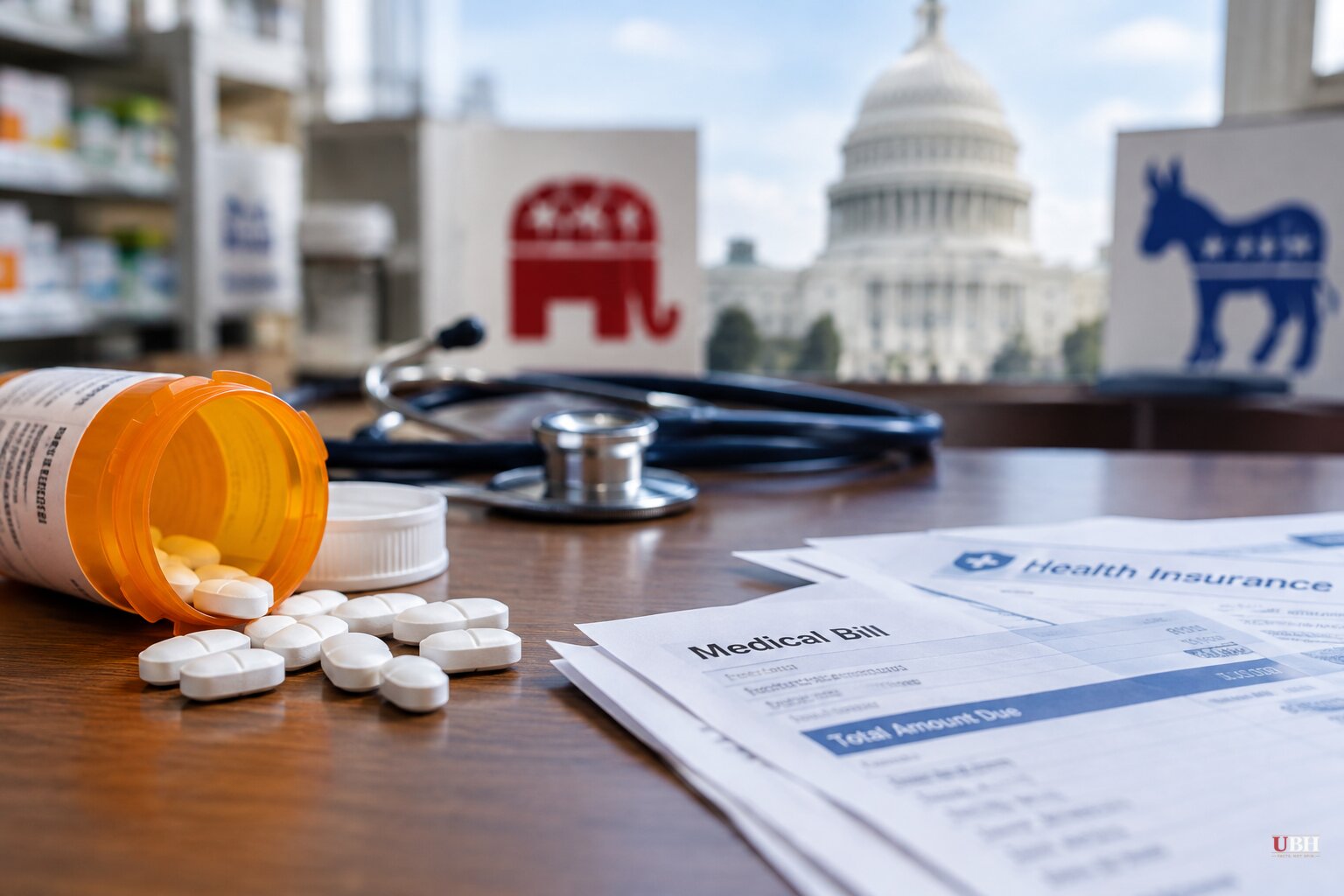
Healthcare is on the ballot again this fall, but the argument is different from 2018. Instead of a fight over how the system should be built, candidates are fighting over who can make it cost less.
Voters have been signaling this for a while. In January, KFF found 31% of voters were "very worried" about healthcare costs, the top economic concern in its survey. That included 33% of Democrats, 36% of independents and 25% of Republicans. Another 58% expected healthcare to get less affordable in the next year.
A newer survey points the same direction. USofCare, a nonprofit that describes itself as nonpartisan, polled more than 2,700 registered voters from June 12 through July 16. It found three-quarters say healthcare will be one of their top three voting issues: 89% of Democrats, 74% of independents and 64% of Republicans.
The same survey found 16% delayed care, 16% skipped care, 12% cut back on food, housing or utilities, and 11% went into debt to pay for care. USofCare CEO Natalie Davis told Fierce Healthcare she sees "a real chance for reform in '29, regardless of who's elected."
Two different answers on cost
Republicans are running on the Trump administration's "most favored nation" drug pricing push, cuts to waste and fraud, and direct subsidies to help some Americans buy insurance.
Democrats are running on several tracks at once. Congressional candidates want to boost Affordable Care Act subsidies, reverse Medicaid cuts and lower the Medicare eligibility age. Sens. Elizabeth Warren and Ron Wyden and Rep. Alexandria Ocasio-Cortez back a bill to bar private equity funds, insurers and other for-profit corporations from owning or controlling medical practices. Wyden said in the bill's announcement that "corporate medicine is making health care more expensive for everyone."
House Democrats have also set up a Cost of Living Healthcare Working Group to push the issue as part of a broader household-budget pitch.
The same fight is playing out in Michigan. In the final governor's debate, Democrat Jocelyn Benson said her opponent "went to Washington to raise your healthcare costs" while she has "an affordability plan to lower them." Republican John James answered, "that's real cute," and pointed to his Patients Deserve Price Tags Act, which he says would increase transparency and lower costs.
Medicare for All returns, with a catch
The single-payer idea is back on Democratic platforms. A 2025 Economist-YouGov poll found nearly 60% of Americans favor Medicare for All, including 85% of Democrats. Sen. Chris Van Hollen of Maryland endorsed it in December, saying the system has "reached the complete breaking point."
Michigan Senate candidate Abdul El-Sayed is the most prominent champion this cycle. He wants a plan with no cost to patients that covers dental and vision, which traditional Medicare does not.
Even sympathetic economists say the label covers too many different ideas. "Medicare for All is a slogan, not a concrete proposal," said MIT's Amy Finkelstein. She and Stanford's Liran Einav argue the country can afford "a shack, not a chateau": a government-funded basic plan with limits on some services and firm protection against catastrophic costs. Finkelstein estimates most people would buy supplemental coverage.
UNC health policy professor Jonathan Oberlander said "there is no chance" Medicare for All passes nationally in the short to medium term. He sees states as the realistic path.
Oregon and California show the stakes
Oregon is furthest along. A nine-person Universal Health Plan Governance Board, created by the legislature in 2023, is due to send lawmakers its proposal by Dec. 1. It aims to give every resident medical, vision, dental and mental health benefits starting in 2032, with no premiums, deductibles or copays.
Lawmakers could vote on it in the 2027 session or refer it to voters in 2028. If approved, Oregon would be the first state with a single-payer system.
California shows the budget pressure that comes with expansive coverage. In March 2025, the state ran out of Medicaid money to pay doctors and hospitals and borrowed $3.4 billion. That loan grew to $4.4 billion, and Gov. Gavin Newsom and Democratic lawmakers agreed to repay it over 10 years. California spends more on Medicaid than New York and Texas combined.
The 2025 Republican law Newsom calls the "Big Ugly Bill" is expected to cut federal Medicaid spending by more than $900 billion over 10 years, mainly through work requirements and limits on provider taxes. Mark Ghaly, the former Newsom health official who co-chairs the Future of Medi-Cal Commission, put the problem plainly: "We know we can't afford to serve everybody we want to serve in the model that we have today."
State Sen. Caroline Menjivar, a Democrat from the Los Angeles area, was blunter about the program's long wait times and low provider reimbursement: "If we continue to just give millions and millions into the same system and expect something different, I'm sick and tired of that."
Polls and the missing message
Democrats lead the generic congressional ballot by 11 points among likely voters in the latest Fox News Power Rankings. Pollster Lee Carter argues that the number measures frustration with President Trump more than enthusiasm for what Democrats would do instead. In 2018, he says, healthcare gave Democrats a cause voters could explain in eight seconds. In 2026, he asks, "what fills in the blank?" His answer is that Democrats have a word, "affordability," but not yet a defined plan.
Democrats counter that their plans are specific: restored subsidies, reversed Medicaid cuts and curbs on corporate ownership of medical practices. They also say Republican policy is driving costs up.
The next hard date is Dec. 1, when Oregon's board delivers its universal plan. It will show what a no-premium, no-copay system for a whole state is projected to cost, and how it would be paid for.
Until then, the ballot offers voters mostly competing promises about price.
Sources used for this briefing
7 links from 7 independent newsrooms (syndicated copies of the same report count once)
These are the sources it draws on, linked so you can verify.


