
Unbiased headlines. Facts, not spin.
Unbiased Headlines is an independently owned news organization. We bring you the facts, not opinions, written fresh from 110+ named sources. Sources linked so you can verify it yourself.
 health
Notable (5/10)
Event date: October 17, 2026 ·
health
Notable (5/10)
Event date: October 17, 2026 ·
94% of 2,475 NSW Homes Lost in Black Summer Fires Were Within 100 Metres of Vegetation, Study Finds
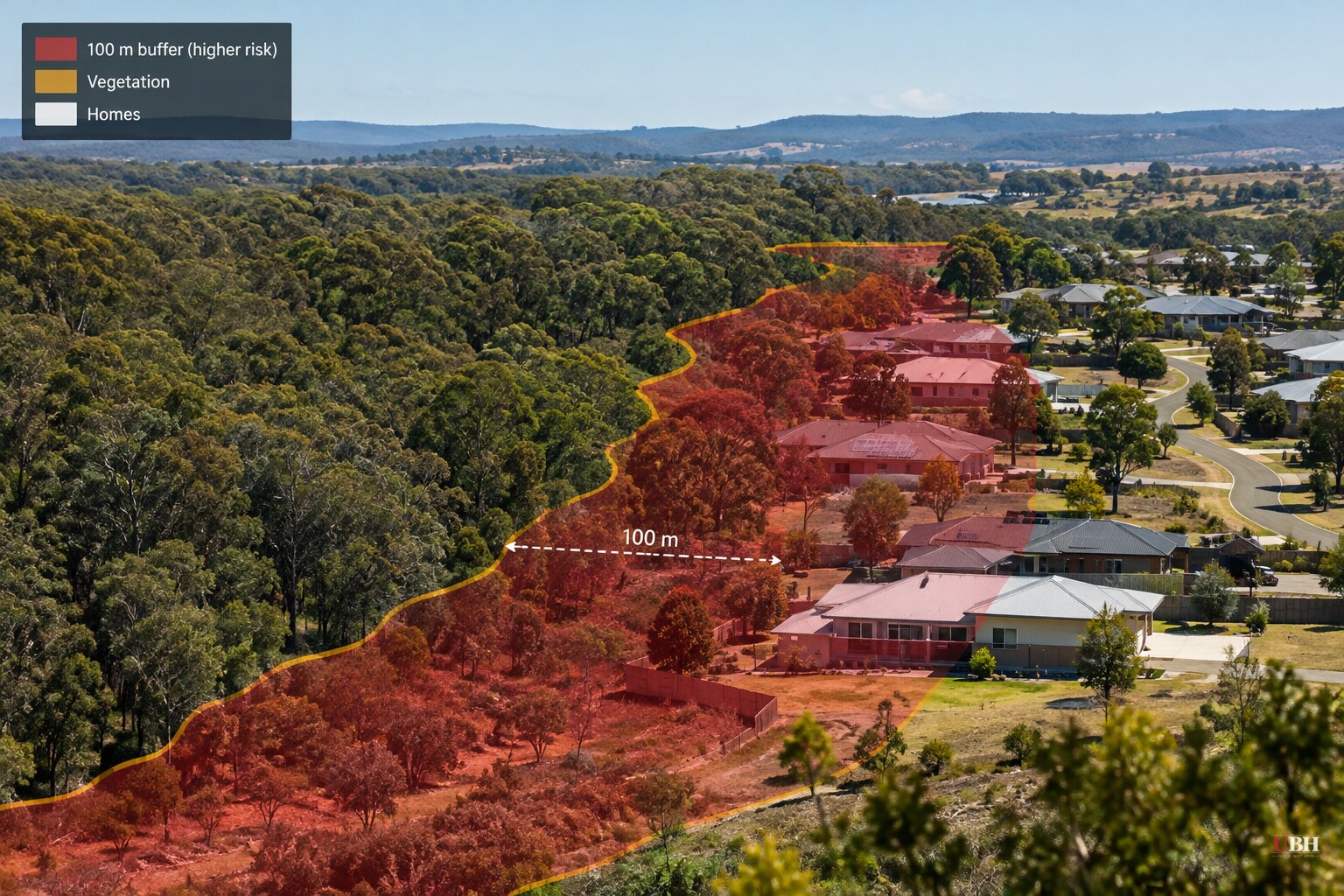
The line planners and firefighters have used for years to flag the most at-risk homes in New South Wales held up against the worst fire season on record.
A study in the International Journal of Wildland Fire found that 94% of the 2,475 NSW homes destroyed in the 2019-20 Black Summer bushfires were less than 100 metres from flammable vegetation such as trees. Across Australia, more than 3,000 homes were lost in those fires, which killed 33 people and killed or displaced almost 3 billion native animals.
What the 100-metre rule does
The 100-metre buffer is a core part of the bushfire-prone land maps used across NSW. Firefighters use the maps to plan community outreach. Planning authorities use them to decide how fire-resistant new homes and renovations must be.
Associate Professor Owen Price of the University of Wollongong, who led the research, said the findings show a key part of the method is "more or less spot on."
"That's reassuring. Distance to vegetation is really important and that 100 metre rule that they apply is pretty good," he said.
Where the rule falls short
The researchers also checked the Forest Fire Danger Index on the day each home was lost. The index combines temperature, wind, humidity and fuel dryness.
When the index hit extreme or catastrophic levels, "houses further away [than 100 metres] were burning," Price said.
He called that a warning sign. "We know that index is going to get worse [from global heating]. We know the direction of travel."
The study itself warns that the "current regulation may become less useful over time" as climate change raises the risk of home loss. The authors say firefighters may eventually need to widen the recommended distance between homes and vegetation.
That projection is the researchers' own. The study does not say the 100-metre line has failed. It says the line captured nearly every loss in 2019-20 and may not keep doing so.
Neighbouring houses are a risk too
Price said wildfire researchers are alarmed by fires moving through urban areas worldwide, including the 2025 Eaton fire in Los Angeles, which killed 19 people and destroyed or damaged thousands of homes and businesses. Part of his research tested whether something similar could happen in Australia.
Proximity to another burning house is its own risk factor, he said. "That's why it's important we stop houses from burning."
What the Rural Fire Service says
The NSW Rural Fire Service said the findings reinforce that homes in high-risk areas should be built to higher fire standards. Melissa O'Halloran, who works on bushfire planning at the service, said the research shows "houses in that [bushfire prone] area should be built to a higher construction standard."
The service is preparing for a fire season it describes as potentially "challenging." Inspector James Morris has reported elevated fire risk this year in the north of the state, the central-west and the far south coast. The service said its bushfire protection policy is being reviewed with climate risk in mind.
Current rules let residents of fire-prone areas remove trees within 10 metres of a home and clear undergrowth within 50 metres.
What the numbers leave open
The study counts destroyed homes within the buffer. It does not, on the figures published, say how many of the homes inside 100 metres of vegetation survived. That would be needed to measure how well the buffer separates safe homes from unsafe ones.
The cost question is also open. Higher construction standards add expense for owners and builders, and no source puts a number on what a wider buffer or stricter standards would cost. No change to the 100-metre rule has been announced. The RFS policy review is the next place that decision would show up.
For now, the maps stand, the season is close, and the researchers say the margin that made the rule work in 2019-20 shrinks on the hottest, windiest days.
Sources used for this briefing
3 links from 3 independent newsrooms (syndicated copies of the same report count once)
These are the sources it draws on, linked so you can verify.


