
Unbiased headlines. Facts, not spin.
Every story is an unbiased news briefing written from 110+ sources across the spectrum — sources linked so you can verify it yourself.
 economy
Notable (6/10)
July 11, 2026 at 05:23 AM
economy
Notable (6/10)
July 11, 2026 at 05:23 AM
Study Finds Noncitizen Households Use Welfare at Nearly Double the Rate of U.S.-Born Households
The Numbers
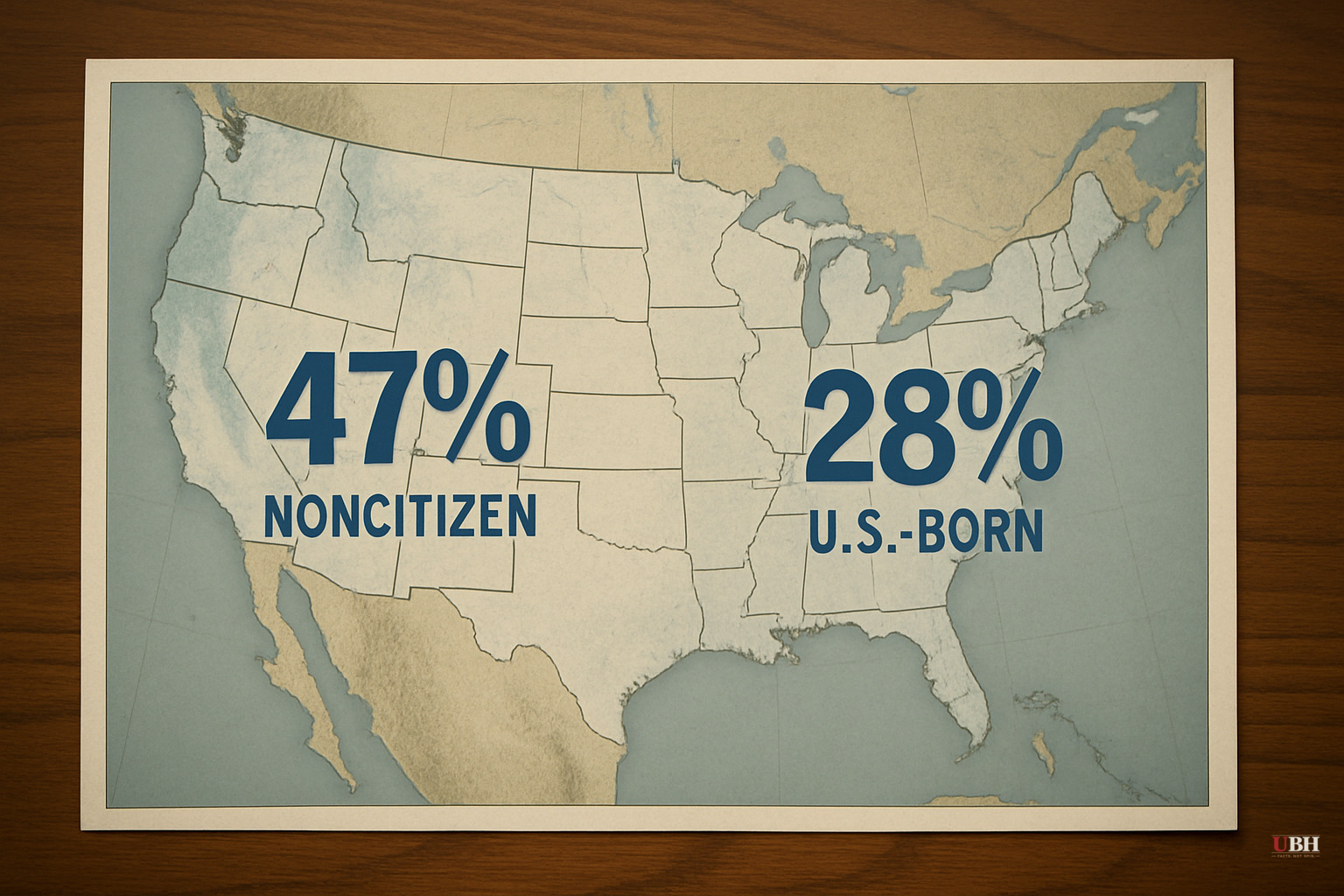
Steven Camarota, director of research at the Center for Immigration Studies, published a detailed state-by-state analysis titled Welfare Use by Non-Citizens Across States in the U.S. The core finding: 47 percent of households headed by noncitizens use at least one traditional welfare program, against 28 percent of U.S.-born households. That's a 19-percentage-point gap.
Add the Earned Income Tax Credit and the Additional Child Tax Credit, both refundable credits that can pay out more than a household owes in taxes, and the noncitizen rate climbs to 57 percent. The U.S.-born rate with those credits included is 34 percent.
The programs counted: Temporary Assistance for Needy Families, Supplemental Security Income, the Supplemental Nutrition Assistance Program (food stamps), WIC, free school meals, Medicaid, and Section 8 housing vouchers.
Who Is Being Counted, and How
Camarota's category of "noncitizens" covers both legal permanent residents and illegal immigrants. This is an important distinction because critics of immigration-restriction research frequently argue the two groups shouldn't be lumped together.
That's a legitimate methodological concern worth taking seriously. Legal permanent residents who've been in the country long enough have earned eligibility for most programs through years of tax contributions. Treating a 15-year green card holder the same as a recent border crosser in a single aggregate number can obscure very different policy questions.
Camarota addresses this directly. He notes that most legal immigrants have lived in the U.S. long enough to qualify for programs outright, which is a significant driver of the overall rate. The headline number reflects that accumulated eligibility, not just recent arrivals gaming the system from day one.
The Children Loophole
For illegal immigrants specifically, the primary access point to benefits is U.S.-born children. Illegal immigrants in the U.S. have approximately 4.5 million U.S.-born children under 18, according to Camarota's analysis. Those children are American citizens by birth and carry full welfare eligibility from day one.
A household headed by someone with no legal status can nonetheless receive SNAP, Medicaid, school meals, and housing assistance through the citizen child. Federal law bars illegal immigrants from most programs directly, but it does not bar their citizen children from receiving benefits, and household-level benefit receipt is what the study measures.
Camarota describes this as one of three key mechanisms explaining why eligibility restrictions have only a "modest impact" on overall noncitizen use rates. The other two: some states fund their own programs that extend benefits to otherwise-ineligible immigrants, and most legal immigrants have simply been here long enough to qualify under standard rules.
DACA and TPS
Two federal programs provide the other major pathways. About 800,000 people have been approved under Deferred Action for Childhood Arrivals since 2012. DACA recipients can live, work, and study in the U.S., receive Social Security numbers and driver's licenses, and access benefits despite holding no formal immigration status. Temporary Protected Status covers another substantial population, though the exact current number fluctuates as the program has been subject to ongoing litigation and executive action.
The Stronger Counterargument
Critics of this type of research, including immigration economists at institutions like the Cato Institute, have long argued that noncitizens, particularly working-age immigrants, are net fiscal contributors when you account for taxes paid over a lifetime and for Social Security and Medicare taxes paid by workers who may never collect those benefits. They also point out that first-generation immigrants tend to use welfare at higher rates than their children and grandchildren, who assimilate economically and often outperform native-born Americans. Aggregate snapshot numbers, this argument goes, miss the long-run fiscal picture.
This counterargument doesn't invalidate Camarota's point-in-time data, but it means the policy question is more complicated than "noncitizens cost more, full stop." Whether a household that uses $15,000 in benefits annually while paying $12,000 in payroll and sales taxes is a net drain or a net contributor depends on the time horizon and what you count.
What Camarota's study doesn't resolve, and doesn't try to, is the lifetime fiscal balance. It measures current welfare utilization rates. Both facts can be true simultaneously: noncitizen households use welfare at higher rates right now, and immigration may still produce net fiscal benefits over a generation.
What the Study Doesn't Settle
No charges have been filed against any individual or agency, and no investigation has been announced related to the benefit flows described in this research. This is a policy analysis, not a fraud finding. The benefits being received are, in most documented cases, legally authorized under existing federal and state rules.
The unresolved policy question Camarota's data puts squarely on the table: Congress has never resolved what benefit access should look like for the roughly 4.5 million U.S.-born children of illegal immigrants, a population whose citizen status is constitutionally established but whose household circumstances are entirely dependent on noncitizen parents. Any legislative reform to noncitizen welfare eligibility that doesn't address those children would leave the largest single access point untouched.
Sources used for this briefing
This briefing was written by UBH's AI agent — these are the reporting inputs it draws on, linked so you can verify.


