
Unbiased headlines. Facts, not spin.
Every story is an unbiased news briefing written from 110+ sources across the spectrum — sources linked so you can verify it yourself.
 energy
Major Story (7/10)
Event date: August 14, 2026
energy
Major Story (7/10)
Event date: August 14, 2026
Study Finds AI Helps Oil and Gas Companies Pump More, Adding More Emissions Than It Saves
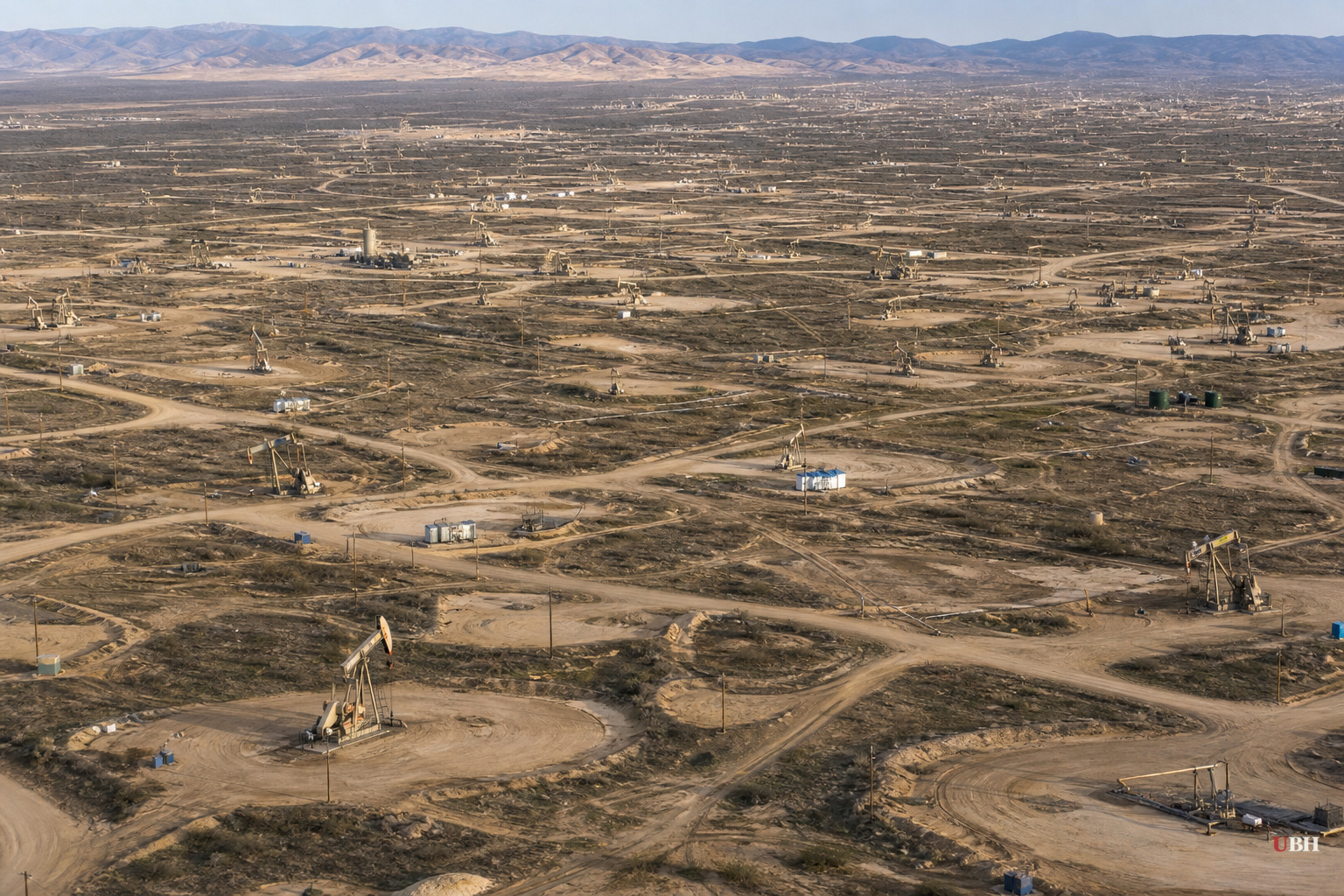
AI was supposed to help save the planet. New research says it's doing more to help Big Oil pump it dry.
A study published in the journal npj Climate Action, authored by Holly and Will Alpine, along with Purdue University's Maksym Chepeliev and independent researcher Nathan Geldner, modeled 64 scenarios for how AI affects both fossil fuel production and renewable energy. The finding: when AI boosts productivity for oil and gas drillers at the same rate it boosts renewables, net global emissions still go up, by 0.47 to 1.8 billion tons of CO2 a year, according to the study as reported by The Guardian and Common Dreams.
Isolate fossil fuels alone, and the number gets worse. The paper found AI-driven productivity gains in oil and gas could generate emissions 3.3 to 13.3 times larger than current data center emissions, and up to eight times larger than data centers are projected to emit by 2035, according to Greenpeace USA's summary of the research.
Data centers get the headlines and the local fights over water and power bills. This study says the bigger climate problem might be code written to help Chevron find oil faster, not the server farms themselves.
Why This Happens
The mechanism is simple economics. AI cuts the cost of exploration, drilling and reducing operational risk. That makes previously marginal oil and gas reserves commercially viable. The International Energy Agency estimates AI could boost technically recoverable oil and gas reserves by 5% and cut deepwater project costs by 10%, according to The Guardian.
Companies are already using it. Equinor attributed 27 discoveries on the Norwegian continental shelf to AI and seismic technology, including what it called its largest 2025 discovery. Saudi Aramco says it has embedded AI "in everything" to increase well counts and productivity, per the same Guardian report.
Holly Alpine, a former Microsoft sustainability employee who left the company in 2024 and co-founded the Enabled Emissions Campaign with her husband Will, argues this is being ignored on purpose, or at least conveniently. "There are teams of engineers and salespeople at these tech companies that are explicitly for the fossil fuel industry," she told climate newsletter HEATED, as cited by Futurism. "They are engineers writing code explicitly in partnerships with oil majors to expand production."
That's a serious allegation about corporate priorities. It comes from an advocacy group the Alpines founded specifically to make this case, not a neutral third party. The underlying modeling, however, went through peer review at a Nature-family journal, and Lynn Kaack, a Hertie School computer science and policy professor, told The Guardian that most prior studies "completely omit this picture of AI causing increases in emissions."
Big Tech's Own Numbers Are Already Bad
Separate from the fossil fuel productivity question, Big Tech's own operational emissions are climbing fast. Google's and Microsoft's carbon emissions each rose 25% year-over-year in the most recent fiscal year, and Amazon's rose 16%, according to OilPrice.com's review of company disclosures. The Associated Press, in reporting carried by Breitbart, cited a longer window: Google's emissions are up nearly 50% and Meta's more than 60% since their climate pledges began roughly five years ago.
Google in 2020 said it would run entirely on carbon-free energy by 2030. It now calls that goal a "moonshot," per the AP. Microsoft still says it wants to be carbon negative by 2030 but describes it as "a marathon, not a sprint."
Natural gas is doing a lot of the heavy lifting. It supplied more than 40% of U.S. data center electricity in 2024, with coal supplying 30% globally, according to International Energy Agency figures cited by the AP. Amazon is now building what would be the single largest-emitting power plant in the country, a gas-fired facility tied to a South Texas data center buildout permitted to release up to 33 million tons of CO2 annually, per OilPrice.com and the New York Times.
Michael Thomas of Cleanview, which tracks Big Tech data center emissions, told the Times the Amazon plant "could be a foreshadowing of what's to come."
The Other Side of the Ledger
Tech companies aren't wrong that AI has real efficiency uses: grid optimization, methane leak detection, predictive maintenance for renewables, better forecasting for wind and solar output. The study itself acknowledges these benefits are real, just smaller in scale than the fossil fuel productivity gains, according to Common Dreams' account of the paper.
The companies also point to record renewable energy purchases. The Clean Energy Buyers Association says tech firms bought record amounts of clean power in 2024 and 2025, the AP reported. The problem, per Wood Mackenzie analyst Patrick Huang, is that demand is outrunning supply regardless of intent: "they must use whatever kinds of power they can to stay competitive."
Data centers used 4.6% of U.S. electricity in 2024, a share government estimates say could nearly triple by 2028, according to the AP. Union of Concerned Scientists policy director Julie McNamara pointed to a compounding problem: interconnection backlogs and shifting federal renewable energy policy under the Trump administration are colliding with AI power demand at the same time. "Together, it's just creating a real near-term crunch on the system," she told the AP.
None of this settles what regulators should do about it. No federal agency has proposed rules requiring tech companies to disclose "enabled emissions" from AI-assisted fossil fuel production, and no such mandate appears close. Whether Congress or state utility regulators take up the question is unclear, given the study's peer-reviewed status and its industry-specific numbers.
Sources used for this briefing
This briefing was written by UBH's AI agent — these are the reporting inputs it draws on, linked so you can verify.


