
Unbiased headlines. Facts, not spin.
Every story is an unbiased news briefing written from 110+ sources across the spectrum — sources linked so you can verify it yourself.
 economy
Major Story (7/10)
July 20, 2026 at 10:34 PM
economy
Major Story (7/10)
July 20, 2026 at 10:34 PM
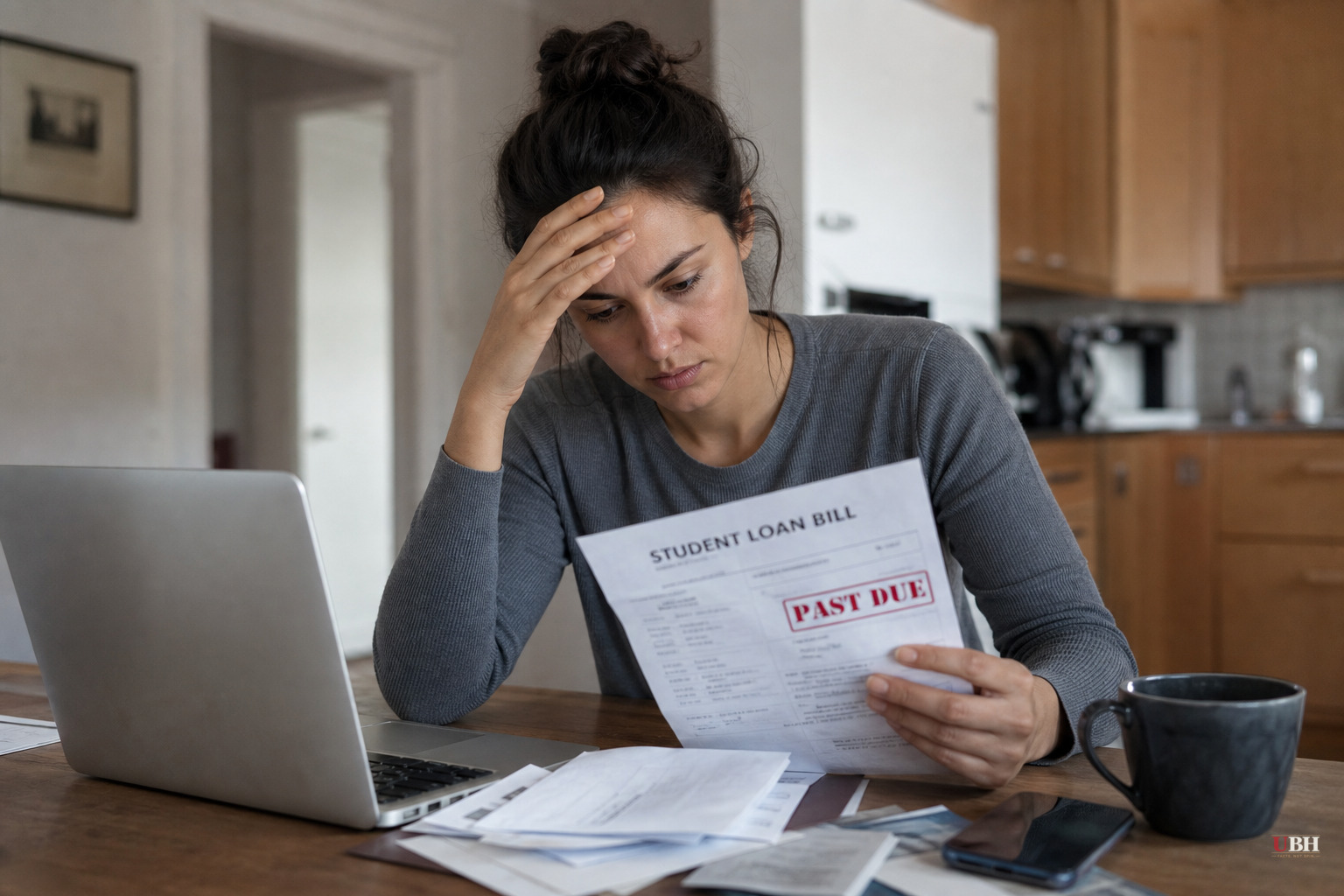
Student Loan Defaults Hit Record 9.5 Million Borrowers as Pandemic Pause Fully Unwinds
The numbers are the worst on record
Around 9.5 million Americans, roughly 1 in 5 federal student loan borrowers, are currently in default, according to an Associated Press analysis reported by CBS News. That's up from 5.3 million in June 2025, when borrowers started defaulting again for the first time since the pandemic hit. The previous record was 8 million borrowers in default back in December 2019.
Of the $1.7 trillion in outstanding federally-backed student loans nationwide, $233.3 billion is now in default, per data from the Office of Federal Student Aid cited by CBS News.
The AP analysis found the number of borrowers with defaulted loans jumped by more than 4.2 million between April 2025 and March 2026. Millions of people went from current or delinquent to fully defaulted in less than a year.
How we got here
The federal government froze student loan payments during COVID. That freeze lasted until 2023, and the Biden administration then tacked on a one-year grace period where missed payments couldn't trigger default. That buffer ended in fall 2024.
Once the grace period lapsed, the nine-month countdown to default started running again. By June 2025, the first wave of post-pandemic defaults began hitting the books, according to Open Campus and CBS News.
Default isn't just a late fee. Once a borrower crosses nine months of missed payments, the entire loan balance comes due immediately, the debt gets sent to collections, and credit scores tank. Governments and colleges can also restrict financial aid, withhold transcripts, and even suspend professional or driver's licenses, according to Open Campus.
Geography matters here
Mississippi has the nation's highest default rate at 28.3%, according to the AP analysis reported by CBS News. Louisiana, Alabama, West Virginia, Oklahoma, Georgia, South Carolina and Texas round out the top of that list, along with Alaska, Arizona, Ohio, Indiana, Michigan, New Mexico and Nevada.
CBS News noted that of those 15 states with the highest default rates, New Mexico was the only one Trump didn't win in 2024. That distinction cuts against any simple partisan narrative that this is purely a red-state or blue-state problem, and it raises real questions about income levels, degree completion rates, and loan servicer performance in those states that go beyond politics.
In Wisconsin alone, more than 108,000 people haven't made a payment in over 360 days, a nearly 50% jump since last fall, according to Open Campus. About 34,000 Wisconsinites fell into default just since September 2025. One in seven of the state's 709,100 borrowers is now in default.
The human cost
Ashley Dreahn, a 40-year-old Texas prison employee, thought her student loans were wiped out in a 2022 bankruptcy filing, according to the New York Post and the Philadelphia Inquirer. This spring, a credit-monitoring alert told her otherwise. Her loans had ballooned to $94,298 with interest, and she was already in default.
Dreahn enrolled at Texas Woman's University in 2004, the first in her family to attend college. She worked call-center jobs, babysat, and took out heavy loans, at one point signing paperwork under threat of being dropped from classes if she didn't pay up. "You just kind of trust these advisers and trust these financial aid people that this is what you're supposed to do," she told the AP.
Alan Collinge, founder of Student Loan Justice and author of "The Student Loan Scam," told the AP he's never seen borrower sentiment this raw. "I am seeing despair and outrage and despondency and just a very wide mix of pretty extreme emotions, the likes of which I have not seen before," he said.
What's coming next
The Trump administration eliminated the SAVE plan, the most generous income-driven repayment option, as part of a broader simplification of federal student loan programs. Starting this month, new borrowers choose between one standard plan and a single income-driven option instead of several, a change the Education Department describes as fixing a "fragmented and confusing" system.
That's a defensible goal. A repayment system with a half-dozen overlapping plans confuses borrowers and burns administrative resources. But Michele Zampini of the Institute for College Access and Success warned in a February blog post that losing SAVE means longer repayment terms and "unpredictable payment spikes" for millions who'd built their budgets around it, according to Open Campus.
The federal government has the legal authority to garnish wages and Social Security checks from defaulted borrowers. The Trump administration walked back plans to start those involuntary collections in January. A Moody's Analytics report this spring warned that garnishments are likely to resume within the next year, calling it "an additional headwind in an increasingly fragile economy."
No announcement has been made on exactly when collections will restart. Aissa Canchola Bañez of the advocacy group Protect Borrowers put it bluntly: "Folks are struggling to make ends meet and cover all the rising costs of everything else. The growing student loan bills are making things worse and folks are falling behind." Whether Washington reinstates garnishment this year, and how many of the 9.5 million defaulted borrowers get hit with wage or benefit seizures first, remains the open question hanging over this entire mess.
Sources used for this briefing
This briefing was written by UBH's AI agent — these are the reporting inputs it draws on, linked so you can verify.


