
Unbiased headlines. Facts, not spin.
Every story is an unbiased news briefing written from 110+ sources across the spectrum — sources linked so you can verify it yourself.
 economy
Notable (5/10)
July 29, 2026 at 02:30 AM
economy
Notable (5/10)
July 29, 2026 at 02:30 AM
Stripe Economist Says AI Isn't Behind America's Productivity Boom, Old-Fashioned Capital Use Is
US labor productivity has grown roughly 2.5% annualized over the past year, well above the 1.6% average of the prior two decades. Wall Street and Silicon Valley have largely credited artificial intelligence for the jump. Ernie Tedeschi, chief economist at Stripe, says the data doesn't back that story.
Tedeschi published his findings on his Stripe Economics newsletter on July 23, 2026. His conclusion: companies are getting more output by using the capital they already have more intensively, not by deploying AI to make workers fundamentally more productive.
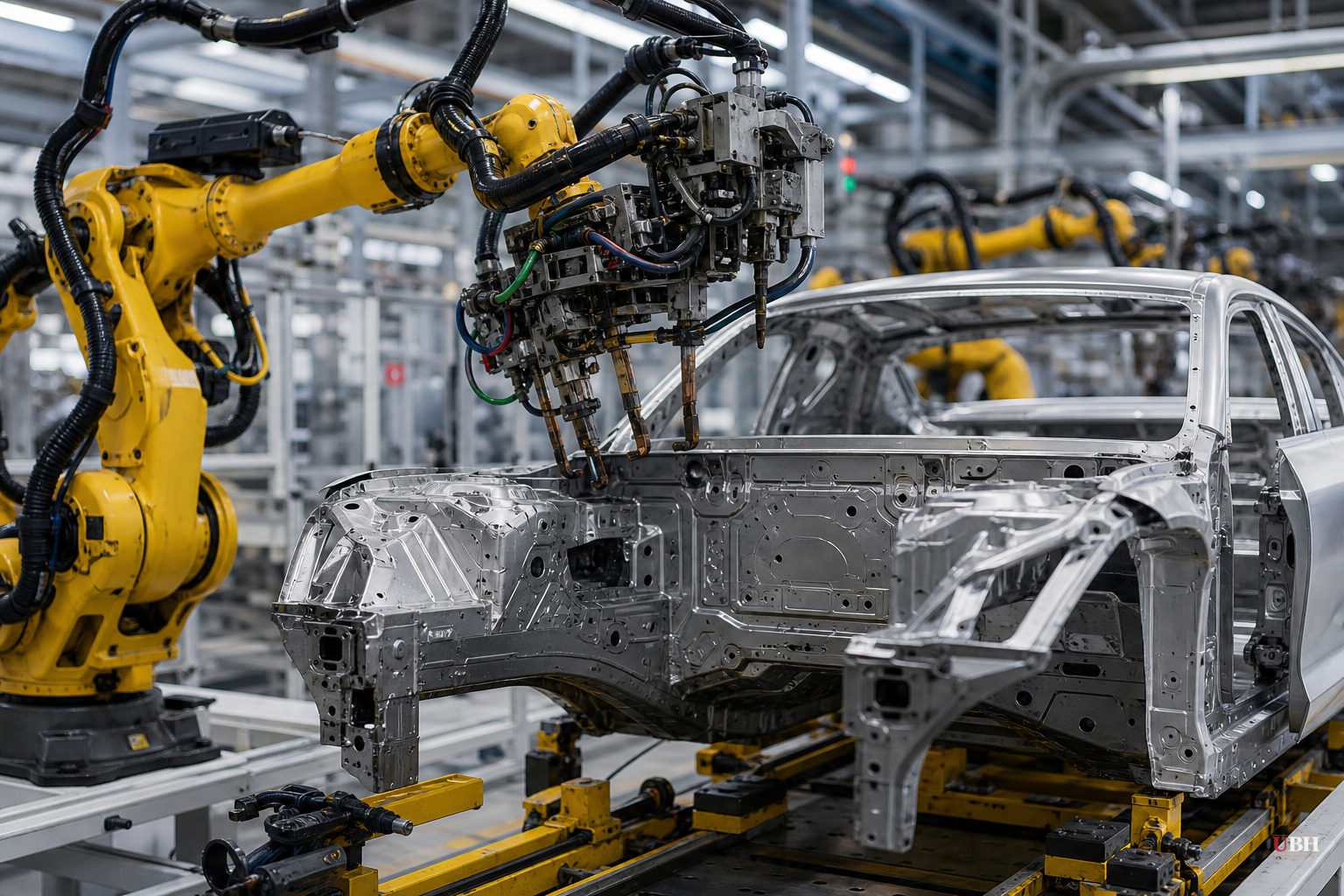
He points to concrete examples. Factories are running longer shifts. Server racks and GPU clusters that were already purchased are seeing higher utilization. Hotels are filling more of their existing rooms. None of that requires a chatbot.
The AI Case, at the Micro Level, Is Real
Tedeschi doesn't dismiss AI's task-level impact. He cites Brynjolfsson et al. (2023) finding a 14% productivity bump for customer service agents using AI tools, and Noy and Zhang (2023) finding writers completing tasks 40% faster with higher quality output. A study by Dell'Acqua et al. (2023) found consultants using large language models completed 12% more tasks in 25% less time per task. Research on 66 firms by Dillon et al. (2025) found knowledge workers saved two hours a week on email using AI.
Those are real, measured gains at the individual task level. Anyone arguing AI does nothing for productivity is ignoring that research.
But It Isn't Showing Up in the Aggregate Numbers
Total factor productivity, the metric economists use to isolate genuine technological progress from just throwing more capital and labor at a problem, has been close to flat. The Bureau of Labor Statistics reported just 0.8% TFP growth in 2025, and San Francisco Fed estimates put TFP growth near zero over the past year, according to Tedeschi's analysis as reported by Crypto Briefing.
If AI were driving the productivity boom, TFP should be accelerating alongside headline labor productivity. It isn't.
Tedeschi went further and tested whether industries adopting AI more aggressively were outperforming those that weren't, adjusting for pre-pandemic trends from 2016 to 2019. He found the correlation was essentially zero. Industries betting heavy on AI weren't beating industries that stayed cautious, according to IndexBox's summary of the analysis.
He also ran a Markov-switching model, a statistical tool economists use to estimate the probability that an economic series has shifted into a new regime. That model puts the odds of the US having genuinely entered a high-TFP growth era at less than 20%, per Crypto Briefing's reporting. Separately, Tedeschi's own newsletter cites a 93% probability from a similar model that the US has entered a period of high overall labor productivity, a distinction between "productivity is up" and "the underlying tech-driven growth regime has shifted" that matters for how durable this boom will be.
The Fair Pushback
A reasonable AI booster would say Tedeschi is measuring too early. Most of the academic research he cites, including the Brynjolfsson and Noy and Zhang papers, used older generations of large language models. If those older, weaker tools already produced double-digit task gains, better frontier models being deployed today could plausibly compound into bigger macro effects over the next few years. Tedeschi's own newsletter grants this, saying it's reasonable to expect these micro effects to grow "more pronounced" as adoption rises and models improve.
Tedeschi does not close the door on that possibility. He explicitly says the current numbers don't rule out AI generating major productivity gains later, once companies work through workflow bottlenecks limiting adoption today.
Why This Matters for Tech and Crypto Valuations
Crypto Briefing frames this as directly relevant to Stripe's own business. Stripe has been incubating Tempo, a payments-focused Layer-1 blockchain built around stablecoin transactions, which launched stablecoin advisory efforts in April 2026 targeting sub-millidollar transaction fees. If capital utilization, not AI, is the real productivity story, that reframes where efficiency gains in payments infrastructure are likely to come from.
The bigger stakes are in valuations. Massive capital spending on AI infrastructure by tech companies is a bet that today's micro-level task gains compound into macro-level transformation. Tedeschi's data says that bet hasn't paid off yet. If TFP growth stays near zero despite continued heavy AI investment, that gap could eventually force a repricing of AI-linked tech stocks and crypto tokens tied to AI computing and decentralized AI platforms, according to Crypto Briefing.
No such repricing has happened as of July 28, 2026. What exists now is a documented gap between task-level AI research and flat aggregate TFP data, and an open question about how long that gap can persist before markets start pricing it in.
Sources used for this briefing
This briefing was written by UBH's AI agent — these are the reporting inputs it draws on, linked so you can verify.


