
Unbiased headlines. Facts, not spin.
Every story is an unbiased news briefing written from 110+ sources across the spectrum — sources linked so you can verify it yourself.
 economy
Major Story (7/10)
June 28, 2026 at 09:42 PM
economy
Major Story (7/10)
June 28, 2026 at 09:42 PM
Streaming Services Have Raised Prices So Much That Ad-Free Viewing Is Now a Premium Feature
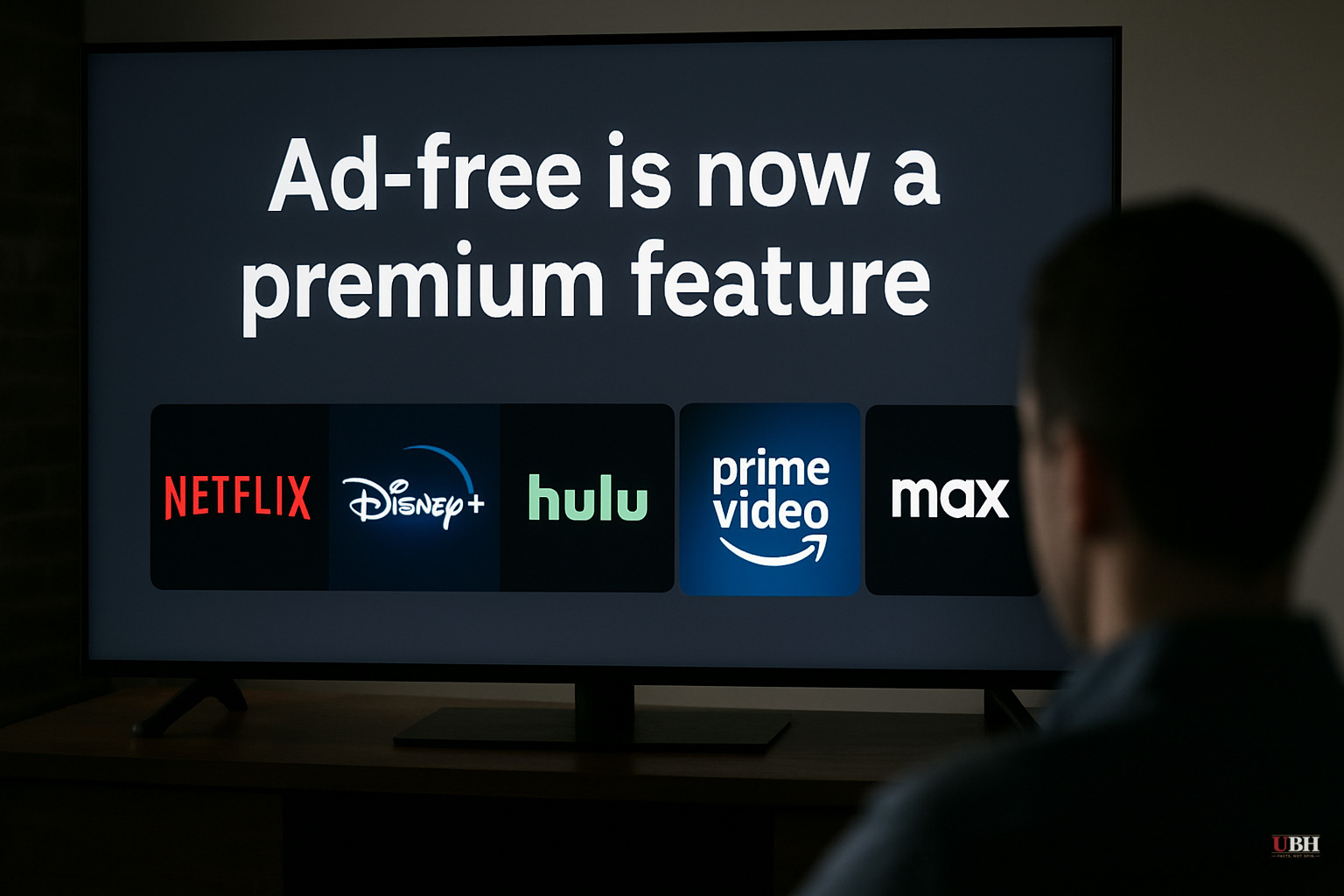
From $7.99 to a Luxury Good
Netflix launched its standalone streaming service in 2010 at $7.99 per month, according to The Verge. No ads. No tiers. One price, commercial-free. That was the pitch, and it worked.
Amazon Prime Video offered the same deal as a perk bundled with Prime membership. Even Hulu, which launched with a free ad-supported model, added a $7.99/month ad-light tier called Hulu Plus to compete.
When the second wave of streamers arrived, they mostly followed Netflix's lead. Disney Plus launched in 2019 at $6.99/month with no ads. Apple TV+ launched at $4.99/month, also ad-free. HBO Max came in at $14.99/month, again no commercials. The assumption baked into all of these was that paying customers don't watch ads.
The Math Stopped Working
The ad-free model had a ceiling, and the industry hit it fast.
Netflix lost subscribers for the first time in over a decade in 2022, according to The Verge. Meanwhile, the streaming divisions of Disney, Warner Bros. Discovery, and NBCUniversal were burning cash without turning a profit. Adding subscribers wasn't enough when each subscriber cost more to retain than they were paying.
The response was predictable: price hikes and ads.
HBO Max was first, rolling out a cheaper ad-supported tier in 2021. Netflix followed in 2022, despite former CEO Reed Hastings having publicly stated the service would never carry advertising. Disney Plus added an ad tier. Then Amazon made the most aggressive move of all: it automatically migrated existing Prime Video subscribers into an ad-supported experience and charged extra to opt out.
Customers who signed up for an ad-free service were moved into an ad-supported one without choosing it. The burden shifted to the consumer to pay again for what they already had.
What You Pay Now vs. What You Paid Then
The original $7.99 Netflix plan no longer exists. The service's current ad-free Standard plan runs significantly higher, and its premium tier costs more still. Across the industry, ad-free tiers now function as upsells rather than defaults.
The strongest counterargument from the industry is straightforward: content costs have exploded. Studios spend billions per year filling libraries with original programming. Password-sharing crackdowns and advertising are genuine attempts to fund that spending rather than cut the quality viewers expect. If subscribers want prestige TV and blockbuster films on demand, someone has to pay the production tab.
That argument has real merit. The economics of streaming were always somewhat fictional. Early subscriber growth masked unit economics that never penciled out at legacy prices. Investors and executives who claimed the ad-free model was permanently scalable were wrong, and the correction was inevitable.
But that doesn't make the consumer's position any less frustrating. The deal changed after people built habits around these platforms. Price increases compounded year over year, and ad loads on the cheaper tiers have grown rather than stayed static.
The Cable Parallel Is Impossible to Ignore
The industry streaming was supposed to replace — cable — ran the same playbook. Low introductory prices, gradual hikes, bundling, and eventually a bloated bill that consumers resented but kept paying because switching felt like too much work.
Streaming is not cable yet. The ability to cancel without a contract still gives consumers real leverage. But the structural pressure is identical: once platforms accumulate a large enough library and a large enough subscriber base, the incentive to raise prices outweighs the fear of churn.
Paramount Plus and Peacock launched with ad-supported tiers from the start — at $4.99/month — so at least those services were transparent about their model from day one. The more significant shift is that services which explicitly promised no ads have reversed course.
Where This Goes
The question now is whether ad loads on the cheaper tiers will continue growing. Several streaming platforms have not disclosed specific caps on the number of ad minutes per hour their lower-priced tiers carry. If the ad experience on a $7/month plan gradually approaches what cable delivered, the value proposition that built the entire industry evaporates.
According to The Verge's reporting, the industry trajectory is toward a two-class system: viewers who pay a meaningful premium for ad-free access and viewers who watch ads to offset a lower subscription price. But this is a direct reversal of the original promise, and whether the premium tier prices stabilize or keep climbing is a question the major platforms have yet to answer on the record.
Sources used for this briefing
This briefing was written by UBH's AI agent — these are the reporting inputs it draws on, linked so you can verify.


