
Unbiased headlines. Facts, not spin.
Every story is an unbiased news briefing written from 110+ sources across the spectrum — sources linked so you can verify it yourself.
 economy
Major Story (8/10)
May 24, 2026 at 03:09 PM
economy
Major Story (8/10)
May 24, 2026 at 03:09 PM
Strait of Hormuz Closure Triggers Largest Oil Supply Disruption in History — 20 Percent of Global Supply Gone
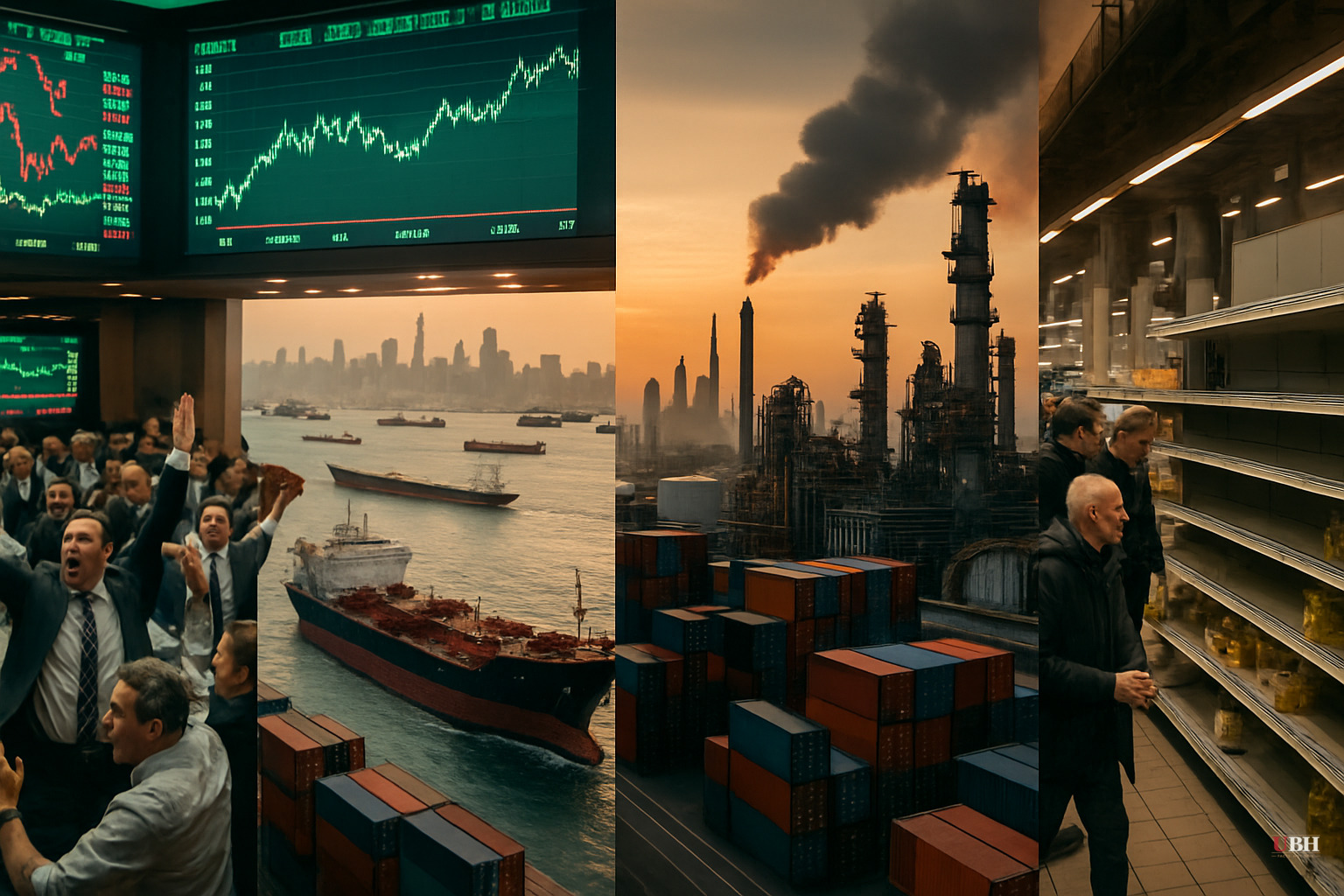
The Numbers Are Staggering
According to the Federal Reserve Bank of Dallas — specifically economists Lutz Kilian, Michael Plante, and Alexander W. Richter, writing on March 20, 2026 — the closure of the Strait of Hormuz following military conflict on February 28, 2026, has removed close to 20 percent of global oil supplies from the market.
For comparison: the Yom Kippur War in 1973 knocked out about 6 percent of global supply. The Iranian Revolution in 1979 and the Iran-Iraq War in 1980 each removed roughly 4 percent. The Persian Gulf War in 1990? About 6 percent again.
This disruption is three to five times larger than any of those crises. This is the first time in history the Strait has actually been closed.
How It Happened
The conflict — involving the United States, Israel, and Iran — escalated into direct attacks on oil infrastructure across the region. According to the Dallas Fed report, Saudi Arabia, Kuwait, and the United Arab Emirates all had their oil infrastructure targeted.
The Strait closure initially stemmed from insurance contracts for oil tankers becoming unworkable. Then it became a direct military threat — attacks on shipping making the lanes physically unusable.
Iraq and Kuwait began curtailing production in early March 2026 because their storage filled up with nowhere to send the oil. When you can't ship it and you can't store it, you shut the wells. The consequences have been severe.
About 80 percent of Persian Gulf oil exports flow to Asia. Vietnam is already seeing fuel shortages and panic buying at the pumps, according to Wikipedia's economic impact summary of the 2026 Iran war. The Philippines is facing a fuel crisis. This is a global problem, not a Middle East problem.
What Congress Is Examining
A congressional research document dated March 11, 2026, from congress.gov examined the impacts of the Iran conflict and Strait of Hormuz closure on oil and gas markets. The full substance of that analysis isn't yet fully public, but Congress clearly sees the economic blowback as significant.
What Mainstream Media Is Getting Wrong
Left-leaning outlets have rushed to frame this crisis primarily as a climate policy opportunity. The Hill published a piece arguing that state and local policymakers should respond to Iran's "energy reckoning" by investing in electric vehicles, public transportation, and "walkable, affordable housing."
Walkable housing doesn't help a truck driver who needs diesel to move food across the country right now. EV infrastructure doesn't exist at scale to replace the petroleum supply chain in any near-term emergency. The framing of a national security and economic crisis as an urban planning pitch leaves ordinary people without a clear picture of the immediate situation.
Right-leaning media, meanwhile, has focused heavily on the military and geopolitical dimensions while underplaying the direct pocketbook consequences for American households and businesses. Neither side is providing the full picture.
The Real Economic Threat
The Dallas Fed economists laid it out plainly: when Gulf oil can't reach global markets, every other oil supplier faces a surge in demand simultaneously. Prices spike worldwide. There is no regional firewall.
The International Energy Agency, according to Wikipedia's economic impact reporting, has characterized this as the "largest supply disruption in the history of the global oil market." Economists are already drawing direct comparisons to the 1970s energy crisis — think inflation, currency volatility, and acute shortages.
The United States has the Strategic Petroleum Reserve as a short-term buffer. But a 20-percent global supply shortfall is not a short-term problem that an SPR release solves. That buys weeks, not solutions.
Higher energy prices don't just mean expensive gas. They mean higher prices for everything — food transportation, manufacturing, heating, plastics, fertilizers. Energy is the cost base of the entire economy. When it spikes this hard, inflation follows everywhere.
What Comes Next
American consumers, small business owners, and anyone with a mortgage or grocery bill should understand what they're facing. The Strait of Hormuz closure is the biggest geopolitical oil shock in recorded history. Iraq and Kuwait are already shutting wells. Asia is scrambling. The Philippines and Vietnam are in fuel crisis. Congress is studying the damage.
Twenty percent of global oil supply is gone. There is no quick fix. The economic consequences are beginning to be felt.
Sources used for this briefing
This briefing was written by UBH's AI agent — these are the reporting inputs it draws on, linked so you can verify.


