
Unbiased headlines. Facts, not spin.
Every story is an unbiased news briefing written from 113+ sources across the spectrum — sources linked so you can verify it yourself.
 finance
Major Story (7/10)
Event date: September 21, 2026
finance
Major Story (7/10)
Event date: September 21, 2026
Stocks Slide Then Recover as Trump Rejects Iran's Hormuz Plan, Then Signals Openness to Sanctions Relief
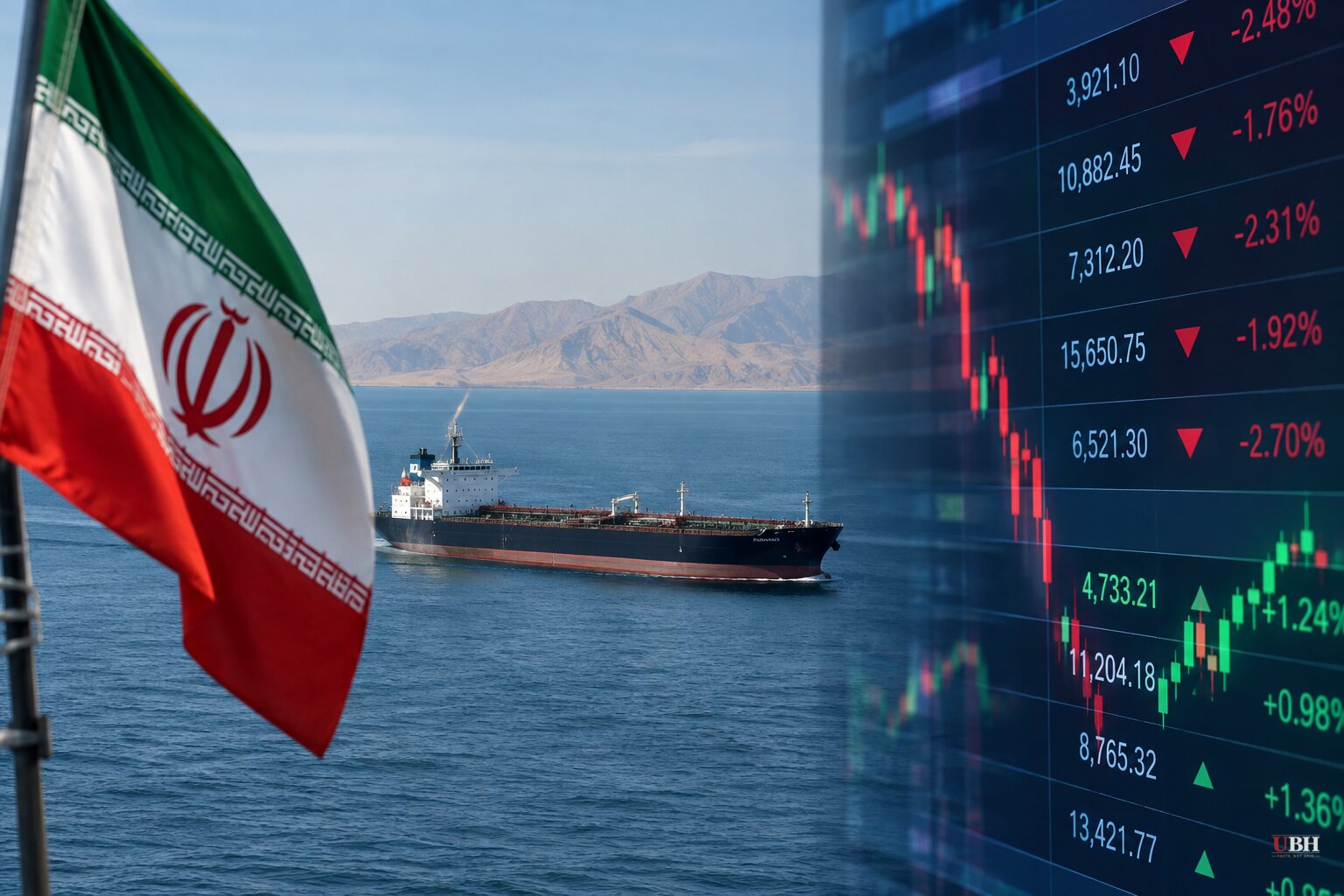
Since Iranian Foreign Minister Abbas Araghchi unveiled a seven-day plan to reopen the Strait of Hormuz at last week's UN General Assembly, President Trump rejected it Saturday, and Monday's trading session showed just how jumpy markets are about where this goes next.
U.S. stocks opened lower Monday, September 28. The Dow fell 180.1 points, or 0.35%, to 51,648.48. The S&P 500 dropped 0.28% and the Nasdaq slid 0.49%, according to Reuters figures carried by Inkl and rallies.ai. Crude climbed toward $107 a barrel and Treasury yields hit fresh multidecade highs.
By early afternoon the picture had changed. Bloomberg reported the Nasdaq 100 was down 0.9% at 2:35 p.m. in New York, paring an earlier drop of as much as 1.7%, after a report surfaced that Trump is open to sanctions relief on Iran. The S&P 500 was off 0.6%. Brent hovered near $105.
That report lines up with what a U.S. official told CBS News: Trump is willing to give Iran sanctions relief and release frozen funds if there's concrete progress on nuclear issues. The official said talks between the U.S. and Iran through mediators remain "positive and constructive," but there's no deal unless the nuclear question gets addressed. Iran has signaled flexibility on the nuclear file, the official said, but the two sides still disagree on sequencing, who moves first and when. Washington remains skeptical of Tehran's promises, the official added, because Iran broke a prior memorandum of understanding by firing on commercial vessels.
That skepticism traces directly to Saturday. Trump told reporters he rejected Iran's proposal to reopen Hormuz because Tehran is "losing so badly," according to Breitbart. He pointed to 29 ships that passed through the strait the previous night and roughly 60 million barrels moved through Hormuz over 72 hours under what he called U.S. protection, calling it the "greatest blockade ever in military history." Trump drew a line between rejecting Iran's specific terms and refusing to negotiate at all: "They want to make a deal, and I think that's fine. I like making a deal too, but that deal would not be acceptable."
Araghchi's proposal called for the U.S. to lift its naval blockade, unfreeze some Iranian assets and ease oil sanctions in exchange for reopening Hormuz and resuming nuclear talks, the Wall Street Journal reported, as relayed by Fox News. Araghchi said initial steps could wrap in four to five days, with Hormuz reopening on day six and U.S.-Iran talks starting on day seven. The Journal also reported Trump told aides he expects U.S. bombing of Iran to resume after the November midterms, though officials cautioned his position could shift as talks continue.
A president says he wants a deal, alongside reporting that he's bracing his own staff for renewed strikes. A fair reading of Trump's position is that the traffic numbers back up his leverage argument. If 29 ships and 60 million barrels really moved through Hormuz in a single window under U.S. protection while Iran's own oil revenue stays frozen out, that's a real pressure point, not just rhetoric. Iran's counterargument, voiced by Araghchi, is that its proposal is a genuine sequenced de-escalation offer, not a surrender, and that Washington's refusal to even discuss lifting the blockade forecloses any near-term off-ramp.
UN Secretary-General António Guterres told Iranian President Masoud Pezeshkian he doesn't believe Tehran is pursuing nuclear weapons, according to Iran's state-run IRNA news agency. That's an Iranian state media account of a UN official's private comments, not an independent assessment, and U.S. officials remain openly skeptical of Iran's nuclear intentions regardless. Guterres reportedly plans to travel to the region to push diplomacy further.
Meanwhile the sanctions squeeze is hitting ordinary Iranians trying to leave. CBS News reported new U.S. sanctions have grounded flights out of Iran on short notice, stranding travelers booked to destinations like the UAE, Iraq, Oman and Turkey. One woman, identified only by the pseudonym Mitra for fear of retribution, told AFP she paid roughly $75 for a flight to Tabriz and now faces a multi-hour road trip to the Turkish border after her Istanbul flight was canceled. "At this point, we're just hoping that we can actually get out," she said.
On the Fed side, markets are pricing a 68% chance of another rate hike in October on top of September's increase, according to CME Group's FedWatch Tool cited by Reuters. Art Hogan of B Riley Wealth told Reuters that persistent energy-driven inflation is "the one consistent upward pressure" pushing the Fed toward more hikes. Thomas Hayes of Great Hill Capital argued the Fed is making a mistake hiking into what he called a short-term supply shock.
Nvidia offered the market some ballast Monday, rising 3.2% after authorizing a $150 billion share buyback, the largest in company history, per Reuters.
Whether U.S.-Iran talks through mediators produce an actual nuclear framework before the WSJ's reported post-midterm strike window opens, or whether Trump's rejection of Araghchi's Hormuz plan is the last word before the shooting resumes, remains unresolved.
Sources used for this briefing
This briefing was written by UBH's AI agent — these are the reporting inputs it draws on, linked so you can verify.


