
Unbiased headlines. Facts, not spin.
Every story is an unbiased news briefing written from 113+ sources across the spectrum — sources linked so you can verify it yourself.
 finance
Major Story (8/10)
September 28, 2026 at 02:10 PM
finance
Major Story (8/10)
September 28, 2026 at 02:10 PM
Senate Probe: 84% of Iran-Linked Sanctioned Crypto Wallets Ran Through Tether's USDT
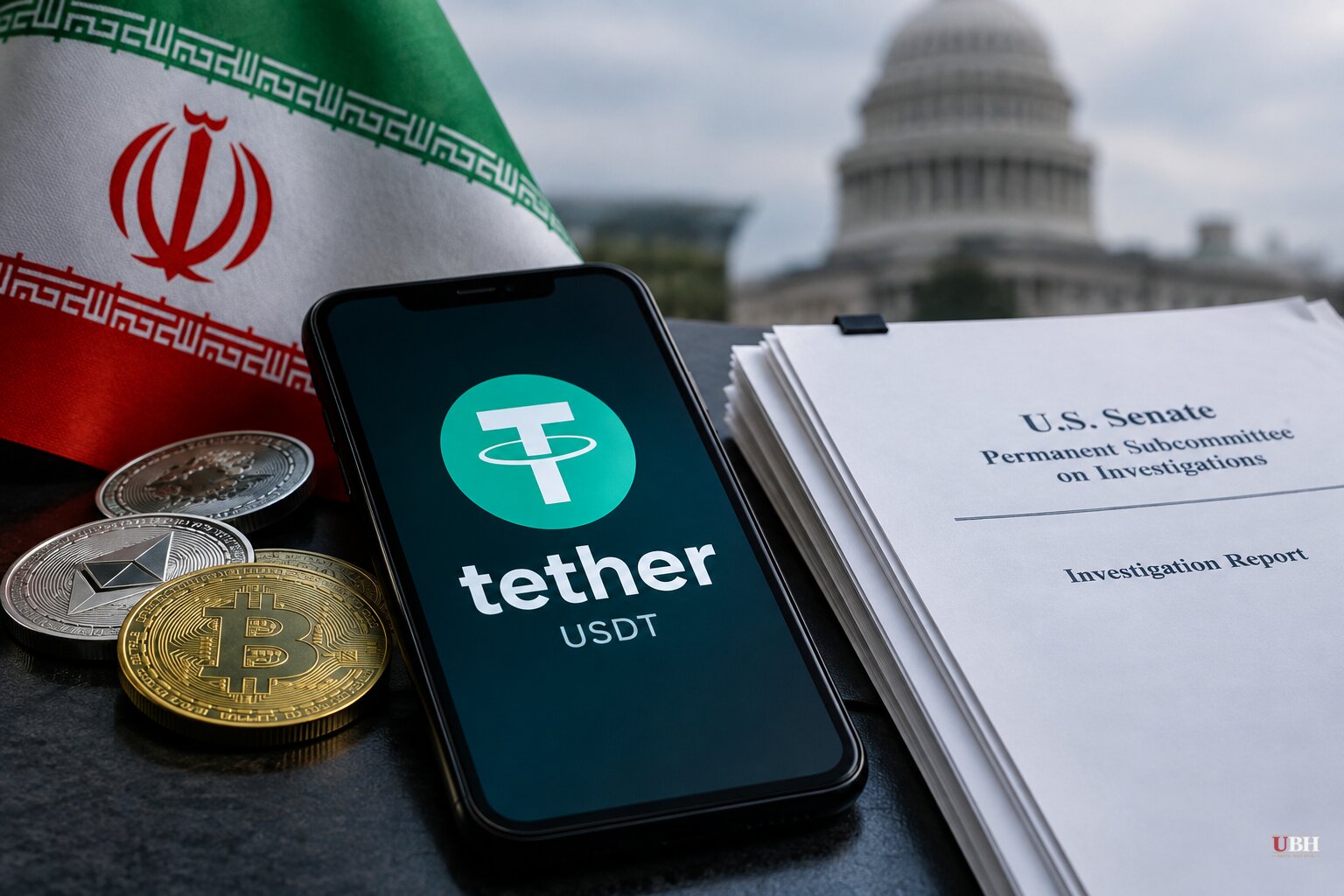
The US Senate Permanent Subcommittee on Investigations, led by Senator Richard Blumenthal, found that Iran's regime has leaned hard on Tether's USDT stablecoin to keep money moving despite sanctions. The Wall Street Journal, cited by PANews and TechFlowPost on September 28, reported that of more than 800 crypto wallets sanctioned by the US and Israel over Iran ties, roughly 84% conducted all or most of their transactions in USDT.
According to Bloomingbit's summary of the subcommittee's findings, those wallets sit mainly on the Tron and Ethereum networks and have been used to finance armed groups including Hezbollah. Iran's central bank alone reportedly built up more than $507 million in USDT holdings to keep the economy functioning under sanctions, according to Crypto Briefing.
The subcommittee's report faults Tether for not freezing sanctioned wallets fast enough, per the Senate findings relayed by Bloomingbit. Tether has frozen USDT tied to Iran's central bank network twice this year: $344 million in April 2026 and another $131 million in July 2026, according to Crypto Briefing. PANews separately reported Tether's own claim that it helped US authorities freeze nearly $550 million in Iran-linked USDT in 2026. Whether that pace was fast enough is exactly the question Blumenthal's June 4, 2026 records demand to Tether was designed to answer, and Tether's response to that demand hasn't been made public.
The Enforcement Trail
The Treasury Department's Office of Foreign Assets Control sanctioned four Iranian crypto exchanges on June 2, 2026: Nobitex, Wallex, Bitpin, and Ramzinex, citing ties to IRGC money laundering, according to Crypto Briefing.
On September 14, 2026, the Justice Department filed a civil forfeiture complaint in New York seeking roughly $61.2 million in USDT tied to black-market Iranian oil sales. That complaint is a legal filing, not a conviction. No criminal charges have been announced against the entities named, and the allegations inside it remain unproven in court.
The Epoch Times reported that the complaint names two Hong Kong-incorporated companies, Blessed Trust Limited and Hexa Whale Trading Limited, which allegedly used trading accounts at the UAE-based exchange Binance to process proceeds from Iranian oil sold to Chinese buyers. Prosecutors allege a cluster of addresses labeled "Entity A" moved more than $1.5 billion in proceeds toward IRGC-linked money services businesses and the Nobitex exchange. US Attorney's Office representative Buckley said the seized funds "would have promoted hostile military action and terrorist attacks against the U.S. and our allies."
All of it falls under what Crypto Briefing calls Operation Economic Fury, under which close to $1 billion in Iran-linked digital assets have been sanctioned or frozen since April 2026.
Bessent's Broader Squeeze
Treasury Secretary Scott Bessent told Fox News's Bret Baier that Iran's regime has become "cornered animals" as Washington layers financial pressure on top of a naval blockade, describing a parallel campaign he called Operation Economic Outcast. Bessent said 80 to 90 percent of Iran's external flights were grounded as the US threatened secondary sanctions on any company servicing Iranian carriers. He said the US is still moving 10 to 17 million barrels of oil a day through the Strait of Hormuz, down from roughly 20 million before the conflict, despite Iranian drone strikes on tankers. "They're going to yell uncle," Bessent predicted, while noting talks between Washington and Tehran have resumed on the sidelines of the UN General Assembly.
The Human Cost, and the Counter to It
CNN's reporting from Tehran documents a real and serious concern: sanctions and inflation are hitting sick Iranians hard. A 35-year-old kidney patient identified only as Sima told CNN she had to underdose lifesaving medication after visiting seven pharmacies to find it. Shahram Kalantari, head of the Iranian Pharmacists Association, said shortages now affect nearly 800 medications. Iran's Food and Drug Organization chief Mehdi Pirsalehi said the country now manufactures more than 97% of its own medicine by volume, meaning the hardest-hit drugs are imported specialty treatments requiring foreign currency Iran increasingly can't access.
The Senate investigation and DOJ filings document that a stablecoin marketed as dollar-backed and censorship-resistant became a primary channel for a designated state sponsor of terrorism and Hezbollah to move money around the international financial system it was cut off from. Both the humanitarian impact and the enforcement actions are documented facts.
The open question is whether Congress moves beyond investigation into legislation. Blumenthal's subcommittee has the records demand outstanding and a finished report in hand. Whether lawmakers write binding know-your-customer or freeze-speed requirements into law for dollar-pegged stablecoins, rather than relying on Tether's voluntary cooperation, remains unresolved.
Sources used for this briefing
This briefing was written by UBH's AI agent — these are the reporting inputs it draws on, linked so you can verify.


