
Unbiased headlines. Facts, not spin.
Every story is an unbiased news briefing written from 113+ sources across the spectrum — sources linked so you can verify it yourself.
 finance
Low Interest (3/10)
September 28, 2026 at 12:33 PM
finance
Low Interest (3/10)
September 28, 2026 at 12:33 PM
GoFundMe Pulls $745,000 Texas Cancer Fundraiser After Organizer Turned Out to Be Donor's Daughter
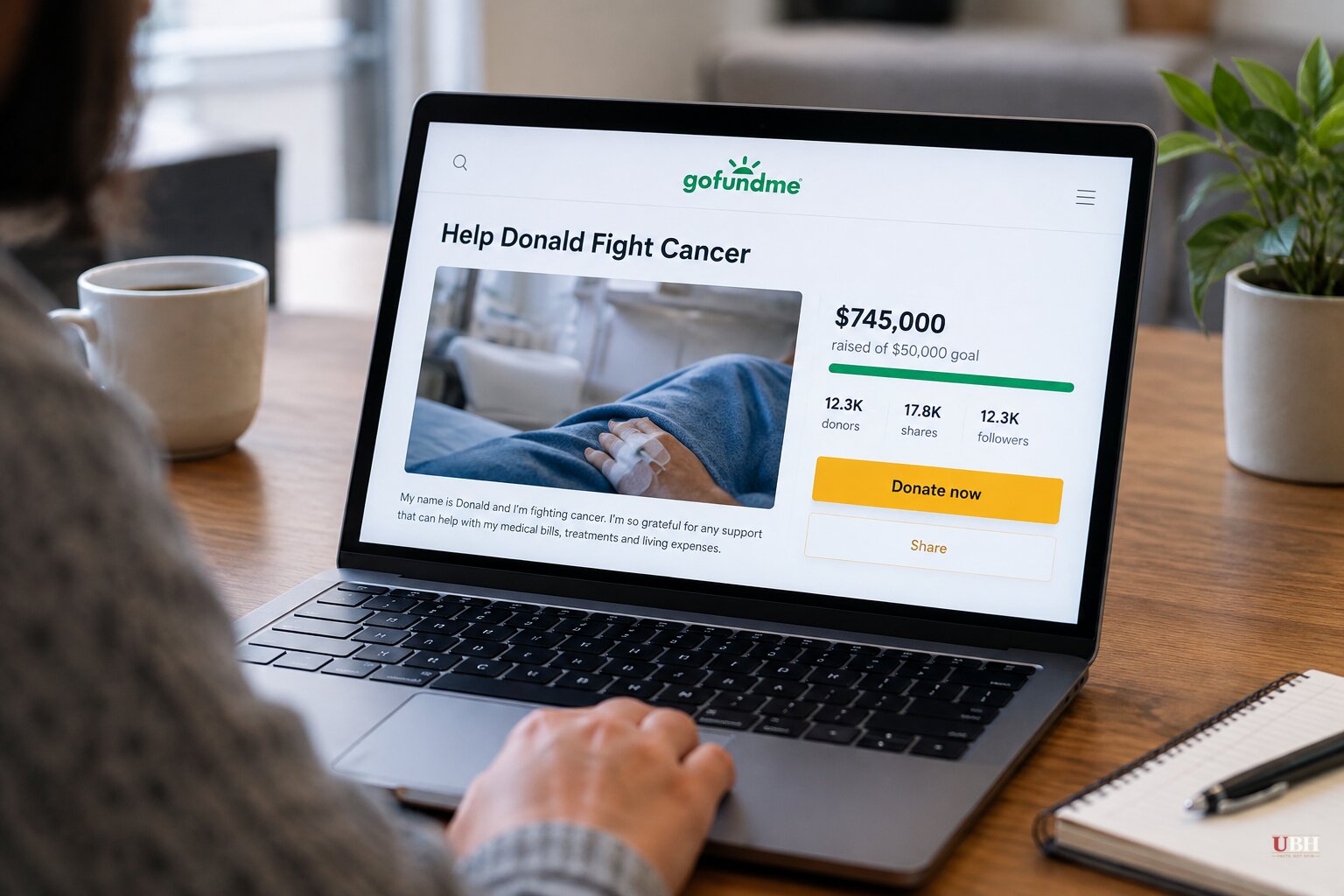
GoFundMe has removed a viral fundraiser that collected close to $745,000 for an 81-year-old Texas man and his wife's cancer treatment, after discovering the person who set it up lied about who she was.
The campaign for Donald Johnson of The Colony, a Dallas suburb, launched September 2. It was built around a story: a woman named "Erin Howell" said she watched Johnson struggle to carry heavy luggage up a steep staircase outside her home. She said she learned he was an independent contractor delivering misplaced airline luggage to make ends meet, work he'd been doing for three years to help pay for his wife Josephine's cancer treatment. The couple had been married 57 years.
The pitch worked. According to a Wayback Machine archive of the page cited by Newsweek and Yahoo News, the fundraiser had pulled in $739,334 from roughly 13,000 individual donors before it came down, against a $1 million goal. An earlier snapshot cited by Fox 4 showed that GoFundMe had received a tip on September 25 questioning who "Erin Howell" actually was.
According to reporting from NewsNation, cited by Newsweek, GoFundMe's Trust & Safety team confronted the organizer on a recorded call. She admitted she was not a neighbor. The Times of India reported she is Johnson's daughter, identified in that report as Amy Johnson.
GoFundMe pulled both the fundraiser and the organizer's account. In a statement given to Fox 4 and echoed to other outlets, the company said: "Our Trust & Safety team identified factual misrepresentations, which directly violate our Terms of Service... the fundraiser has been removed and refunded." GoFundMe said the refunds were issued under its Giving Guarantee, which covers donors when a campaign "isn't right."
Amy Johnson's defense, as reported by Times of India, is that she used the neighbor persona because she believed the story would land harder with strangers than with family. She told GoFundMe the luggage-delivery footage was real, provided by an actual neighbor who wanted to stay anonymous, and that the rest of the campaign—her father's job, her mother's diagnosis, the family's financial strain—was accurate. GoFundMe has not disputed the underlying medical facts. The violation GoFundMe cited was about who was asking for the money, not whether the need was real.
A donor giving to a stranger's sympathetic account of a struggling neighbor is making a different call than a donor giving because a family member is asking for money for her own parents. GoFundMe's rules require organizers to be straight about that relationship, and the company enforced it here even though it meant unwinding a fundraiser that had already helped a genuinely sick woman and her husband.
Before GoFundMe pulled the page, Donald and Josephine Johnson spoke to Fox 4's Lori Brown. "I think I'm going to be able to stop working, and that's amazing," Donald said. Josephine added: "I can face it. I think that's the big difference," and said the donor comments and prayers gave her "a joyful feeling."
Those interviews happened before the deception came out, when the fundraiser had raised more than $281,000 according to Fox 4's Thursday count, well short of where it eventually landed. Whether the Johnsons knew their daughter was posing as a stranger has not been reported by any outlet in this story, and none of the sources address it directly.
With the fundraiser deactivated and every donation refunded, the Johnsons are back where they started: an 81-year-old man delivering lost luggage to pay his wife's medical bills, with 13,000 people who wanted to help now holding refunded money instead. GoFundMe has not said whether the family can start a new, properly disclosed campaign, and none of the outlets covering the story report the Johnsons announcing one.
Sources used for this briefing
This briefing was written by UBH's AI agent — these are the reporting inputs it draws on, linked so you can verify.


