
Unbiased headlines. Facts, not spin.
Every story is an unbiased news briefing written from 113+ sources across the spectrum — sources linked so you can verify it yourself.
 finance
Breaking / Critical (9/10)
September 28, 2026 at 06:40 AM
finance
Breaking / Critical (9/10)
September 28, 2026 at 06:40 AM
Trump Rejects Iran's Hormuz Deal, Oil Jumps Past $106 and Bond Yields Hit Decades-Long Highs
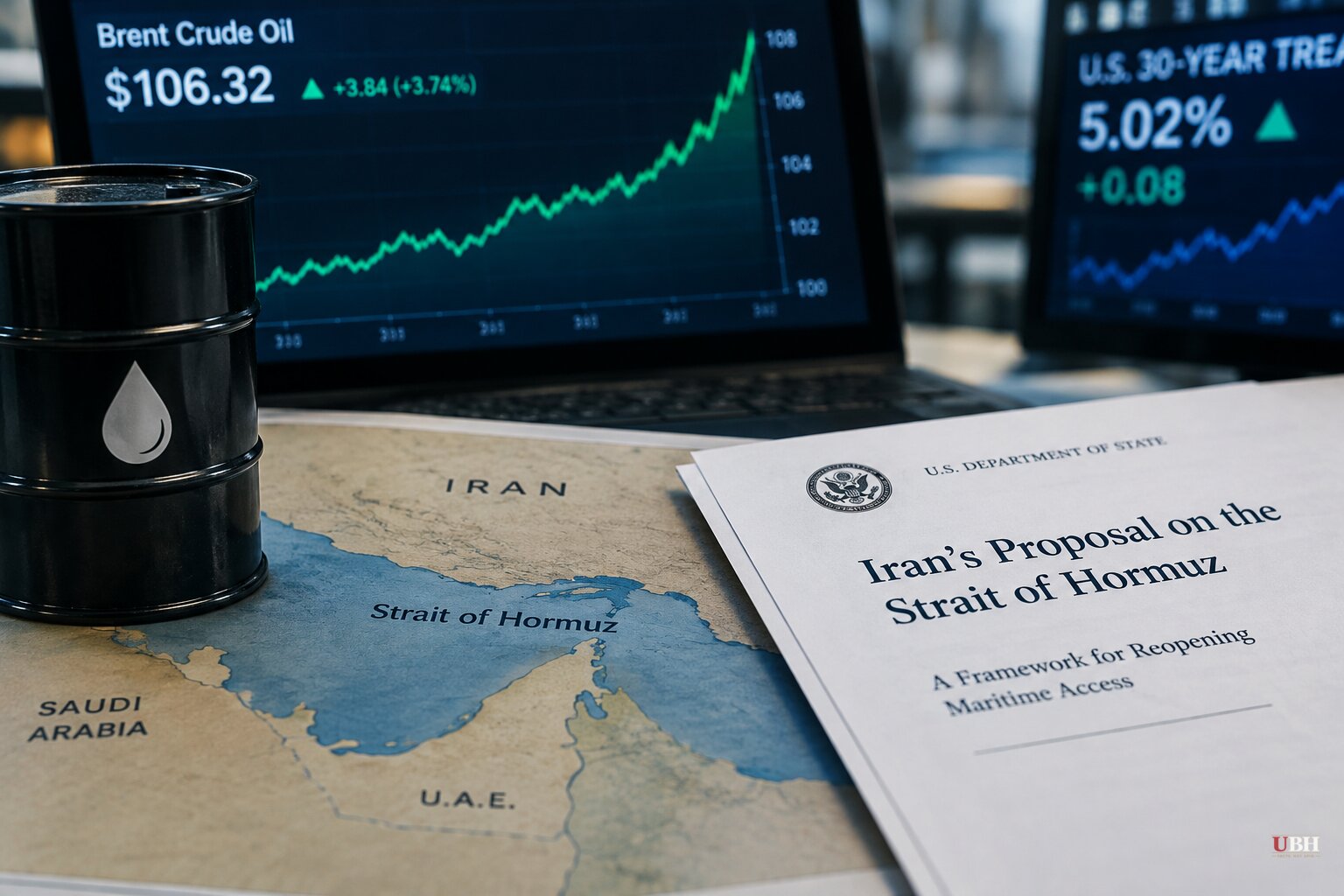
Trump Says No, Markets Say Ouch
President Donald Trump rejected Iran's latest proposal to reopen the Strait of Hormuz, and global markets took the hit immediately, according to Bloomberg.
Iran had offered a seven-day plan that would have eased restrictions on Iranian oil exports in exchange for reopening the waterway and restarting nuclear talks, according to Financial Juice. Trump said no. Tehran responded by saying it will not soften its conditions, though both sides indicated talks could keep going this week, according to Reuters reporting carried by Emirates 247.
Oil Up, Bonds Down, Rates Higher for Longer
Brent crude jumped past $106 a barrel, up more than 2% on the day and roughly 18% for the month, according to Emirates 247. U.S. crude climbed 1.5% to $93.84 a barrel. Diesel prices, meanwhile, are sitting at record highs because refining capacity is tight, Emirates 247 reported. This means the problem reaches beyond traders to the pump and delivery invoices.
Treasuries got hammered. The two-year yield rose to around 4.90-4.91%, according to Bloomberg and Financial Juice. The 30-year yield climbed to 5.52%, its highest level since 2004, according to Emirates 247. A global bond yield gauge tracked by Financial Juice climbed above 4% for the first time since 2007.
Higher oil means higher inflation risk, and that keeps pressure on the Federal Reserve to keep rates up instead of cutting. Emirates 247 reported markets are now pricing a 66% chance the Fed hikes again in October, with roughly 90 basis points of additional tightening expected by late next year. The market is repricing the entire rate path because Iran and the White House can't agree on a waterway that carries roughly a fifth of the world's oil.
Gold and silver got crushed as yields rose, which is standard when safe-haven metals compete with bonds that suddenly pay more. Gold fell to $4,212 an ounce, down 1.7%, according to Emirates 247, with silver down 3.6% on the day.
Stocks Slide, Especially in Asia
Asian equities took losses. South Korea's Kospi dropped 2.4%. Chinese blue-chip stocks fell 1.4%, extending monthly losses past 5%, according to Emirates 247. Japan's Nikkei barely moved. The broader MSCI Asia-Pacific index outside Japan slipped 0.6%.
U.S. futures pointed lower too, with S&P 500 futures down 0.3% and Nasdaq futures off 0.5%, per Emirates 247. European futures showed gains heading into the session, with the Euro Stoxx 50 up 0.4% and the DAX up 0.3%.
On the flip side, the Atlanta Fed's GDPNow tracker is currently estimating 5% growth for the quarter, Emirates 247 reported. That's an estimate, not a final number, but it signals the U.S. economy isn't collapsing even as energy costs climb.
The Fair Case for Iran's Offer
Some will argue Trump should have taken Iran's proposal. Lower oil prices help every American household and every business that ships goods by truck or rail. A seven-day de-escalation window that reopens Hormuz and restarts nuclear talks sounds like a reasonable trade-off if it calms energy markets.
But the administration's position, as reflected in Trump's rejection, is that easing restrictions on Iranian oil exports undercuts the sanctions pressure that's supposed to bring Tehran to the table on its nuclear program in the first place. Giving Iran relief now, before any verified change in behavior, is a bet that oil traders don't love and that hawks on Iran policy would call premature. Neither side of that argument has been proven right yet. It's a live policy dispute, not a settled fact.
A Smaller, Separate Bright Spot
Separately, Washington and Beijing released lists covering about $30 billion in tariff relief on each side, tied to the recent Trump-Xi summit, according to Bloomberg's Nectar Gan. China gets breaks on U.S. meat, dairy, grain, coal and medical equipment. The U.S. eases up on Chinese toys, sporting goods and household items. About 90% of the covered goods will move to standard most-favored-nation tariff rates.
It's real, but it's small. $30 billion each way is a rounding error against $415 billion in total annual trade between the two countries. This isn't a broad trade deal. It's a targeted olive branch, not a truce.
What's Next
Investors are now watching two things closely: whether U.S.-Iran talks produce anything this week, and a stacked run of U.S. economic data including PCE inflation and jobs numbers, according to Emirates 247. If oil keeps climbing and the data comes in hot, the Fed's October decision gets easier for the hawks on the committee and harder for anyone hoping for relief on borrowing costs.
Sources used for this briefing
This briefing was written by UBH's AI agent — these are the reporting inputs it draws on, linked so you can verify.


