
Unbiased headlines. Facts, not spin.
Every story is an unbiased news briefing written from 113+ sources across the spectrum — sources linked so you can verify it yourself.
 finance
Major Story (7/10)
Event date: September 25, 2026
finance
Major Story (7/10)
Event date: September 25, 2026
Three Seized Iranian Oil Tankers Carrying $600 Million in Crude Are Weeks From US Ports
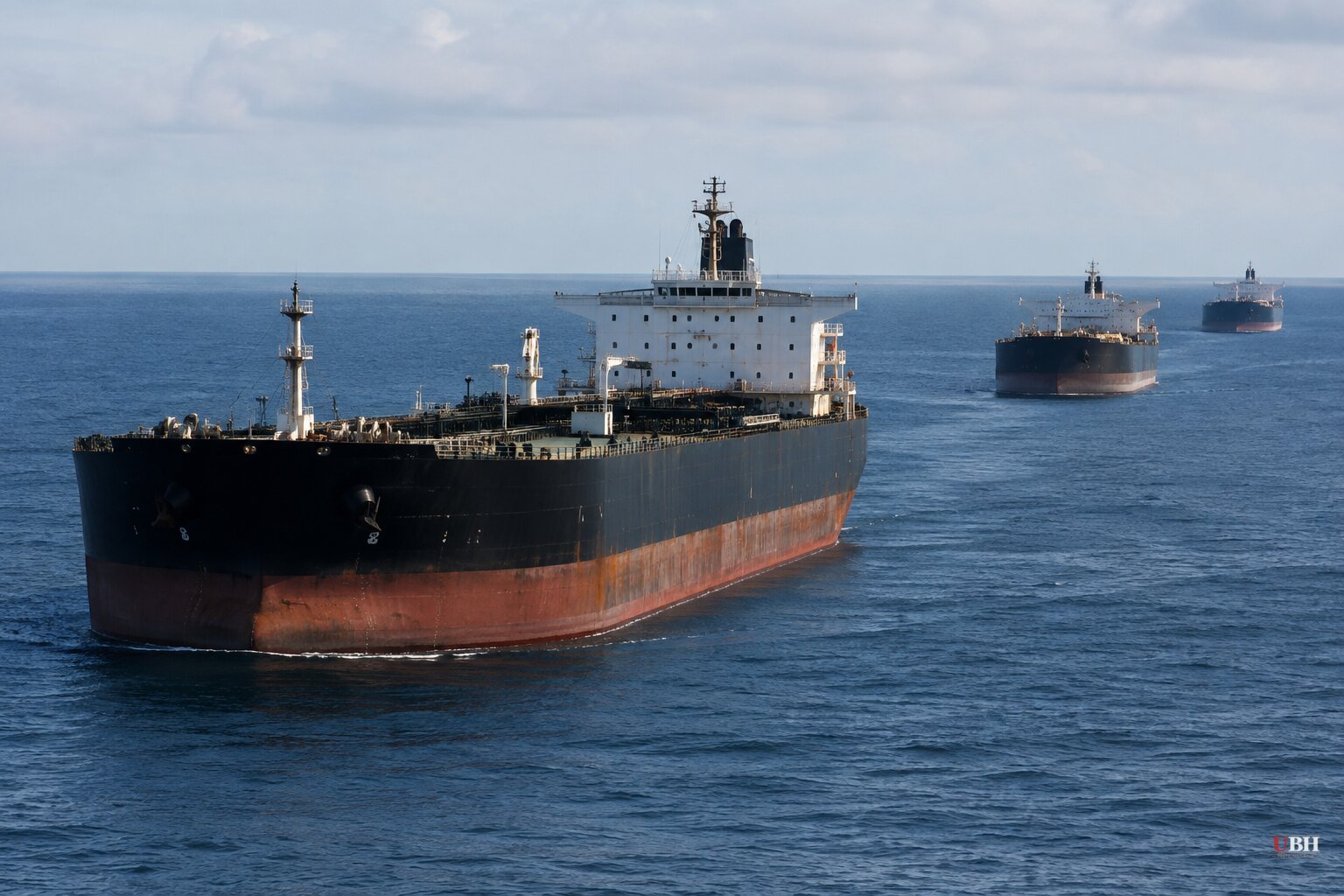
Two supertankers loaded with Iranian crude are skirting the coast of Brazil right now, and a third just rounded the Cape of Good Hope headed into the Atlantic. All three are weeks away from reaching the United States, according to Bloomberg. If they make it to port, it will be the first Iranian oil to touch American soil since a 2023 forfeiture case, according to Energy Information Administration data cited by Bloomberg.
The ships are the Tifani, the Majestic X (also called Phonix), and the Lenore (also going by Davina). All three are very large crude carriers, each able to haul about 2 million barrels. Combined, that's nearly 6 million barrels of oil worth roughly $600 million at current prices, according to Tanker Trackers, which posted the tracking data on X.
U.S. forces boarded the Tifani on April 21, 2026, in the Bay of Bengal, and boarded the Majestic X two days later, according to Energy News Beat. The Lenore was seized in early June southwest of Sri Lanka after weeks of running with its transponder off. Homeland Security Investigations said on X at the time that agents were executing federal warrants to seize the ships and their cargo.
These aren't official Iranian state tankers. Energy News Beat reports they're part of the so-called dark fleet, aging VLCCs with spoofed AIS signals, flags of convenience, and ownership buried in shell layers across places like India. The Majestic X and Tifani falsely claimed registries in Botswana and Guyana; the Davina claimed Curacao and Palau, according to Ground News. Iran doesn't hold title to these ships, but the oil trade generates revenue for the regime and entities like the IRGC, per Energy News Beat's reporting.
An 1812 Law Gets Dusted Off
The mechanism the administration is leaning on is called prize law, and it dates to the Prize Act of 1812, according to ICLG. It's rooted in the Constitution's Captures Clause and was last invoked during the Spanish-American War, according to Fortune. Abraham Lincoln used it to justify the Union blockade of Confederate ports during the Civil War.
Prize law is different from ordinary civil forfeiture. Civil forfeiture requires prosecutors to prove a specific statute was violated. Prize law lets the government ask a federal court to simply rule that a vessel or cargo captured during armed conflict was lawfully taken as enemy property, according to ICLG.
Aaron Reitz, the U.S. Attorney for the Southern District of Texas, confirmed his Houston office is preparing to handle these cases. "Our national security interests may require the United States military to seize vessels or cargo supporting the enemy during military conflict," Reitz said in a statement to Fortune. "If that happens, our federal courts must be ready to adjudicate the disposition of these captured vessels and cargo." He called prize law "an ancient body of maritime law" that's "already codified in statute but which we are now reviving."
Houston makes sense as the destination. It's home to the Port of Houston, major refiners, and Reitz's own courthouse. But ICLG reports that as of its filing, no prize proceeding had actually been filed and the administration hadn't formally identified which tankers it intends to claim under this specific doctrine. HSI had already executed civil forfeiture warrants on the Tifani and Majestic X back in April, per Bloomberg's reporting carried by gCaptain, which suggests the government may be running two separate legal tracks rather than waiting entirely on the revived 1812 statute.
Iran Calls It Piracy
Tehran isn't taking this quietly. Iran characterizes the tanker seizures as piracy and ties them directly to the broader standoff over the Strait of Hormuz, according to Ground News. A spokesman for Iran's Ministry of Foreign Affairs didn't respond to Bloomberg's request for comment.
That framing deserves a fair hearing. From Tehran's perspective, the U.S. Navy is stopping vessels flying no Iranian flag, in international waters, and taking cargo without a completed court judgment establishing the seizure was lawful, which is precisely the kind of unilateral action prize law's critics worry about. The counterweight is that the U.S. has publicly declared a blockade tied to an active conflict, and prize law exists specifically to let courts, not just the military, decide after the fact whether a capture was legitimate. Until a judge issues a condemnation order, ownership of the oil technically hasn't transferred, according to ICLG, and any shipowner, lender, or cargo claimant can still contest the seizure in federal court.
The backdrop hasn't cooled off either. Fox News reported, citing The Wall Street Journal, that Trump rejected an Iranian proposal for a seven-day ceasefire that would have traded a lifted blockade and eased sanctions for reopening the Strait of Hormuz. Officials told the Journal that Trump expects U.S. bombing of Iran to resume after the November midterms, and that Washington has told Tehran the blockade isn't going away. U.S. Central Command said it had redirected 122 commercial vessels by September 25 to maintain compliance with that blockade, according to Ground News.
The precedent the administration is pointing to is a 2020 case involving four tankers, including one called the Bella, where the U.S. seized roughly 1.1 million barrels of Iranian fuel bound for Venezuela, later sold after forfeiture with proceeds going to the Treasury, according to Energy News Beat. Whether these three tankers end up sold the same way, or tied up in prize-law litigation for months, depends on which federal court gets the case, and on when, or if, the Justice Department actually files it.
Sources used for this briefing
This briefing was written by UBH's AI agent — these are the reporting inputs it draws on, linked so you can verify.


