
Unbiased headlines. Facts, not spin.
Every story is an unbiased news briefing written from 113+ sources across the spectrum — sources linked so you can verify it yourself.
 finance
Major Story (7/10)
Event date: September 21, 2026
finance
Major Story (7/10)
Event date: September 21, 2026
Paramount Launches $44 Billion Bond Sale to Fund $110 Billion Warner Bros. Discovery Takeover
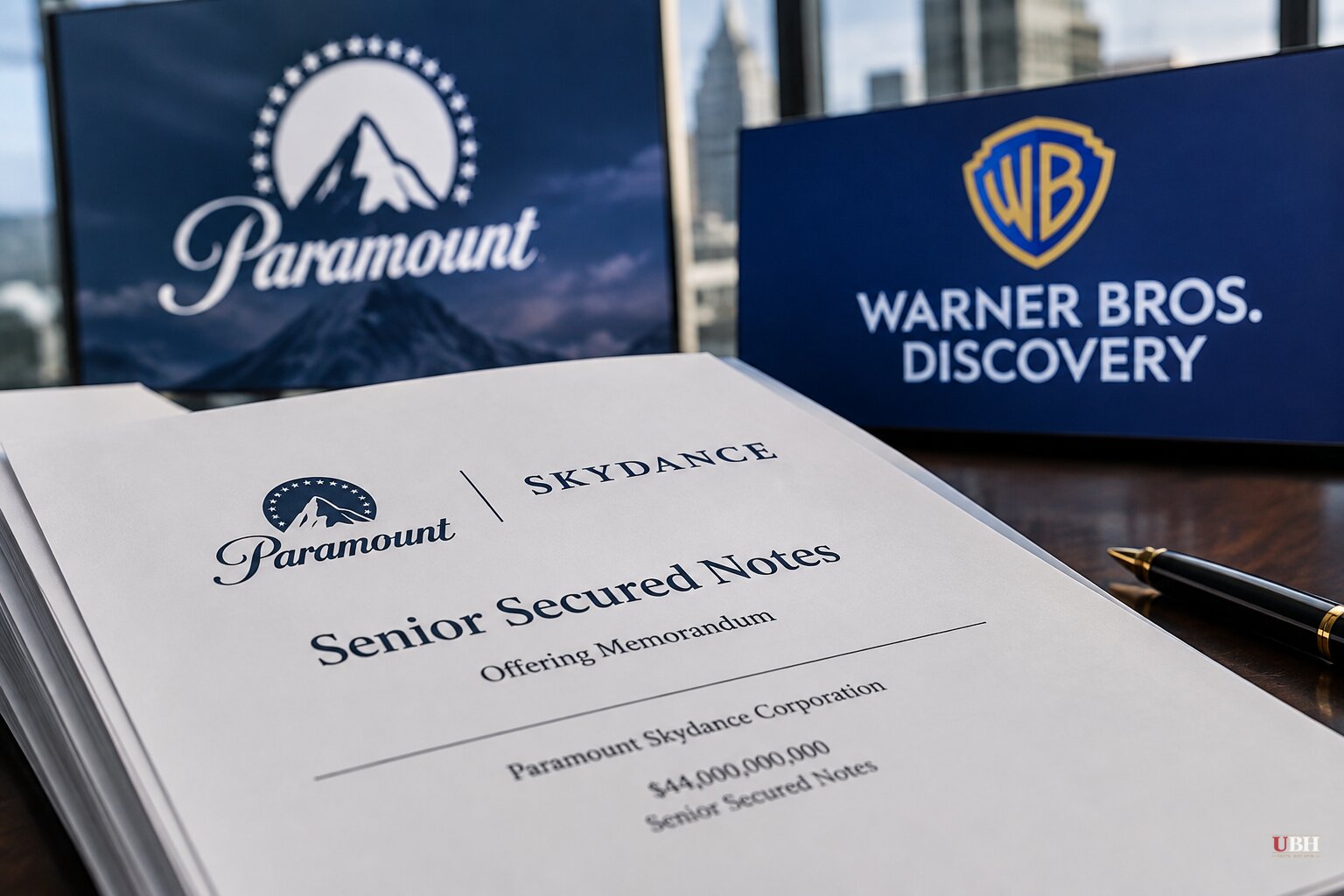
Since Paramount Skydance settled its antitrust fight with 12 state attorneys general on September 21, the company has moved fast to lock down financing and close its $110 billion acquisition of Warner Bros. Discovery. On Monday, September 28, Paramount launched a bond sale exceeding $44 billion to fund the deal, according to Bloomberg-sourced reporting carried by The Straits Times and TradingView.
Bank of America and Citigroup are running investor calls Monday on roughly $32 billion of investment-grade notes and $12.4 billion-equivalent of high-yield bonds, per The Straits Times. That debt sale is the core of a $52 billion financing package that also includes $7.5 billion in loans banks began marketing last week, according to a Form 8-K Paramount filed with the Securities and Exchange Commission and reported by Stock Titan.
The investment-grade piece has eight dollar-denominated tranches with maturities running from two years out to 40. The high-yield side includes a two-part euro tranche maturing in five and eight years, plus three dollar tranches due in five, eight and 10 years. Early price talk on the 10-year high-yield notes sits in the low 9 percent range, both The Straits Times and Briefs Finance reported.
At roughly $44.4 billion, the notes offering alone is about four times Paramount's current market capitalization of $11.2 billion, according to TradingView. Paramount shares fell 2.2 percent Monday to $9.96, TradingView reported.
Why the rush
Under its merger contract, Paramount owes Warner Bros. Discovery shareholders roughly $7 million a day if the deal doesn't close by October 1, as reported by the Epoch Times and confirmed in Stock Titan's summary of the SEC filing. Banks are targeting pricing on all the debt tranches by Wednesday, September 30, according to The Straits Times.
The pro forma materials in Paramount's 8-K assume an October 6 closing, with Warner Bros. Discovery shareholders receiving $31 per share plus additional "Ticking Consideration," and total cash consideration estimated at $78 billion. The filing puts combined six-month revenue at $31.648 billion with a $2.091 billion net loss attributable to Paramount for the period ended June 30, 2026, before accounting for any merger synergies.
The settlement that cleared the runway
The bond sale only became possible after Paramount settled two separate lawsuits last week: one from a coalition of Democratic state attorneys general led by California's Rob Bonta, and one from the Writers Guild of America, according to The Straits Times. Both had been trying to block the merger since July, when Judge Araceli Martínez-Olguín of the Northern District of California issued a temporary restraining order.
Bonta's original case, filed in July, argued the combined company would control nearly a third of theatrical motion pictures and a third of cable network programming, including 50 of the most-watched cable channels, and that it would give Paramount more than 30 percent of anticipated blockbuster films. That is a substantive competition concern under the Clayton Antitrust Act, the century-old law barring mergers that substantially lessen competition, and it's the argument a reasonable regulator would raise before waving through the largest media merger in Hollywood history.
The settlement did not require Paramount to sell off any assets, according to reporting cited by Breitbart's Nolte. It did include two specific concessions: independent editorial oversight boards for CBS News and CNN, and a $30 million penalty for each film short of Paramount Skydance chief David Ellison's pledge to release 30 movies a year.
The editorial-board provision creates an interesting tension regardless of how the merger's economics shake out. State attorneys general used merger leverage to extract a structural change in how two major news organizations govern their own newsrooms. A condition that has nothing to do with box office competition raises questions about content oversight and whether it's a reasonable safeguard against a single owner controlling two national news brands, or state government inserting itself into editorial decisions it has no statutory authority over. Neither side in this dispute has fully answered this on the record.
Bonta said at a news conference that the deal will also bring at least $300 million more in annual film production to the United States and increase yearly film releases once the merger closes, according to the Epoch Times.
What's left
A federal judge in San Francisco still has to enter the proposed consent decree and lift the standing order blocking the merger before Paramount and Warner Bros. Discovery can close. Once that happens, the companies must wait five days before finalizing the transaction, per the court's earlier order.
The bond sale is also landing in a market under real strain. Treasury yields have climbed to multi-decade highs, and the ongoing US-Iran standoff has pushed oil prices up, weighing on both stocks and bonds on fears of stickier inflation and further Federal Reserve rate hikes, according to The Straits Times and Briefs Finance. Most companies with planned high-grade bond offerings stood down Monday rather than compete with Paramount's sale.
If the pricing holds through Wednesday and the court signs off, Paramount is on track to close what would be one of the largest corporate debt raises on record, financing a media merger that took eight months and two lawsuits to get across the finish line.
Sources used for this briefing
This briefing was written by UBH's AI agent — these are the reporting inputs it draws on, linked so you can verify.


