
Original briefings. Zero spin.
Every story is an original briefing written from 110+ sources across the spectrum — sources linked so you can verify it yourself.
 finance
Notable (6/10)
August 21, 2026 at 04:59 PM
finance
Notable (6/10)
August 21, 2026 at 04:59 PM
Stocks Bounce Friday but Head for a Weekly Loss as Treasury Yields Stay Elevated
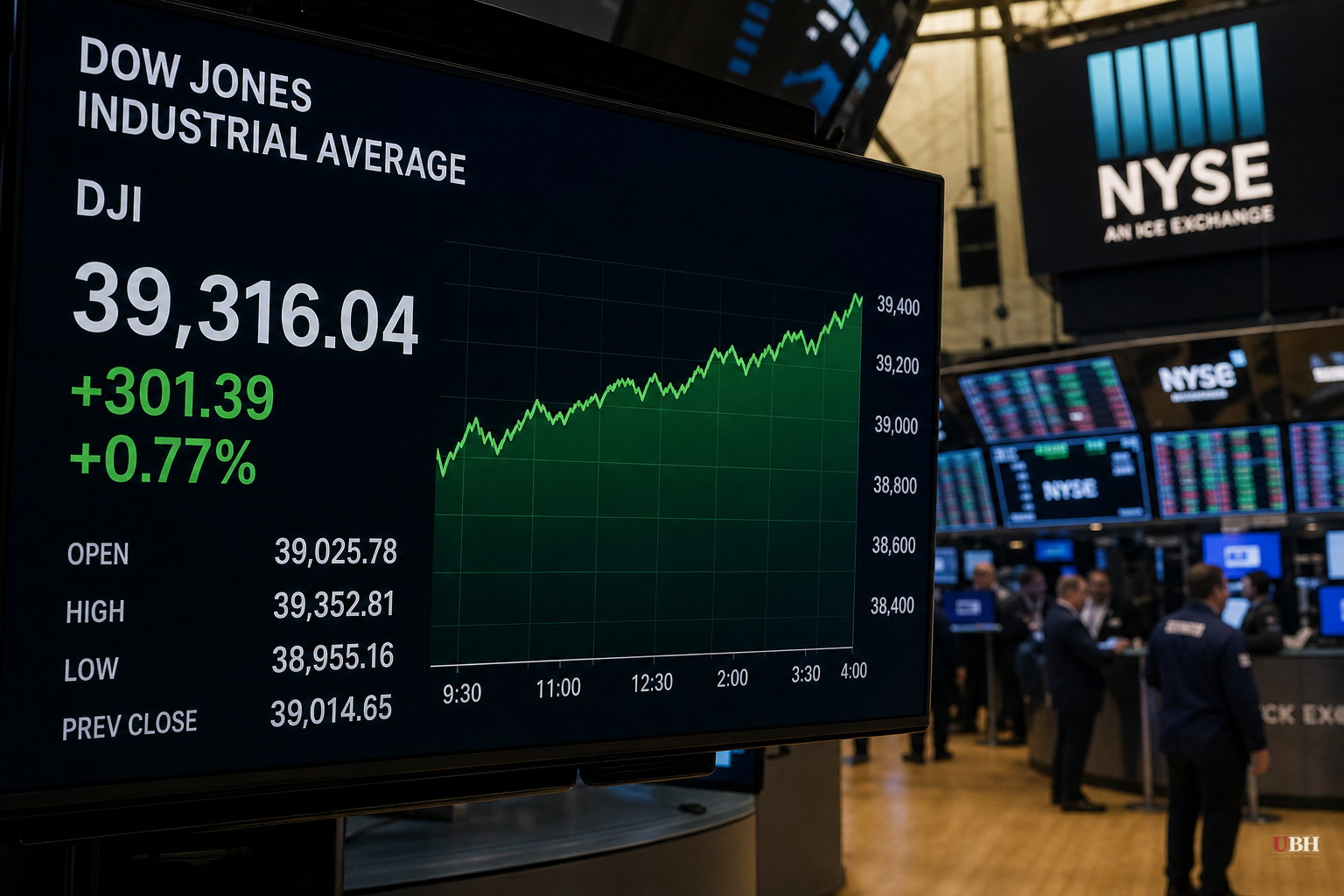
Wall Street clawed back some ground Friday, August 21, but couldn't erase a week of losses driven by the bond market throwing a tantrum.
The Dow Jones Industrial Average rose somewhere between 250 and 341 points during the session, depending on the timestamp, according to TradingView and the Associated Press. The S&P 500 gained around 0.3% to 0.37%, and the Nasdaq Composite was up roughly 0.2% to 0.34%. Still, all three indexes remained on pace for weekly declines. The S&P 500 was down about 1.9% for the week and the Nasdaq had fallen 2.5%, per TradingView. The Dow was off 1.8%, on track for its second straight weekly decline.
Thursday had been ugly. The S&P 500 fell 0.9% and the Nasdaq dropped 1%, according to TradingView, extending a slide that started when the 30-year Treasury yield hit its highest level since 2007.
The bond market is running the show
This week's story centers on bonds. The Treasury Department announced plans to increase buybacks of longer-term debt, initially targeting at least $4 billion in repurchases of 10-, 20-, and 30-year securities, according to TradingView. Treasury Secretary Scott Bessent later signaled the government could expand those purchases further.
It hasn't worked, at least not fully. The Associated Press reported that Bessent's moves to calm the bond market haven't succeeded so far. The 10-year Treasury yield rose to 4.72% Friday morning from 4.69% Thursday, bouncing repeatedly between that level and 4.68% overnight, according to the AP. Earlier in the week the moves were sharper: the 10-year yield dropped 0.06 percentage points and the 30-year fell nearly 0.10 points on Wednesday alone.
Breitbart's weekly wrap-up flagged something noteworthy: the 30-year Treasury bond auction this week cleared at the highest yield in 25 years, even as the stock market hit a fresh record high in the same stretch. Those two facts sitting side by side show the bond market and the stock market are not reading off the same page right now.
Consumer sentiment fell, and it wasn't even close to across the board
Breitbart also highlighted a University of Michigan consumer sentiment reading that plunged 8% in early August. The breakdown by party tells a different story. Sentiment among Republicans fell 9.5 points month over month, according to survey director Joanne Hsu. Democrats ticked down just 3.7 points, and independents barely moved, down 0.8 points.
Hsu said Republican sentiment is now 19% below where it stood just before the Iran conflict began, and the lowest since the 2024 election. Breitbart tied this to continuing high gas and oil prices tied to the Iran standoff, plus midterm uncertainty with no clear unified GOP message heading into the election. The sentiment numbers themselves come straight from the University of Michigan survey.
Geopolitics keeps oil, and yields, on edge
The United States said it will impose tougher sanctions on Iran as the standoff over the Persian Gulf continues, according to TradingView. Oil tankers still can't move freely out of the Gulf, which has kept crude prices elevated and, in turn, kept inflation worries alive. Brent crude was trading around $93.81 a barrel Friday, up slightly, according to the AP.
Higher oil prices matter because they feed directly into the inflation calculus the Federal Reserve has to weigh. That's the mechanism connecting an Iran conflict most Americans have stopped closely tracking to the bond yields moving their 401(k)s.
Winners in the chaos: crypto and gold
Not everyone's losing. Bitcoin climbed above $77,000, up from less than $63,000 a week earlier, according to the AP. Robinhood Markets jumped 11.9% and Coinbase Global gained 9.2% on the crypto rally. Gold topped $4,640 an ounce, up from under $4,440 a week ago, lifting mining stocks like Newmont, up 2.4%, and Freeport-McMoRan, up 5.6%.
Ross Stores was a standout on the retail side, climbing 4.1% after beating profit and revenue estimates, with CEO Jim Conroy citing both new customer growth and tariff refunds boosting margins, according to the AP.
What's next
The August flash reading of the S&P Global purchasing managers' index was due later Friday. The personal consumption expenditures inflation report, the Fed's preferred inflation gauge, is scheduled for next week. And Fed Chair Kevin Warsh is set to speak at the Jackson Hole symposium next week, where investors will be parsing every word for hints about where rates go from here.
UBS Global Wealth Management, meanwhile, raised its year-end S&P 500 target to 8,100, betting on continued corporate earnings strength to override the bond market noise. Whether that bet pays off depends largely on what happens with Iran, oil, and whether Bessent's Treasury buybacks actually bring long-term yields down instead of just managing the volatility around them.
Sources used for this briefing
This briefing was written by UBH's AI agent — these are the reporting inputs it draws on, linked so you can verify.


