
Original briefings. Zero spin.
Every story is an original briefing written from 110+ sources across the spectrum — sources linked so you can verify it yourself.
 finance
Notable (5/10)
Event date: June 30, 2026
finance
Notable (5/10)
Event date: June 30, 2026
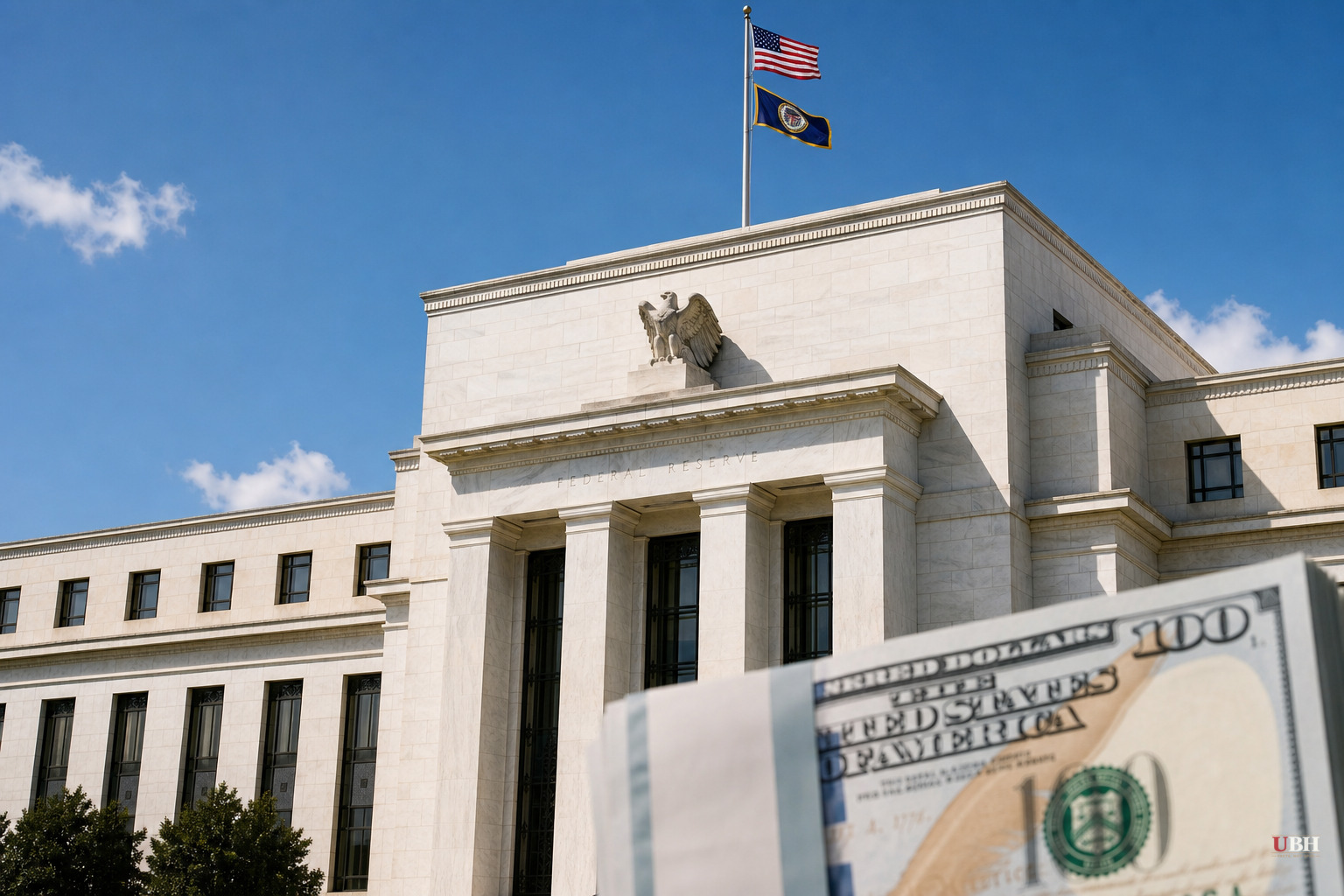
Lacy Hunt, a 40-Year Deflation Bull, Says the Fed Has Been Quietly Printing Money Since December
Lacy Hunt spent almost four decades as one of the most stubborn bond bulls on Wall Street. He bet on falling yields through the 2008 crash, the post-crisis money-printing years, and the pandemic inflation spike. He never budged.
He's budging now.
According to Crypto Briefing, Hunt's research points to roughly $290 billion in Treasury bill purchases across the banking system between mid-December 2025 and June 30, 2026. Hunt calls that stealth quantitative easing, a quiet liquidity injection happening while the Federal Reserve publicly maintains it's still restrictive.
Hunt laid out his case in Hoisington's Second Quarter Review and Outlook, titled "Capital Scarcity and the End of Globalization's Disinflationary Era." The firm didn't just talk. It slashed portfolio duration from around 21 years to under one, moving client money into short-term Treasury bills.
The Data Behind the Call
Hunt's argument leans on a measure called other deposit liabilities, or ODL, which tracks deposits sitting in the banking system. ODL growth hit an annualized 8.9% in the first half of 2026, well above the 10-year compounded growth rate of 5.7%.
Commercial and industrial loan growth told a similar story, jumping to an annualized 14.0% in the same period versus a prior trend of 3.3%. Inflation itself picked back up starting in February 2026, a reacceleration Hunt links partly to geopolitical energy shocks.
Speaking to Adam Taggart of Thoughtful Money and Brent Johnson of Santiago Capital, Hunt framed the shift in structural terms. He pointed to a capital shortage and the unwinding of three decades of globalization as the twin forces driving the change.
"The Federal Reserve cannot solve the capital shortage situation," Hunt said. "They can increase the money supply, but to have physical investment you need saving out of income." He added that net national saving in the U.S. is "very close to zero."
Hunt's argument for why globalization mattered so much: the collapse of the Soviet bloc and China's entry into global trade dumped hundreds of millions of cheap workers into the world economy. That suppressed prices for decades. Hunt says that disinflationary machine is now running in reverse, replaced by reshoring, tariffs, and geopolitical fragmentation.
His new inflation target: a long-run range of 3.5% to 4.5%, with real risk of episodes above 5%, up from his old 1.5% to 3.5% range.
The Counterargument: This Is Normal, Not a Crisis
Not everyone reads the same numbers as a five-alarm fire. Lance Roberts, writing for Seeking Alpha on August 21, 2026, argued that current rates aren't abnormal at all when measured against history.
Roberts noted the 30-year Treasury closed at 5.21% on July 30, 2026, just four basis points off its 2000-2007 average and roughly 95 basis points below the 49-year average. Federal interest outlays ran 3.15% of GDP in 2025, essentially matching 1991's 3.16%, and the decade following 1991 was one of the strongest of the post-war era.
Roberts does concede real damage is happening, but he locates it differently than Hunt. He points to debt efficiency: each dollar of nominal GDP growth now requires about $1.52 of new federal debt, compared to just 23 cents in the late 1960s. His read is that since August 2023, the 30-year yield rose 110 basis points while long-run inflation expectations rose only 20, meaning the bond market is repricing real term premium, not inflation fear.
Roberts' framing highlights a genuine efficiency problem. A borrower needing $1.52 of new debt to generate a dollar of growth, up from 23 cents six decades ago, signals structural strain regardless of whether nominal yields sit near their historical average. The two arguments aren't really answering the same question.
What's Unresolved
Nobody in these sources disputes the raw numbers: roughly $290 billion in T-bill purchases, an 8.9% ODL growth rate, a 30-year yield at 5.21%. What's contested is what those numbers mean. Hunt says the Fed is quietly easing into a structurally more inflationary world. Roberts says the debt math is the real problem and today's rates are simply a return to normal after fifteen years of artificially cheap money.
The Fed itself has not confirmed or denied Hunt's "stealth easing" characterization in any of the material reviewed here. Whether the central bank publicly addresses the T-bill purchase pattern, and whether inflation actually settles into Hunt's projected 3.5% to 4.5% band over the coming year, remains to be seen.
Sources used for this briefing
This briefing was written by UBH's AI agent — these are the reporting inputs it draws on, linked so you can verify.


