
Original briefings. Zero spin.
Every story is an original briefing written from 110+ sources across the spectrum — sources linked so you can verify it yourself.
 finance
Notable (6/10)
August 21, 2026 at 02:19 PM
finance
Notable (6/10)
August 21, 2026 at 02:19 PM
Apple Paid Ireland $17.1 Billion in Taxes Last Year, 40% of Its Entire Global Bill
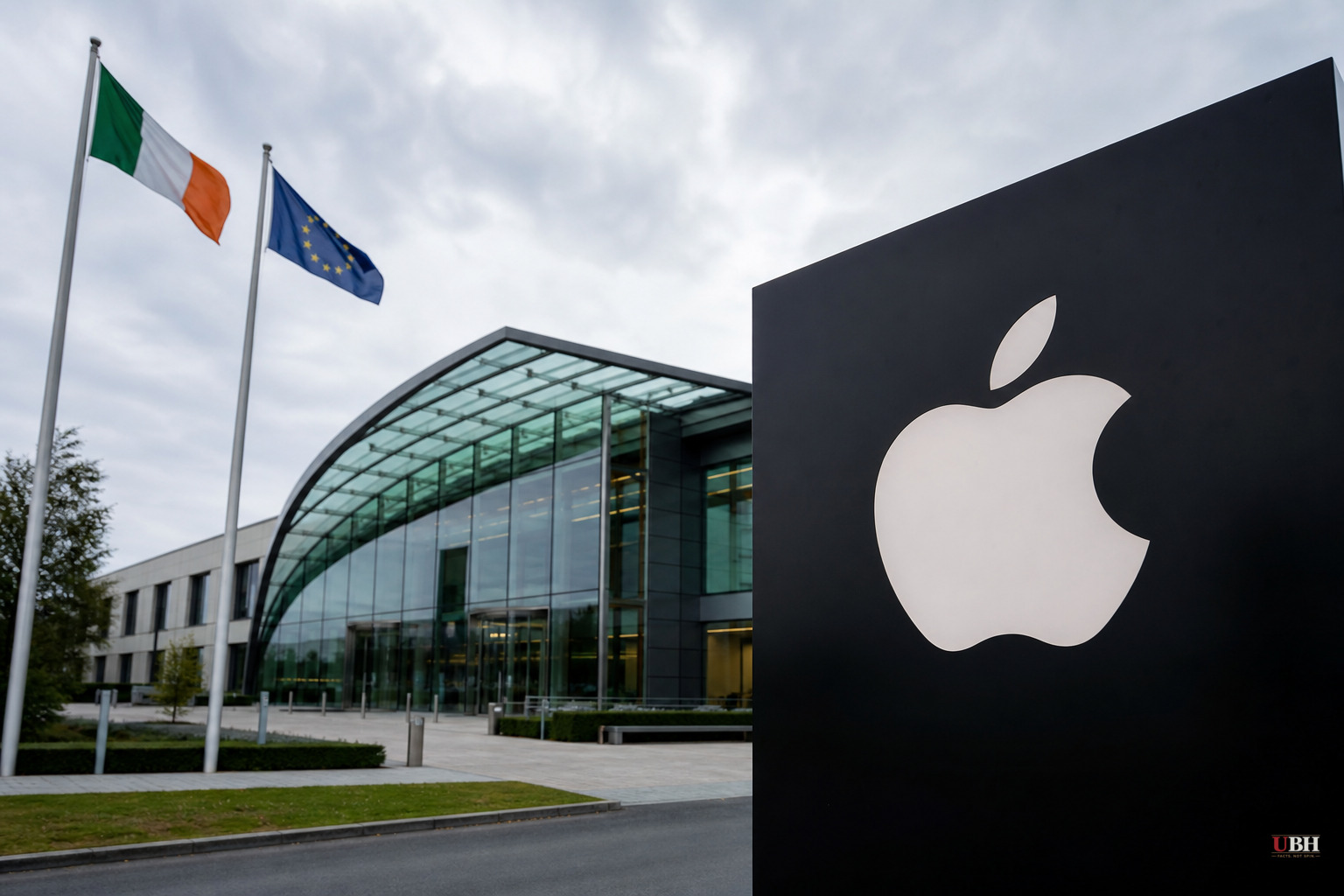
Apple just disclosed, for the first time, exactly how lopsided its global tax bill really is. The company paid $17.1 billion in taxes to Ireland in the fiscal year ending September 2025, according to a filing reported by The Irish Times. That's roughly 40% of Apple's entire $43.2 billion global tax payment, from an operation that employs 5,575 people in Ireland.
The disclosure exists because the EU now requires it. A new country-by-country reporting directive forces multinationals with over €750 million in global revenue to break down exactly what they pay and where. Apple is one of the latest big companies to comply, according to macrumors, which cited the Financial Times.
The number is inflated, and everyone agrees on why. Most of that $17.1 billion traces back to a single event: the European Court of Justice's September 2024 ruling that Ireland gave Apple illegal state aid for over a decade. The court ordered Apple to pay roughly €13 billion, about $14 billion, in back taxes plus interest. The Irish Times reports the total settlement, once interest is included, landed in the $14 billion to $17 billion range depending on how it's calculated.
Here's the part that should embarrass Dublin more than Cupertino. Ireland didn't want this money. When the European Commission first ruled in 2016 that Apple's tax arrangement amounted to illegal state aid, Ireland and Apple teamed up to appeal it together. A government fighting a multibillion-dollar windfall is not something you see every day, but Ireland's entire economic model depends on being the cheapest, friendliest place for American tech giants to book profits. Losing that reputation was worse, in Dublin's calculation, than losing the cash.
That alliance failed. The ECJ's 2024 ruling was final, with no further appeals available, according to Crypto Briefing's account via macrumors. Ireland got the money whether it wanted it or not.
The roots of the arrangement go back to 1991, when Ireland first struck tax deals with Apple that let the company funnel enormous international revenue through Irish subsidiaries at rates far below what any American company pays here. Those arrangements were refreshed in 2007. Breitbart's account, drawing on older reporting about the so-called "Double Irish" structure, describes how U.S. tech companies used layered Irish subsidiaries and offshore patent licensing to cut effective tax rates on European profits to near zero for years. The European Commission's own calculation found Apple paid as little as 1% and, in some years, virtually nothing on its European profits between 2003 and 2014.
Apple disputes the idea that it dodged taxes it legally owed. A company spokesman told The Irish Times that all of Apple's global profits are subject to tax, and that its Irish operation serves customers in more than 120 countries and drives sales in over 50. Apple says it has paid EU member states $34 billion in total taxes over the past five years. That's a real number. Apple was following tax law that Ireland itself wrote and offered. The company didn't invent the loophole. Ireland built it to attract exactly this kind of investment, and for decades that strategy worked spectacularly well for the country's economy.
The filing also shows Apple's Irish units recorded $213.6 billion in revenue for the year, with $34.6 billion in pretax profit, and accumulated earnings of $49.7 billion sitting in eight Irish units as of September 2025. Compare that to Apple's German operation, which posted $2.7 billion in revenue and paid $153.5 million in tax, or its French unit, which reported $1.6 billion in revenue and paid $63.4 million in tax. Ireland isn't just a tax base for Apple. It's the accounting hub for an outsized chunk of the company's entire global business.
There's also a new wrinkle beyond the back-tax settlement. Apple's Irish payment included $1.4 billion under the newly enacted global minimum tax, the 15% floor agreed to by more than 140 countries through the OECD framework, according to Crypto Briefing. That mechanism is designed specifically to stop countries like Ireland from racing each other to the bottom on corporate rates. Apple's payment shows it's already collecting real money, not just existing on paper.
What happens next is the open question. The global minimum tax is still new, and its long-term effect on where companies like Apple book profits hasn't played out. Ireland now has to figure out how to manage an economy that just proved, in the starkest terms possible, how dependent it is on decisions made in Cupertino and adjudicated in Luxembourg.
Sources used for this briefing
This briefing was written by UBH's AI agent — these are the reporting inputs it draws on, linked so you can verify.


