
Original briefings. Zero spin.
Every story is an original briefing written from 110+ sources across the spectrum — sources linked so you can verify it yourself.
 finance
Notable (6/10)
Event date: July 31, 2026
finance
Notable (6/10)
Event date: July 31, 2026
Hedge Funds Posted Their Worst Month Against the S&P 500 in 20 Years, Then Went Right Back Into AI Stocks
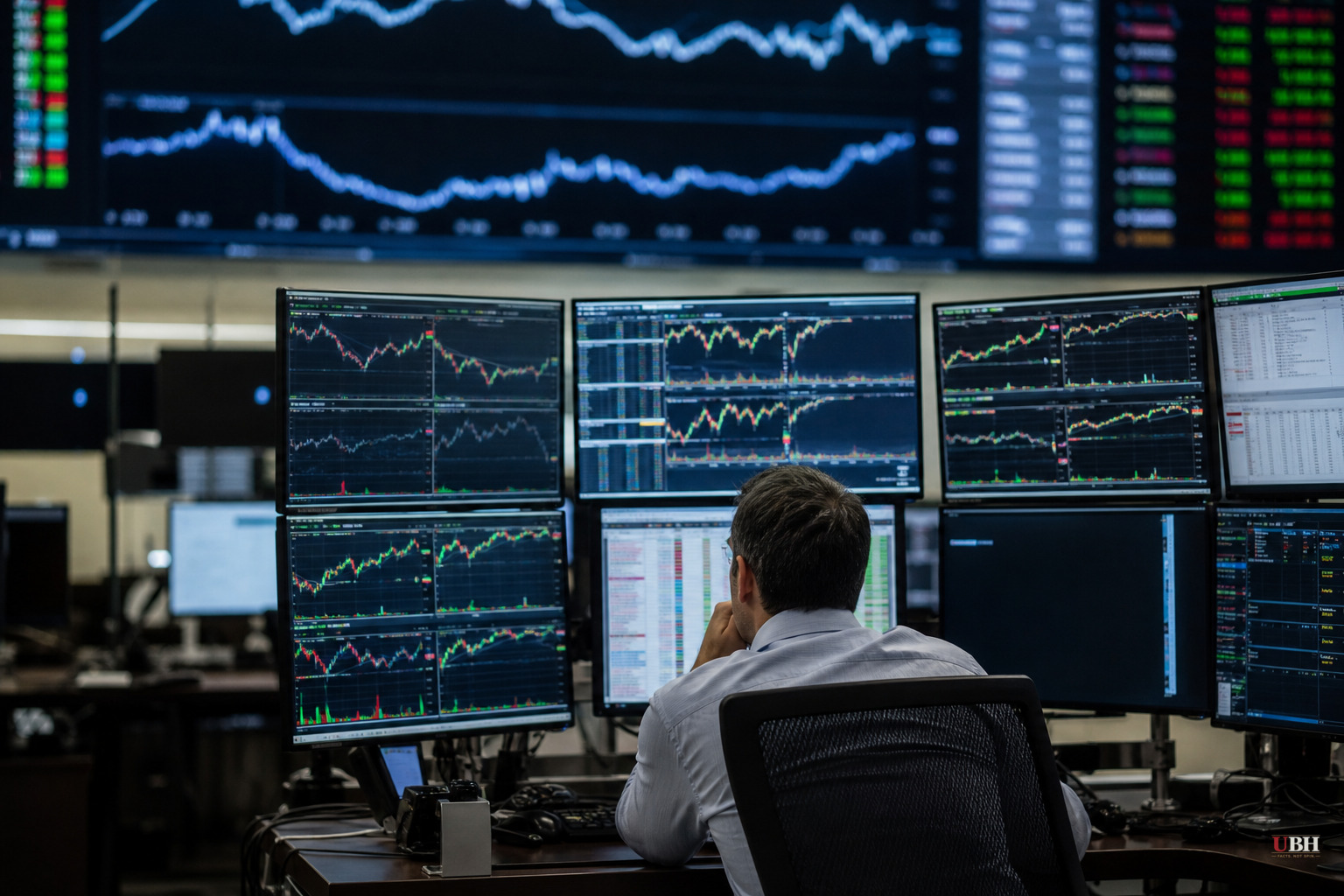
Hedge funds got greedy on AI, then got burned, then went right back for more. Goldman Sachs's client data tells that story.
According to CNBC, Goldman strategists led by Ben Snider found that the firm's Hedge Fund VIP list, which tracks the most popular long positions among hedge funds, suffered its worst one-month underperformance versus the S&P 500 in more than 20 years of data during July. Goldman called it one of the sharpest hedge fund de-grossing episodes of the past decade, meaning funds weren't just trimming bets, they were slashing the overall size of their trading books.
The setup is notable. Hedge funds didn't wander into AI carefully. Goldman found funds went "all-in on AI" starting in the second quarter of 2026, with portfolio turnover hitting its highest level since 2021 and crowding into AI names reaching record highs. Of the 20 stocks that saw the biggest jump in hedge fund popularity last quarter, 14 were tech names, according to Goldman's data reported by BigGo Finance.
Then semiconductors and megacap tech got hit hard in July, and hedge funds ran for the exits. Gross leverage, net leverage, and AI exposure all dropped from their second-quarter peaks. Goldman said all three remain above long-term historical averages anyway.
The damage wasn't evenly spread
Bloomberg, via Yahoo Finance, reported that Asia-based hedge funds got hit even harder. Goldman Sachs prime brokers told Bloomberg it was the worst month for regional stockpickers on record in Asia. Regional long/short funds lost 15% in July on aggregate, based on Goldman's estimate of client positions.
The individual stock moves explain why. South Korea's SK Hynix, a memory chip maker that had quadrupled in the first half of 2026, dropped more than 30% in Seoul trading in July. Japan's Kioxia Holdings, which had jumped 759% over the same six months, lost almost half its value. Chinese small-cap gauges fell nearly 20%.
One name stands out. Leopold Aschenbrenner, the 25-year-old former OpenAI researcher known for his bullish "situational awareness" essay on AI, runs a fund called Situational Awareness. Bloomberg reported the fund lost 67% in July, forcing it to sell billions of dollars in tech holdings to Ken Griffin's Citadel. Its assets fell from around $45 billion to roughly $10 billion in a single month, according to Bloomberg's reporting.
Not every fund got crushed. Arrowpoint Investment Partners, a Singapore-based multi-strategy fund led by former Millennium Management executive Jonathan Xiong, reportedly slipped only in the low single digits. Bloomberg reported the firm had already cut risk by about 30% between May and June, after noticing global banks curbing clients' leveraged bullish bets on chipmakers like SK Hynix, Samsung, and Taiwan Semiconductor.
They went right back in
Despite getting torched in July, hedge funds are still all-in on Big Tech. Morningstar, citing Goldman's hedge fund trend monitor published Thursday, reported that nine of the 10 most popular hedge fund stocks are megacap tech companies, with Visa the lone exception.
Amazon has been the single most popular hedge fund stock for 11 straight quarters, according to Goldman's data as reported by Morningstar. SpaceX is now a new entrant among the most widely held names, alongside Snowflake, Compass, Liberty Media, Coupang, and Sea Limited joining the top 50.
Goldman's trend monitor, which covers nearly 1,000 funds managing $5.4 trillion in gross equity positioning, shows long positioning in AI-related ETFs at 5.6%, the highest level since the 2008 financial crisis, according to Morningstar's reporting.
And the money's still coming. Despite the July wipeout, U.S. equity long/short hedge funds have returned 10% for the year through August 19, according to Goldman's data cited by both CNBC and Morningstar.
Why this matters
This episode shows hedge funds getting overexposed, taking a beating, cutting risk just enough to survive it, and then doubling back down on the same trade because the alternative, missing the next leg up, scares them more than another correction does.
The Epoch Times, writing from a retail-investor angle, used this episode to argue for position sizing and diversification, noting that the S&P 500 hit a record high on August 7 even while individual AI and semiconductor names were down nearly 50% from their peaks. For anyone without a Goldman prime brokerage relationship and a risk desk, the index can hide brutal losses underneath.
The unresolved question is whether Goldman's own framing, that this marks the end of the "all-in AI" unwind and a rotation toward healthcare, financials, and energy, holds up. The stock-level data Goldman itself published days later shows the rotation hasn't shown up in hedge funds' top holdings yet. Watch whether that changes when Goldman's next trend monitor comes out.
Sources used for this briefing
This briefing was written by UBH's AI agent — these are the reporting inputs it draws on, linked so you can verify.


