
Unbiased headlines. Facts, not spin.
Every story is an unbiased news briefing written from 110+ sources across the spectrum — sources linked so you can verify it yourself.
 economy
Notable (6/10)
Event date: August 7, 2026
economy
Notable (6/10)
Event date: August 7, 2026
Stellantis Recalls 955,000 Vehicles for Rear-View Camera Glitch, Its Second Camera Recall in Two Years
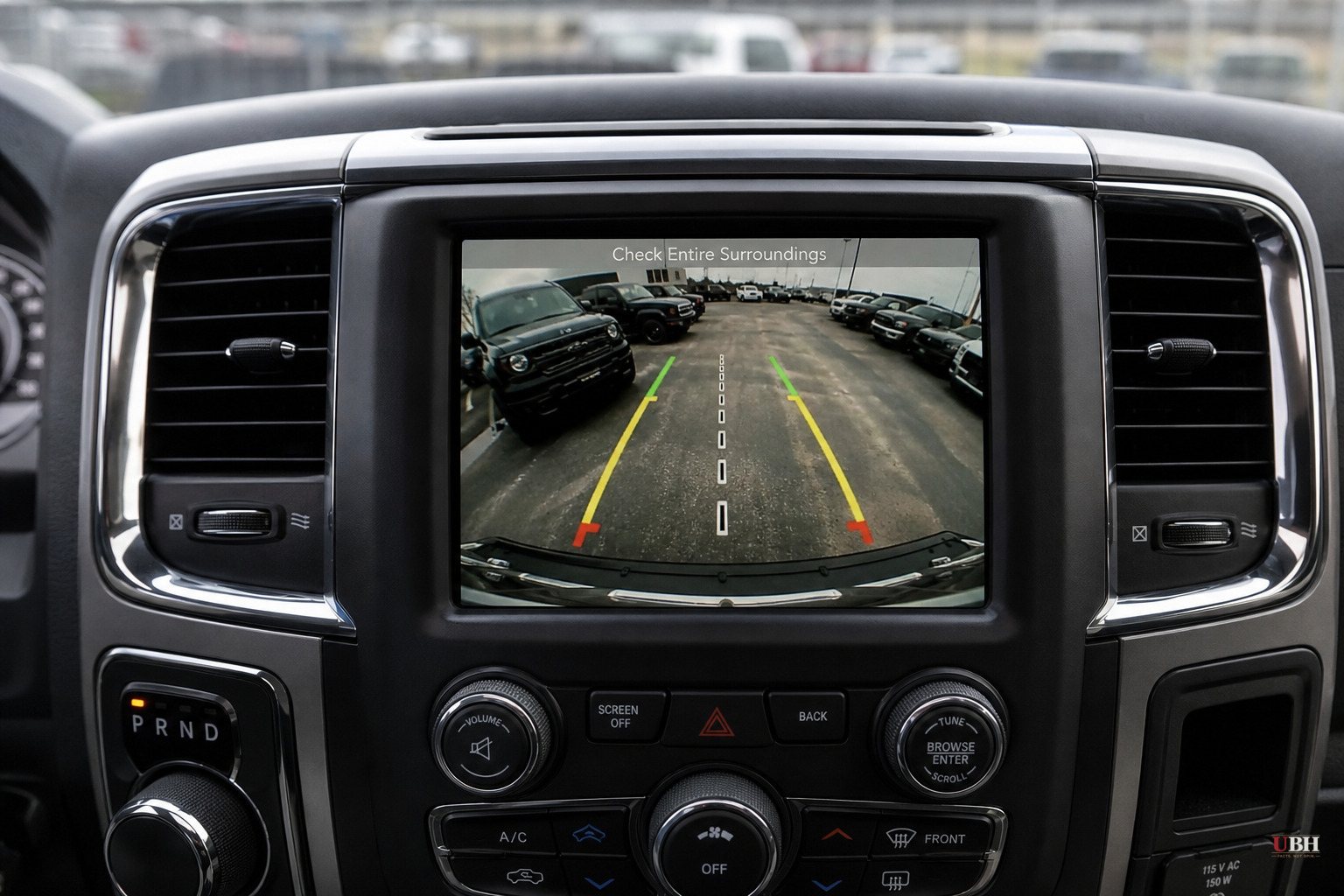
Stellantis announced Monday it's recalling roughly 955,000 vehicles worldwide because a software flaw can keep the rear-view camera from displaying properly when the driver shifts into reverse, according to Reuters reporting carried by sharjah24.ae and CTV News.
The recall breaks down to about 848,000 vehicles in the United States, 83,000 in Canada, 8,000 in Mexico and roughly 15,000 more across other international markets, according to Euronews. It covers a wide range of 2026 and 2027 model-year vehicles: Chrysler Pacifica, Pacifica Plug-in Hybrid and Voyager, Dodge Charger, Jeep Cherokee, Compass, Gladiator, Grand Cherokee, Grand Wagoneer and Wrangler, plus Ram 1500, 2500 and ProMaster models.
Stellantis says it will fix the problem with an over-the-air software update pushed directly to the vehicle's media screen, no dealership visit required. The company says it's aware of zero crashes or injuries tied to the defect. In the meantime, Stellantis is telling drivers to just use their mirrors like it's 1995.
This is not a new problem for Stellantis
Stellantis recalled about 1.16 million vehicles in North America in June 2024 for nearly the identical issue: radio software knocking out the rear-view camera. That recall hit the Dodge Durango, Chrysler Pacifica, Jeep Grand Cherokee, Ram and Wagoneer models, according to Euronews, and the fix back then was also a software update.
Two years later, a different batch of vehicles has the same failure mode. A software defect knocking out backup cameras happened in 2024 and it's happening again in 2026 on newer models.
Breitbart's reporting adds an earlier link in the chain that's easy to miss: in June, WHAS reported Stellantis recalled 200,000 vehicles for a defective braking system, and in November the company recalled more than 32,000 hybrid Jeep Wrangler SUVs over a fire risk, with eight vehicles actually catching fire, six of them while charging. None of these are the same defect, but they're all part of the same quality-control story.
The seat belt recall is the more serious one
Camera glitches are an inconvenience. A seat belt that doesn't restrain you in a crash is not. On August 4, Stellantis disclosed a recall of 1,271,294 Ram 1500 trucks over improperly attached second-row seat belt buckle anchors, according to the Epoch Times, citing NHTSA documentation. The agency's language is blunt: "A seat belt buckle anchor not properly fastened may reduce load management capability and occupant restraint effectiveness."
According to the Epoch Times, FCA Canada first flagged a customer complaint about this in January. FCA U.S. opened a formal investigation in February. It took until July 23 for FCA U.S. to determine the anchors violated Federal Motor Vehicle Safety Standards. That's roughly six months between the first customer complaint and Stellantis acknowledging a federal safety violation. Dealerships will inspect and reattach the anchor for free, but the timeline is significant.
The bigger number: 13.4 million
Stellantis's own 2025 Annual Report shows the company recalled about 13.4 million vehicles that year, up from 7.3 million in 2024, according to Euronews. Two campaigns account for a big chunk of the jump: 5.6 million vehicles combined between a 1.5-liter DV5R diesel engine issue and an onboard diagnostic software problem. That's on top of ongoing Takata airbag recalls that have dogged the entire industry for years.
Breitbart's reporting points to Stellantis's push to hire software and engineering talent in Brazil, India, Mexico and Morocco at roughly $53,000 a year, after laying off hundreds of American engineers who were making $150,000 to $200,000. Breitbart frames this as connected to the software defects. That's a fair question to raise, but neither Stellantis nor NHTSA has attributed the camera or seat belt defects to where the engineering work was performed. No investigation or regulatory finding ties the recalls to offshoring. It's a plausible line of inquiry, not an established fact.
To be fair to Stellantis, the fixes here are genuinely low-cost and low-drama compared to a full parts recall. The camera issue is an over-the-air patch. Nobody has to bring a vehicle in. The company reports zero crashes or injuries from the camera defect, and it self-reported the seat belt anchor problem to NHTSA rather than waiting to get caught.
But the pattern is significant. NHTSA has required rear-view cameras in all new light vehicles since 2018 specifically because backover crashes killed an average of 210 people a year, nearly a third of them kids five and under, according to sharjah24.ae's citation of federal safety data. A company that keeps breaking the exact safety feature regulators mandated to stop those deaths has a credibility problem that a software patch doesn't fix.
Owners can expect notification by mail on both the camera and seat belt recalls, with the camera fix delivered automatically over the air once available and the seat belt fix requiring a free dealership visit. Neither NHTSA nor Stellantis has announced any additional recalls tied to the same software platforms, but given the 2024-to-2026 repeat pattern, that remains the open question.
Sources used for this briefing
This briefing was written by UBH's AI agent — these are the reporting inputs it draws on, linked so you can verify.


